
What is Reproduction?
Reproduction is the biological process by which living organisms produce new individuals of their own kind. Every organism follows a life cycle — it is born, grows, matures, reproduces, and eventually dies. Reproduction ensures that life on Earth continues. For example, a mango tree may grow old and die, but its seeds grow into new plants. Cows give birth to calves, dogs to puppies, and humans to children.
Living beings reproduce in two main ways:
- Asexual reproduction — a single parent produces offspring that are almost exact copies of the parent.
- Sexual reproduction — offspring inherit a mix of characteristics from two individuals.
This mixing of characteristics leads to small differences between parents and their young ones. Accumulated over many generations, such differences help living beings adapt to changing environments and sometimes give rise to new species.
1. Asexual Reproduction
Asexual reproduction is seen in many unicellular organisms like bacteria, amoeba, and yeast, as well as simple multicellular organisms like hydra and sponge. It is also seen in many plants.
1.1 Vegetative Propagation in Plants
Many plants sprout new shoots and roots from their existing parts without producing seeds. Examples include:
- Potato and ginger — fleshy underground stems sprout new plants.
- Money plant stem, sugarcane stem cuttings — grow into new plants.
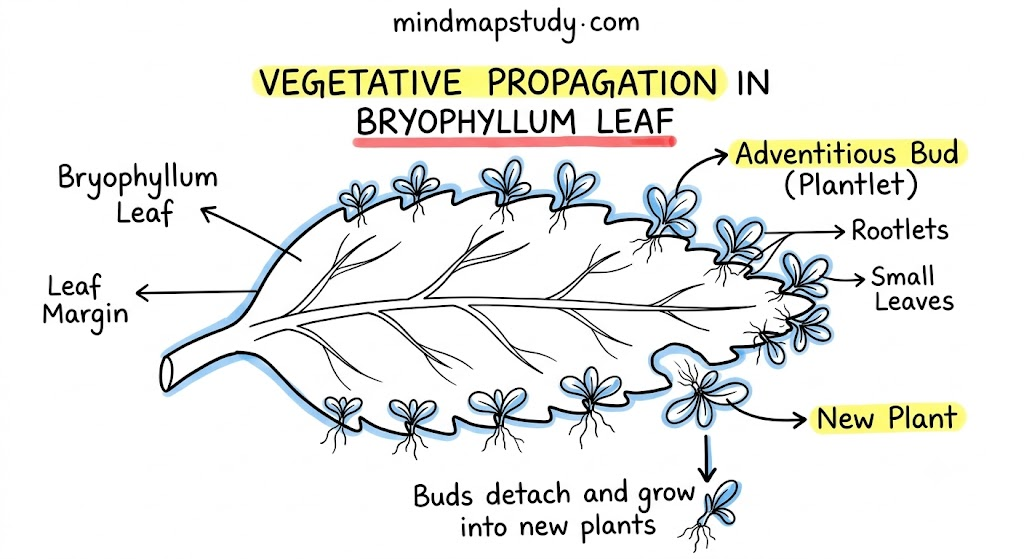
- Bryophyllum leaves — sprout tiny plantlets that eventually grow into new plants.
This is called vegetative propagation, where new plants arise from the vegetative (growing) parts of a plant. Since only one parent is involved, it produces genetically identical individuals.
1.2 Vegetative Propagation in Agriculture
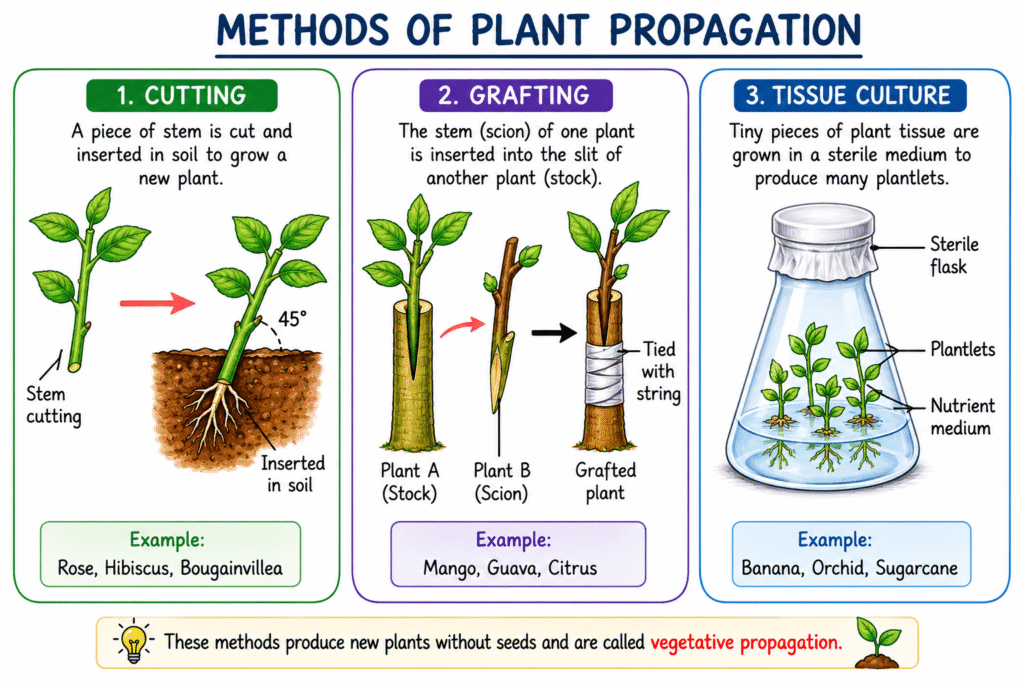
Scientists and horticulturists have developed several methods of vegetative propagation for agricultural use:
| Method | Description | Example |
|---|---|---|
| Cutting | A stem piece is cut and planted in soil | Rose, money plant |
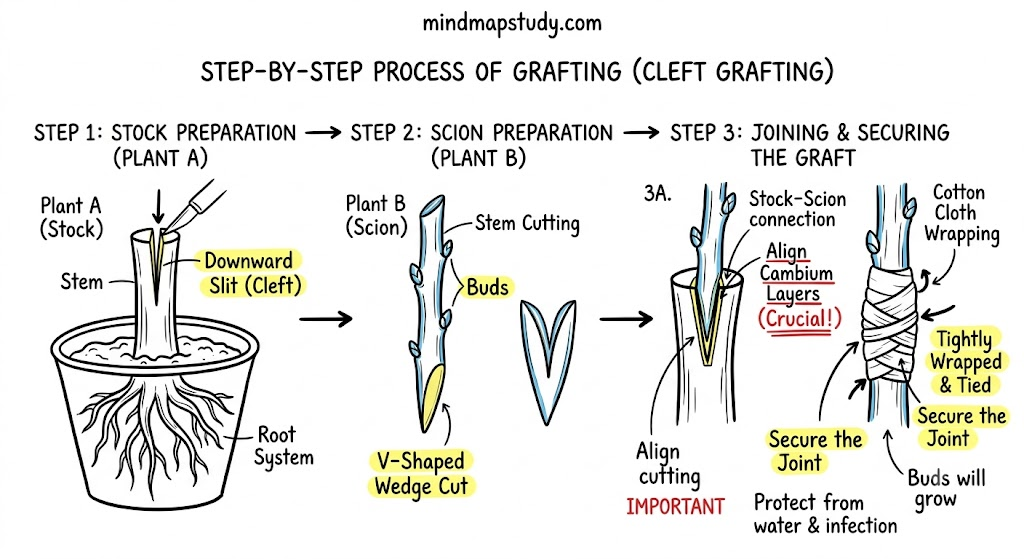
| Grafting | A stem piece (Plant B) is inserted into a slit of a rooted plant (Plant A) | Rose varieties |
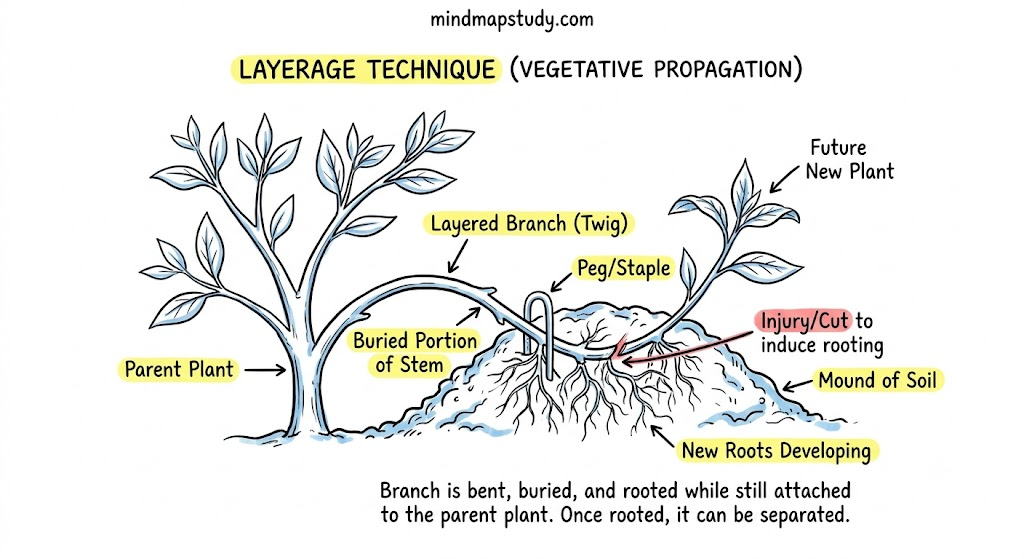
| Layering | A twig is buried in soil; roots develop; the twig is then cut free | Lemon, jasmine |
| Tissue culture | Healthy plantlets grown from shoot tip (apical meristem) in lab | Banana farming |
Tissue culture has revolutionised farming. Mass-produced healthy plantlets help eliminate virus-infected plants and ensure high yields.
1.3 Budding
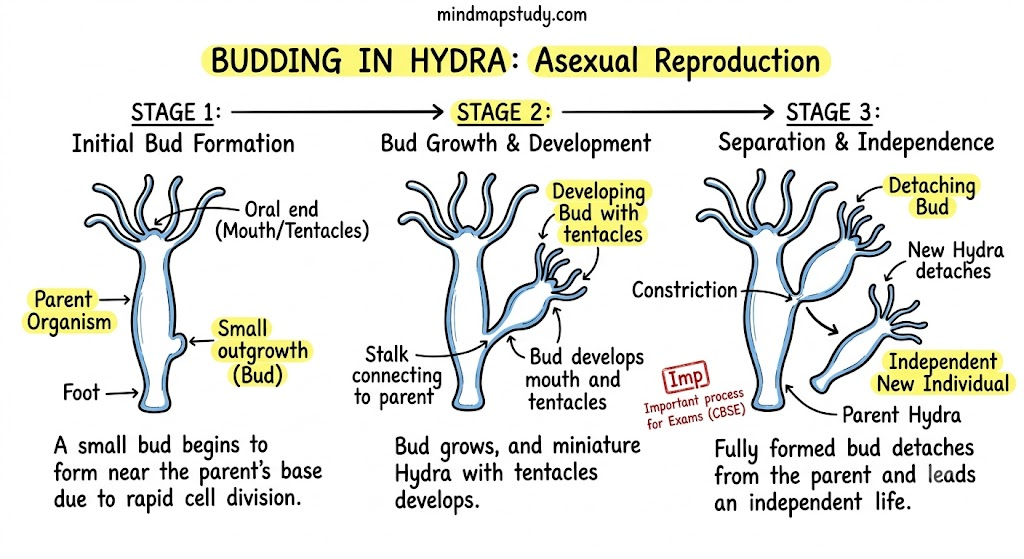
In organisms like hydra (a multicellular animal), repeated cell division at a specific site on the parent body produces a small outgrowth called a bud. The bud enlarges and separates from the parent to live independently. In hydra, many buds can grow on the parent body at the same time.
1.4 Spore Formation
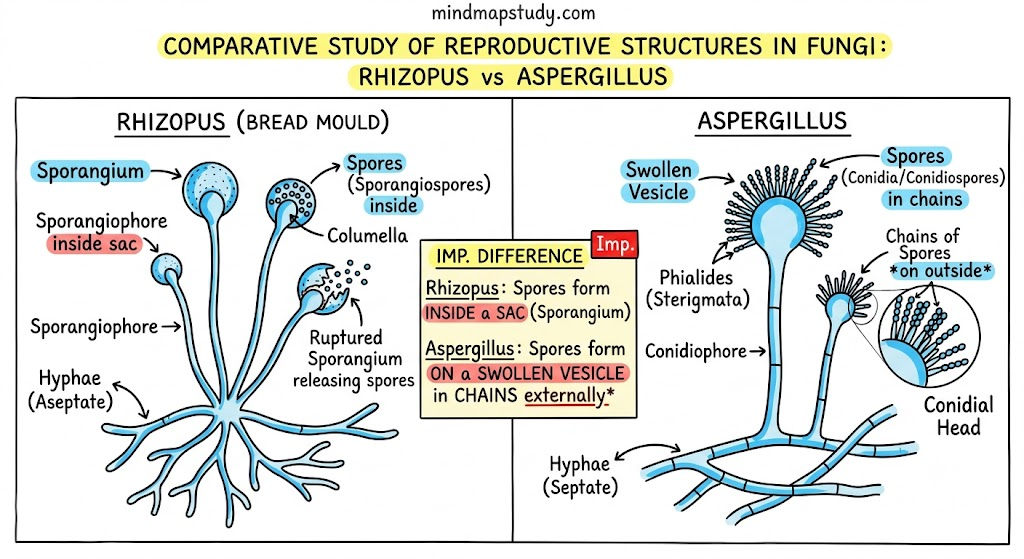
Fungi like bread mould (Rhizopus, Aspergillus) reproduce through spores. Spores are formed in a sac-like structure or on a swollen vesicle on a long strip of fungal hyphae. They are:
- Produced in huge numbers (millions from one mould colony).
- Lightweight and usually single-celled.
- Float easily through air currents.
- Germinate quickly into a new individual when moisture and nutrients are available.
1.5 The Central Process — Mitosis
In all asexual reproduction, the central process is mitosis — a type of cell division that produces two daughter cells, each having the same number of chromosomes identical to the parent cell. Because of this, the offspring produced are genetically identical to the parent and are called clones. This method is fast and helps organisms increase their population quickly when environmental conditions are favourable.
2. Sexual Reproduction
Sexual reproduction involves two parents in the formation of a new individual. Both parents contribute to the genetic material of the offspring.
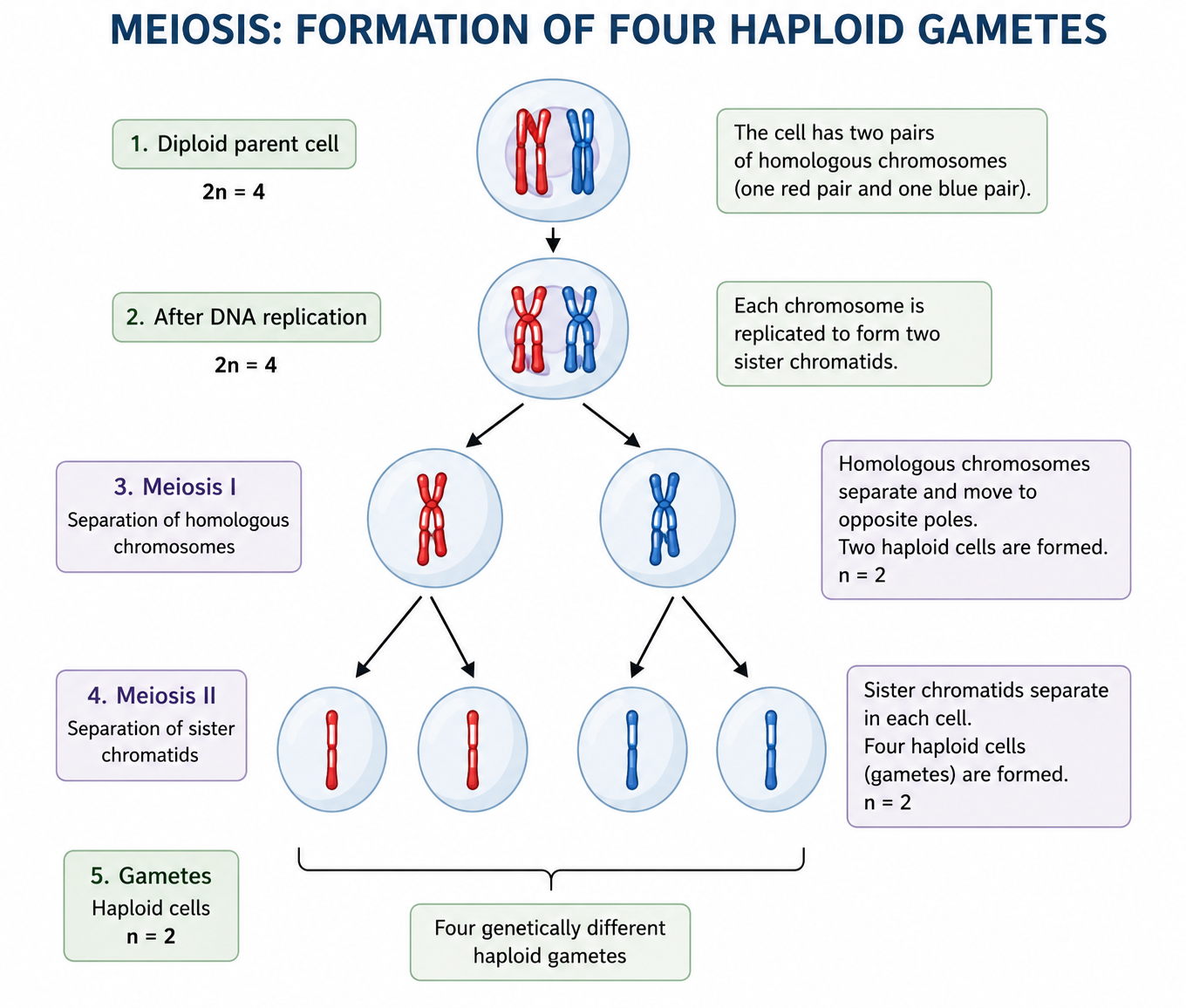
The chromosome problem and meiosis: If each generation received a full set of chromosomes from both parents, the chromosome number would double every generation. This is solved by a special cell division called meiosis.
2.1 How Meiosis Creates Variation
Each species has a fixed number of chromosomes. Chromosomes are thread-like structures in the nucleus that carry genetic information. Humans have 23 pairs (46 total) chromosomes.
Meiosis is a special cell division that forms gametes. It reduces the chromosome number of a parent cell (diploid) to half (haploid) in daughter cells. These haploid cells are called gametes.
- In animals: male gametes = sperm, female gametes = eggs.
- In plants: pollen grain contains male gametes; ovule contains the female gamete (egg).
During meiosis, the chromosomes of each pair separate so that each gamete receives only one chromosome from each pair. Every human gamete therefore has 23 chromosomes.
With just 3 pairs of characters, 8 combinations are possible. Imagine the combinations possible with 23 pairs of chromosomes — this random mixing makes every individual genetically unique. This creates variation, which is important for the survival and evolution of a species.
3. Sexual Reproduction in Flowering Plants
Flowering plants (angiosperms) are the most diverse group of plants. Flowers serve as their reproductive organs.
3.1 Parts of a Flower
A complete flower has four whorls from outside to inside:
| Part | Description | Function |
|---|---|---|
| Sepal | Outermost green covering | Protects the flower in bud stage |
| Petal | Coloured projections | Attract pollinators |
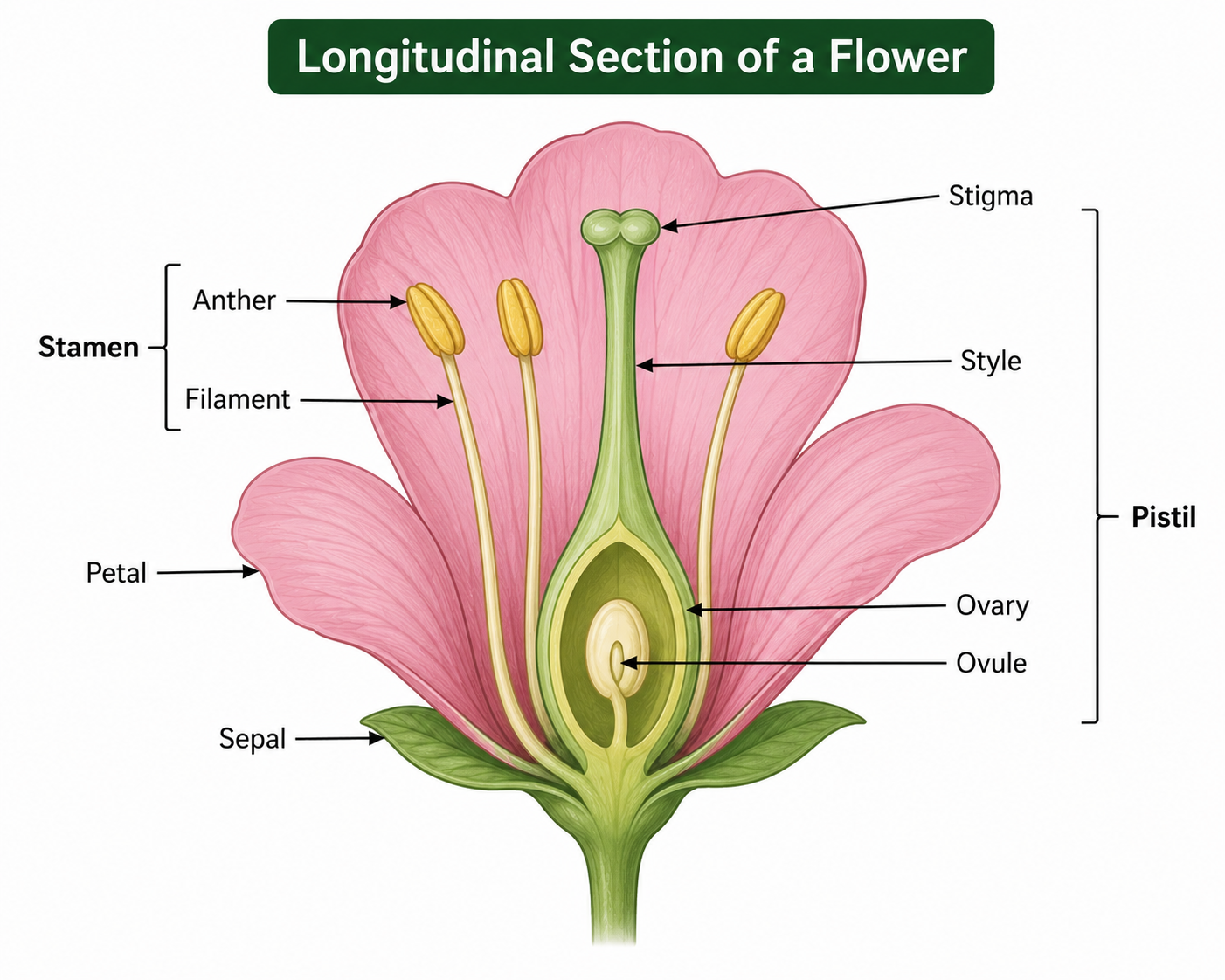
| Stamen | Male part — filament + anther | Anther produces pollen grains (male gametes) |
| Pistil | Female part — stigma + style + ovary | Receives pollen; contains ovules with egg cells |
- The stigma is at the tip of the pistil, often flat and/or sticky.
- The style is a thin tube connecting stigma to the ovary.
- The ovary contains ovules, each with an egg cell (female gamete).
3.2 Pollination
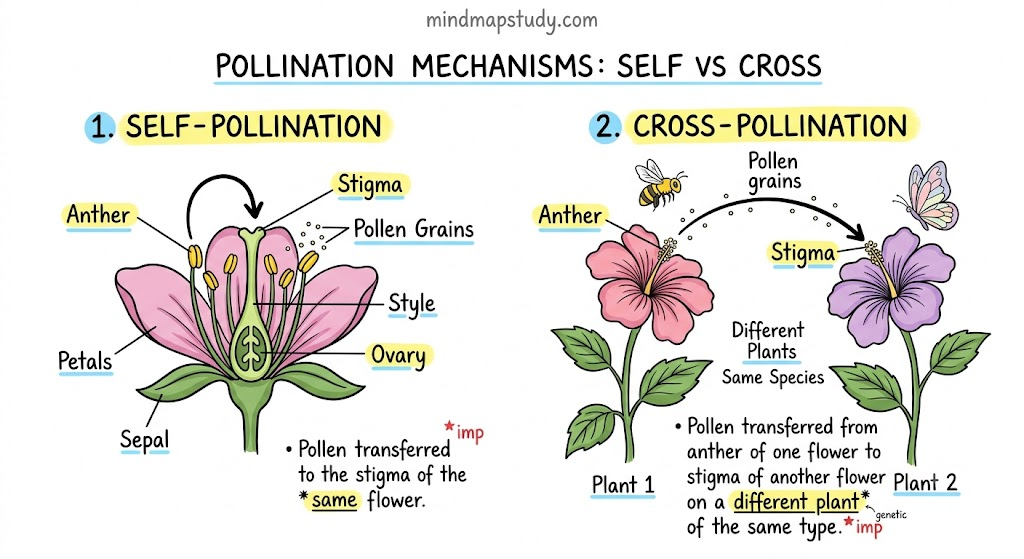
The transfer of pollen grains from the anther to the stigma of a flower is called pollination.
Types of pollination:
- Self-pollination — pollen transfers to the stigma of the same flower or another flower on the same plant.
- Cross-pollination — pollen transfers from the anther of one plant to the stigma of a flower of another plant of the same species.
3.3 Pollination Strategies and Agents
Pollination depends on external agents called pollinators:
| Pollinator | Plants | Features of pollen/flower |
|---|---|---|
| Wind | Wheat, maize, rice | Light, small pollen; produced in large numbers; long feathery stigma |
| Water | Vallisneria, Hydrilla | Water currents carry pollen |
| Insects (bees, butterflies) | Sunflower, hibiscus, marigold | Brightly coloured, fragrant, produce nectar; sticky/spiny pollen |
| Birds (sunbirds, Indian white-eye) | Coral tree, hibiscus | Large, showy flowers; often red/orange |
3.4 Fertilisation and Seed Formation
Once pollen reaches a compatible stigma:
- Pollen grains produce pollen tubes that grow down through the style into the ovary.
- The male gamete moves through the tube and fuses with the egg cell in the ovule.
- This fusion is called fertilisation, and the fertilised egg is called a zygote.
- The zygote develops into an embryo.
- The ovary enlarges and develops into a fruit.
- The ovules develop into seeds inside the fruit.
- Seeds are dispersed by wind, water, or animals, and under favourable conditions germinate into new plants.
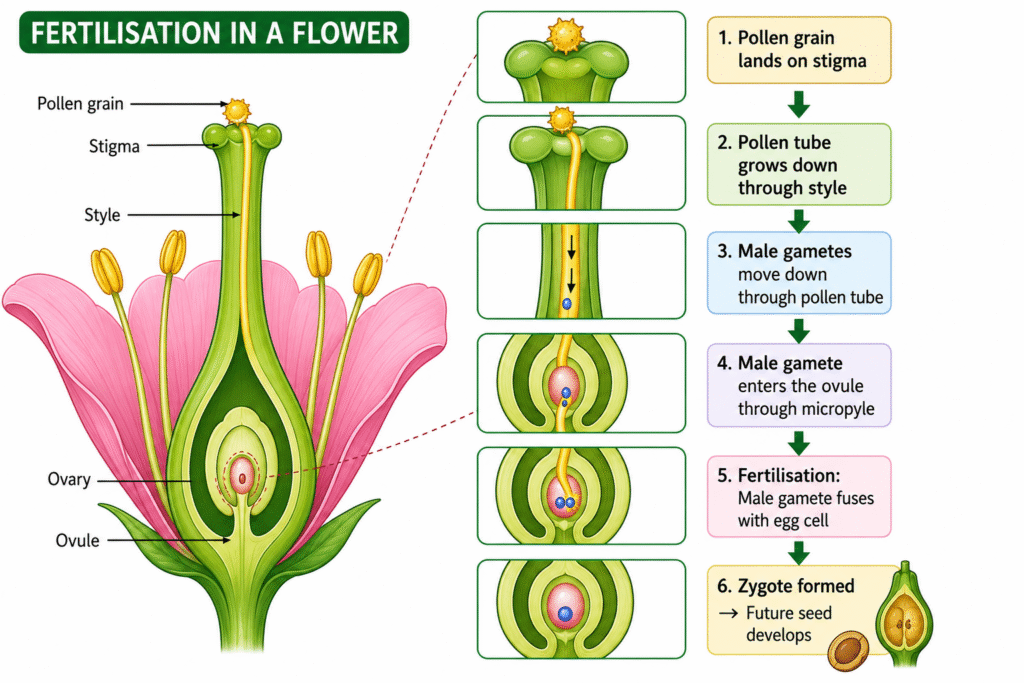
Diagram prompt: Draw the transformation showing ovary → fruit and ovule → seed.
3.5 Pollen Production and Seed Formation — Wind vs Insect Pollination
| Pollination Strategy | Approximate Pollen Grains per Flower | Estimated Seeds Formed |
|---|---|---|
| Wind-pollinated (maize, wheat) | 5,00,000 – 10,00,000 | 50 – 200 |
| Insect-pollinated (sunflower) | 20,000 – 40,000 | 800 – 1,000 |
Wind-pollinated plants release millions of pollen grains because pollen transfer is random and most grains never reach a stigma. Insect pollination is more targeted, so fewer grains are needed but more seeds result.
3.6 Plant Breeding
Sexual reproduction in plants has important applications:
- Selective breeding — farmers select plants with desirable characters for reproduction.
- Artificial hybridisation — stamens are removed, the flower is bagged to prevent self-pollination, and pollen with desired characters is manually transferred.
- Genetic engineering — desired genetic material is inserted into the DNA of selected varieties, leading to high-yielding and disease-resistant varieties.
4. Sexual Reproduction in Animals
4.1 External and Internal Fertilisation
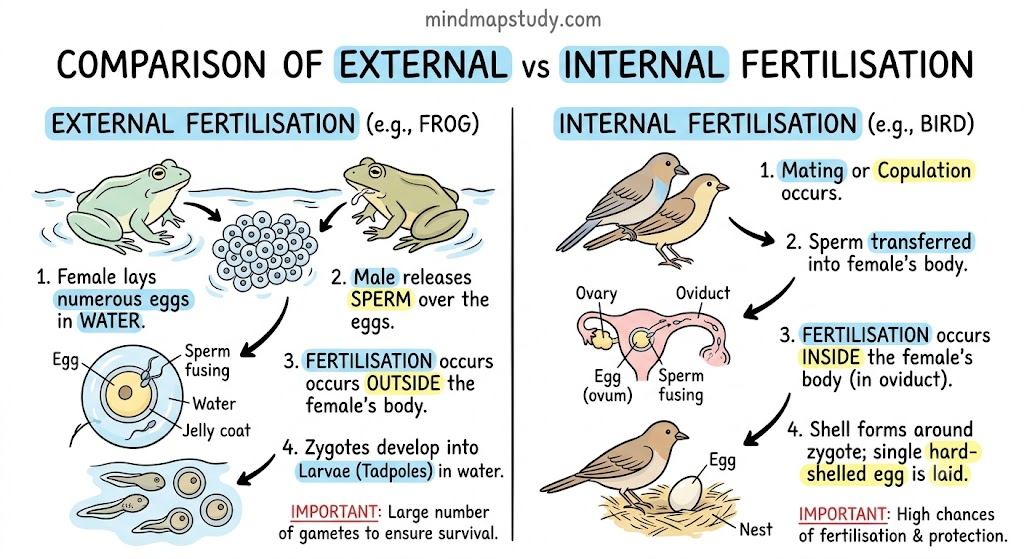
- External fertilisation — in many aquatic animals (frogs, most fish), eggs and sperm are released into water and fertilisation occurs outside the body. Large numbers of eggs are laid, but many are destroyed or eaten.
- Internal fertilisation — in reptiles, birds, and mammals, fertilisation occurs inside the female body. Chances of survival are generally higher since the fertilised egg or embryo is more protected.
4.2 Variation in Reproductive Strategies Among Animals
| Animal | Habitat | Mode of Fertilisation | Number of Eggs | Estimated Survival |
|---|---|---|---|---|
| Fish | Water | External | 100s – 1000s | Low |
| Frog | Water/Land | External | 5,000 – 50,000 | Low |
| Lizard | Land | Internal | 2 – 20 | Moderate |
| Bird | Water/Land | Internal | 1 – 15 | Moderate to High |
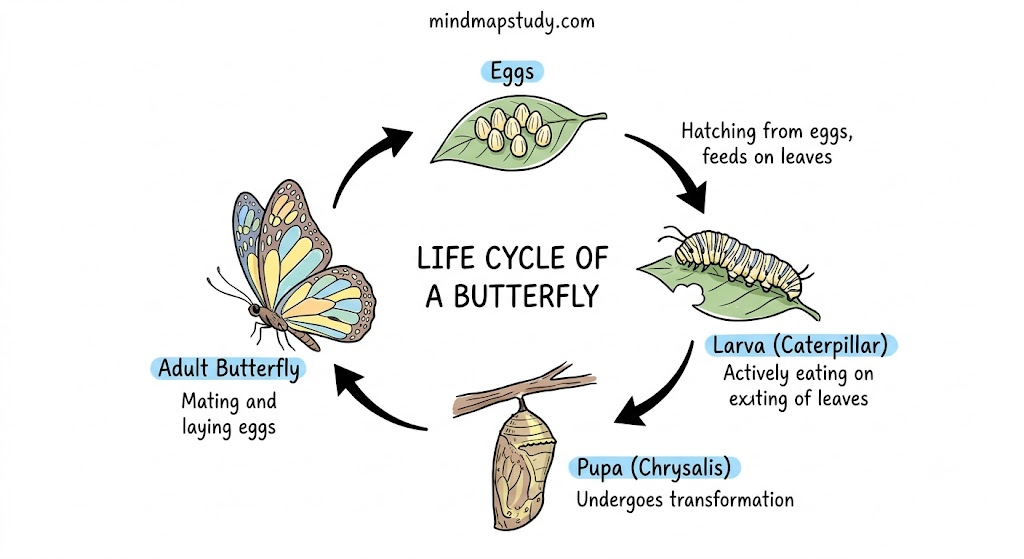
Fish, amphibians, and insects produce many eggs. The yolk in each egg is just enough to produce a larva, which then feeds on organic waste to grow. Once enough nutrition is accumulated, a transformation occurs and the adult body is formed — as seen in the butterfly life cycle (egg → larva → pupa → adult).
Reptiles and birds lay eggs with enough yolk to nourish the embryo until hatching. In mammals, the zygote grows inside the female body.
5. Reproduction in Human Beings
5.1 Reproductive Maturity
As a child grows into an adult, reproductive organs mature and begin producing gametes — sperm in males and eggs in females. When a sperm meets an egg inside the female body, they form a zygote that develops into an embryo and eventually into a foetus in the uterus.
5.2 Male Reproductive System
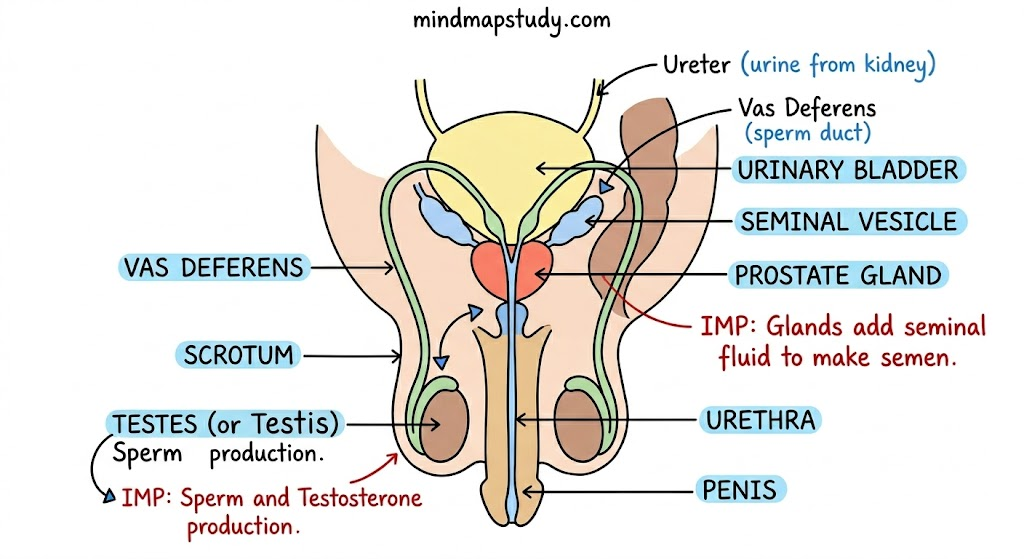
The male reproductive system produces sperm and transfers them to the female body.
- Testes — two oval-shaped organs in a skin pouch called the scrotum. The scrotum keeps testes slightly cooler than body temperature, which is necessary for sperm formation. Testes also produce hormones that control sperm production and cause physical changes in boys during puberty.
- Vas deferens — a long tube through which sperm travel from the testes; opens into the urethra.
- Urethra — a common passage for urine and sperm.
- Seminal vesicles and prostate — add fluids to nourish the sperm and keep them active.
- Each sperm has a head (containing genetic material) and a long tail (for swimming).
5.3 Female Reproductive System
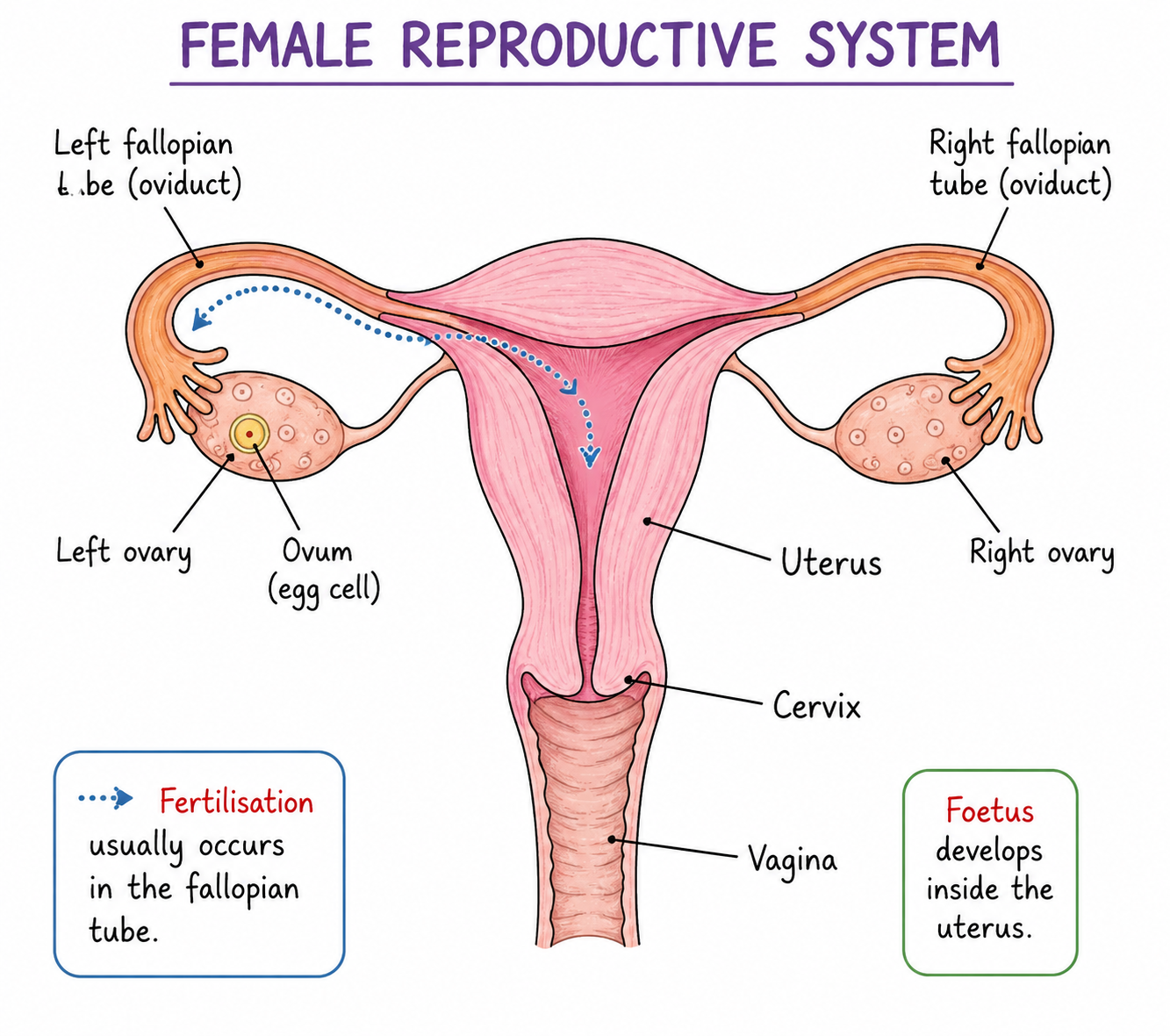
The female reproductive system consists of:
- Ovaries — a pair of organs that produce eggs and hormones. Hormones bring about puberty changes.
- Oviducts (Fallopian tubes) — connect each ovary to the uterus.
- Uterus — a bag-like structure where the foetus develops.
- Cervix — a narrow passage connecting the uterus to the vagina.
- Vagina — the birth canal.
5.4 Gametogenesis — How Reproductive Cells Are Made
The formation of gametes is called gametogenesis, and it takes place in the testes and ovaries through meiosis.
| Feature | Sperm | Egg |
|---|---|---|
| Size | Very small | Large |
| Number produced | Millions | Few |
| Stored nutrients | Absent | Present |
| Motility | Actively motile | Non-motile |
In humans, cells have 46 chromosomes, but sperm and eggs each have only 23, so when they combine, the zygote has 46 chromosomes — same as the parents.
5.5 Fertilisation — When Sperm Meets Egg
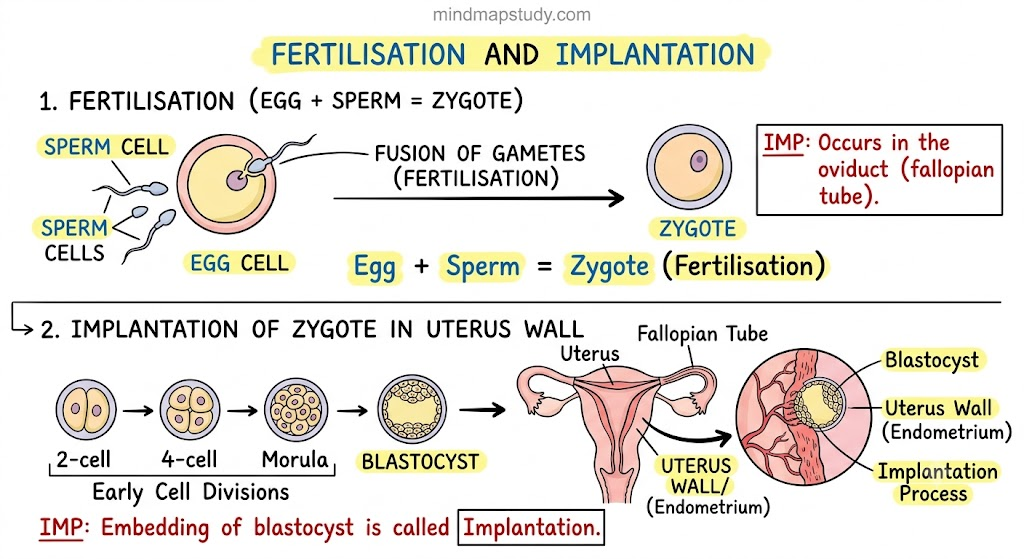
From puberty onwards, usually one mature egg is released every month from one of the ovaries — this is called ovulation. Before ovulation, the uterus lining thickens to prepare for a possible pregnancy.
The egg travels to the oviduct. During sexual intercourse, millions of sperm swim through the reproductive tract and may reach the egg. When a sperm fuses with the egg, a zygote is formed. The zygote undergoes mitotic divisions while travelling to the uterus, and implants into the thickened uterus lining. This implantation marks the beginning of pregnancy.
5.6 Menstruation — When Egg Is Not Fertilised
If the egg is not fertilised, it degenerates after about a day. The thickened uterus lining, which is no longer needed, sheds along with some blood through the vagina. This process is called menstruation (or a period) and usually lasts 3 to 7 days.
The complete cycle — ovulation, uterine preparation, and menstruation — repeats typically every 21 to 35 days (usually about 28 days). It begins at puberty (ages 10–14) and continues till menopause (around age 50).
Key stages of the 28-day menstrual cycle:
| Days | Event |
|---|---|
| Day 1 – 5 | Menstruation — shedding of uterine lining |
| Day 6 – 14 | Uterine lining rebuilds; egg matures in ovary |
| Day 14 | Ovulation — ovary releases a mature egg |
| Day 15 – 28 | Uterine lining thickens; if no fertilisation, breakdown starts around day 28 |
What determines a baby’s biological sex? Every person has two sex chromosomes. Females have XX and males have XY chromosomes. The mother always contributes an X chromosome. The father contributes either X (resulting in a female: XX) or Y (resulting in a male: XY). So the father’s contribution determines the biological sex of the baby.
5.7 Pregnancy and Childbirth
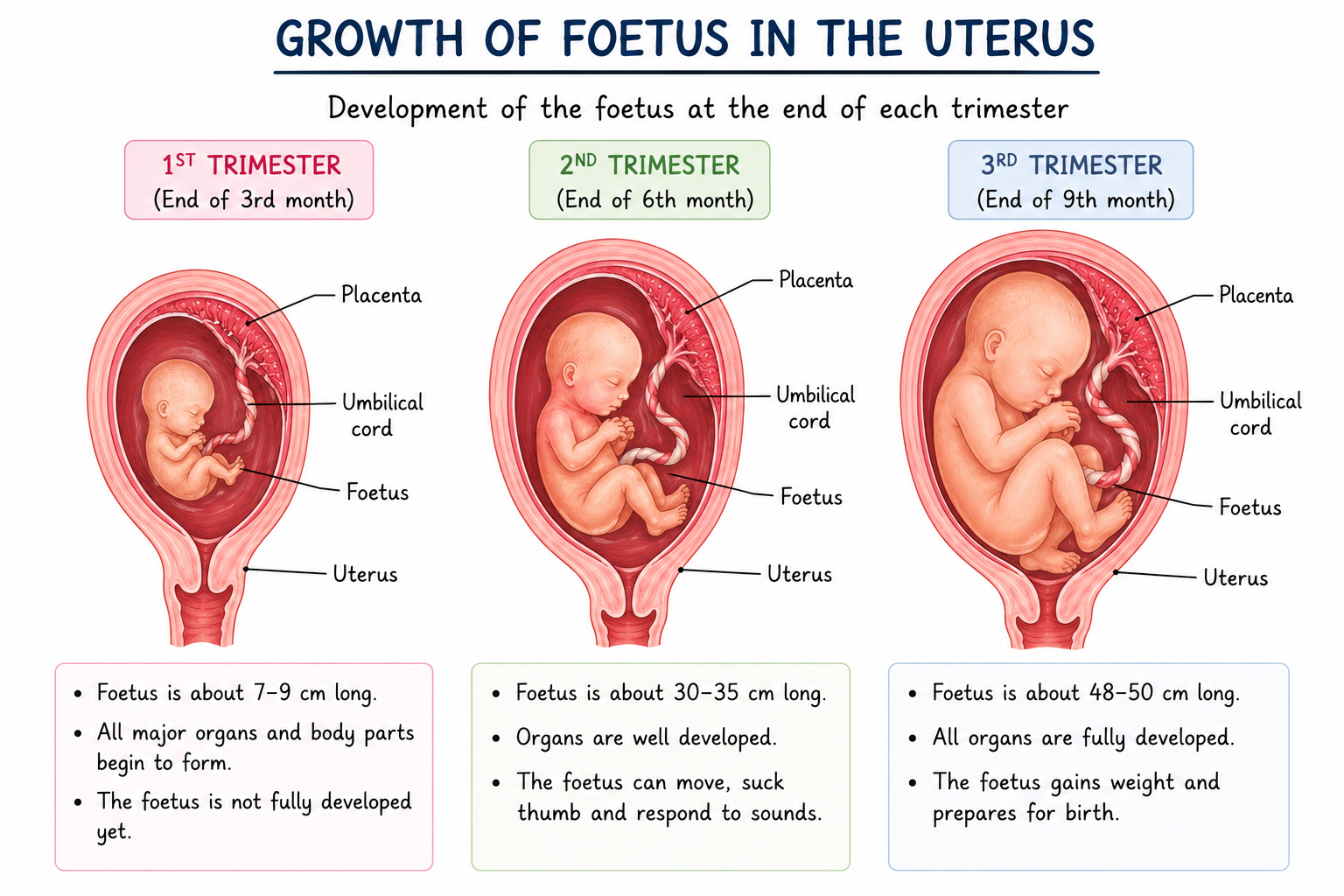
Pregnancy in humans lasts about nine months and is divided into three trimesters:
| Trimester | Period | Imp Events |
|---|---|---|
| First trimester | Months 1 – 3 | Fertilised egg → embryo; major organs start forming; from week 9, called foetus |
| Second trimester | Months 4 – 6 | Foetus grows bigger and stronger; mother can feel movements |
| Third trimester | Months 7 – 9 | Baby grows rapidly; gets ready for life outside the womb |
During childbirth, strong contractions of the uterus muscles push the foetus out through the birth canal. In some cases, medical or surgical procedures are used for safe delivery.
After birth, breastfeeding is essential — a mother’s milk provides complete nutrition and protects the infant from many diseases.
5.8 Mother’s Health During Pregnancy
A pregnant woman should:
- Eat a balanced diet rich in proteins, vitamins, and minerals.
- Attend regular medical check-ups.
- Follow doctor’s advice on light exercise and rest.
- Avoid smoking, alcohol, and medicines without medical advice.
- Maintain emotional well-being with family support.
Some mothers experience post-partum depression (anxiety and fatigue after delivery) — a recognised and treatable condition. Mothers should be encouraged to speak to a healthcare worker if they feel low or overwhelmed.
5.9 Sexual Maturity
Sexual maturity (sperm production in boys; menstrual cycles in girls) happens gradually during adolescence, but emotional maturity takes longer. Being emotionally mature means handling feelings, communicating clearly, and making thoughtful decisions. Physical readiness for reproduction does not equal readiness for adult responsibilities.
5.10 Preventing Unwanted Pregnancies and Infections
Infections transmitted through close physical contact are called Sexually Transmitted Infections (STIs) — these include gonorrhoea, herpes, syphilis, genital warts, and HIV (which can lead to AIDS). Some STIs are not yet curable. Condoms can prevent transmission of STIs and also help prevent pregnancy.
Contraceptive methods:
| Method | How It Works | Imp Notes |
|---|---|---|
| Condoms / vaginal covers (barrier) | Stop sperm from reaching the egg | Also prevents STIs |
| Oral contraceptive pills | Alter hormones to prevent egg release | May have side effects |
| Intra-Uterine Device (IUD/Copper-T) | Placed in uterus to prevent pregnancy | May sometimes irritate uterus |
| Surgical methods | Block vas deferens (male) or fallopian tubes (female) | Permanent/long-term |
| Abortion | Surgical removal of embryo (usually first trimester only) | Strictly regulated |
Prenatal sex determination is strictly prohibited by law in India to prevent sex-selective abortions and to maintain a healthy sex ratio in society.
Indian scientists at the Central Drug Research Institute, Lucknow, developed the world’s first non-steroidal, non-hormonal oral contraceptive pill — taken once weekly with no side effects like weight gain or nausea. It is provided free through the National Family Planning Programme.
6. Exercise Solutions (Revise, Reflect, Refine)
Q1. A flower’s anthers are removed before it matures. Later, pollen from another plant of the same species is dusted onto its stigma and seeds are produced. Which process has been ensured here?
Answer: (ii) Cross-pollination. Since pollen from one plant has been transferred to the stigma of a different plant of the same species, this is cross-pollination. Removing the anthers before maturity ensures the flower cannot self-pollinate, and the manual transfer of pollen from another plant is a standard technique in artificial hybridisation.
Q2. Arrange the following stages of sexual reproduction in plants in the correct order: (i) Pollen germination on stigma (ii) Fertilisation (iii) Pollination (iv) Formation of zygote
Answer: The correct order is:
(iii) Pollination → (i) Pollen germination on stigma → (ii) Fertilisation → (iv) Formation of zygote
Explanation: First, pollen is transferred to the stigma (pollination). The pollen then germinates and forms a pollen tube (germination on stigma). The male gamete travels through the tube to fuse with the egg cell (fertilisation), producing the fertilised egg (zygote).
Q3. Assertion (A): The zygote formed after fertilisation immediately attaches to the uterus wall. Reason (R): The uterus wall is always prepared to receive the zygote.
Answer: (iii) A is true, but R is false.
Explanation: The zygote does not immediately attach to the uterus wall. It first undergoes several mitotic divisions while travelling from the oviduct to the uterus, and then implants. Also, the uterus wall is not always prepared — it thickens only during the specific phase of the menstrual cycle in preparation for implantation.
Q4. Why does asexual reproduction produce offspring that are genetically identical to the parent?
Answer: Asexual reproduction involves only one parent and the central process is mitosis — a type of cell division in which daughter cells receive an exact copy of the parent’s chromosomes. Since there is no mixing of genetic material from two individuals and no meiosis involved, the offspring are genetically identical to the parent. These genetically identical individuals are called clones. Examples include budding in hydra, vegetative propagation in plants, and spore formation in fungi.
Q5. Explain why the menstrual cycle stops during pregnancy.
Answer: The menstrual cycle involves a sequence of events — uterine lining thickening, ovulation, and if fertilisation does not occur, shedding of the uterine lining (menstruation). When fertilisation does occur, the zygote implants into the thickened uterine lining. The body recognises the pregnancy and hormonal signals prevent the next ovulation and stop the shedding of the uterine lining. The lining is needed to nourish and support the developing embryo/foetus throughout the nine-month pregnancy. Since there is no shedding, menstruation stops completely during pregnancy.
Q6. Why are flowers that bloom at night white or light in colour compared to flowers that bloom during the day?
Answer: Flowers that bloom at night are pollinated mainly by moths and bats, which are active at night. These pollinators cannot see colours well in darkness, but they can detect pale or white flowers more easily because white and light colours reflect moonlight and starlight, making the flowers more visible in low-light conditions. Colour vision is not useful at night, so bright colours would serve no purpose. In contrast, daytime flowers use bright colours (yellow, red, orange, blue) to attract bees, butterflies, and birds that have good colour vision in daylight.
Q7. Why do vegetatively propagated plants tend to be more vulnerable to diseases than sexually reproduced plants?
Answer: Vegetative propagation produces genetically identical individuals (clones) because only one parent is involved and mitosis is the basis of reproduction. If a parent plant carries a genetic susceptibility to a particular disease or pest, all its clones will carry the same susceptibility. There is no genetic variation among the offspring. When a disease or pest attacks, it can wipe out the entire population because none of the individuals have the genetic variation needed to resist it. In contrast, sexually reproduced plants inherit a mix of characteristics from two parents, creating genetic variation. Some individuals in the population may carry genes that make them resistant, improving the overall chance of survival.
Q8. If all flowers in a type of plant were only capable of self-pollination, how would it affect genetic diversity over several generations? Explain.
Answer: If all flowers could only self-pollinate, pollen from a plant would always fertilise eggs of the same plant. This means the same set of chromosomes and genetic combinations would be passed on repeatedly across generations. Over time, genetic diversity would decrease significantly because there would be no new combinations of genetic material from different individual plants. With reduced variation:
- The population would become increasingly uniform in traits.
- The plants would be less able to adapt to environmental changes such as new diseases, pests, or climate shifts.
- The chances of evolution and the development of new beneficial traits would be greatly reduced.
This is why cross-pollination is favoured in nature — it promotes genetic diversity, which is essential for the long-term survival and adaptability of a species.
Q9. A farmer wants to produce a large number of genetically identical plants quickly. Suggest suitable reproduction methods and explain why they are effective.
Answer: The farmer should use asexual/vegetative propagation methods. The most suitable are:
1. Cutting: Stem cuttings are taken from a desirable parent plant and planted in soil. Each cutting grows into a new plant with the same genetic make-up as the parent. It is fast and economical.
2. Grafting: A stem piece from a desirable plant is joined onto a rooted stock plant. This preserves the genetic characteristics of the desired variety while using the established root system of another plant for rapid growth.
3. Tissue Culture: Shoot tips (apical meristem cells) from a single parent plant are grown in a sterile laboratory medium. This produces thousands of genetically identical plantlets from a very small amount of parent tissue in a short time. It is especially useful for mass production of disease-free plants.
These methods are effective because they involve only one parent, rely on mitosis (producing exact genetic copies), do not require seeds, and allow rapid multiplication of plants with desired traits on a large scale.
Q10. Suresh prepares slides with pollen grains in different sugar concentrations (0%, 2.5%, 5%, 7.5%, 10%) to study the germination of pollen.
(i) What are the different hypotheses which can be tested using this set-up?
Answer: The following hypotheses can be tested:
- Higher sugar concentration promotes pollen germination and pollen tube growth.
- There is an optimal sugar concentration at which pollen germination is maximum.
- Very high sugar concentrations (beyond a certain level) may inhibit pollen germination due to osmotic stress.
- Pollen tubes are longer at intermediate sugar concentrations than at very low or very high concentrations.
(ii) What parameters should be kept the same in this set-up?
Answer: The following parameters (control variables) must be kept constant:
- The species of pollen used (same plant/same variety).
- The number of pollen grains placed on each slide.
- Temperature at which slides are kept.
- Duration of observation (same time period for all).
- Humidity/moisture conditions.
- The type of microscope and magnification used for observation.
Q11. Look at the pictures and find out which type(s) of pollination might have been followed in Tomato, Wheat, and Papaya.
| Plant | Clue Given | Type of Pollination |
|---|---|---|
| Tomato | Stamens cover the stigma | Self-pollination — because the anthers physically surround and cover the stigma, pollen naturally falls on the stigma of the same flower. |
| Wheat | Flowers open after pollination | Self-pollination — because the flowers open only after pollination has already occurred (cleistogamy). |
| Papaya | Male and female flowers are on different trees | Cross-pollination — since male and female flowers are on separate trees, pollen must be carried from one tree to another (by wind or insects). This is called dioecy. |
Q12. Apple orchard experiment — natural pollinators (Place A) vs. beekeeping (Place B).
(i) What are the hypotheses the researcher-farmer group has thought of for this investigation?
Answer:
- Introducing bee colonies (managed pollination) will increase fruit setting in apple orchards compared to natural pollination alone.
- Bee-assisted pollination will reduce premature fruit drop compared to natural pollination.
- The decline in natural pollinator populations is a significant cause of reduced apple yield in the Himalayan region.
- Managed beekeeping as a supplementary pollination strategy can compensate for the loss of natural pollinators and improve yield.
(ii) What are the different parameters in the experiment?
Answer:
- Independent variable: Mode of pollination — natural pollinators only (Place A) vs. natural pollinators with managed bee colony (Place B).
- Dependent variables: Fruit setting (%) and fruit drop (%).
- Control variables: Same apple variety, same location conditions as far as possible, same observation period, same methods of counting fruits and branches.
(iii) Compare and analyse the data of the two experimental orchards in terms of high yields of apple fruits.
Answer: From the bar graph:
- Place B (with bee colony) shows a higher fruit setting percentage than Place A (natural pollination only).
- Place B shows a lower fruit drop percentage compared to Place A.
- This means that orchards with managed beekeeping had more fruits successfully developing to maturity and fewer premature fruit drops.
This indicates that Place B has a significantly better apple yield compared to Place A.
(iv) Based on your analysis, what do you infer from the data?
Answer: The data clearly shows that managed beekeeping alongside natural pollination significantly improves apple yield. With the declining population of natural pollinators due to climate change, relying solely on natural pollination is insufficient. Introducing bee colonies ensures better and more reliable pollination, resulting in higher fruit setting and lower fruit drop. Mixed farming that combines beekeeping with apple cultivation is therefore an effective and sustainable strategy to maintain and improve apple production in the lower Himalayan region. Additionally, beekeeping provides honey as an additional source of income for farmers.
Q13. A student claims, “In humans, ovulation always happens on day 14 of the menstrual cycle.” Critically examine this claim.
Answer: The claim is not entirely correct. While day 14 is the approximate average for a standard 28-day cycle, it is not a fixed rule. Here are two reasons:
Reason 1 — Cycle length varies: The menstrual cycle typically ranges from 21 to 35 days, not always exactly 28 days. Ovulation generally occurs around the middle of the cycle, meaning in a 21-day cycle it may occur around day 7–10, and in a 35-day cycle it may occur around day 17–21. Day 14 is only valid for a textbook 28-day cycle.
Reason 2 — Ovulation is influenced by several factors: Stress, illness, nutritional status, hormonal imbalances, and other physiological factors can cause the timing of ovulation to shift within the same individual from cycle to cycle. It is therefore not accurate to say ovulation “always” happens on day 14 even in the same person.
The correct statement would be: ovulation typically occurs around the midpoint of the individual’s cycle, which is approximately day 14 only in a standard 28-day cycle.