
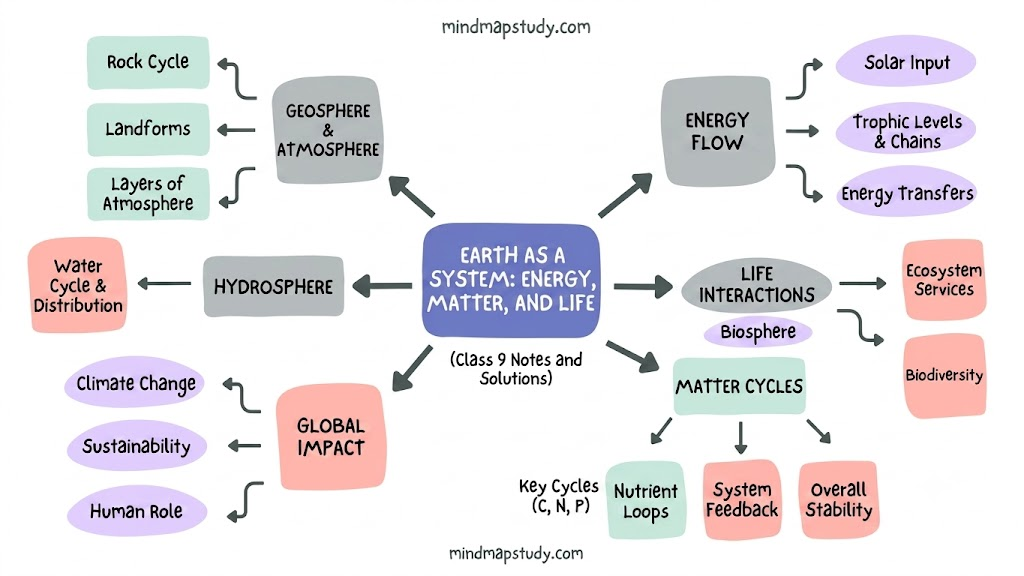
What is the Earth System?
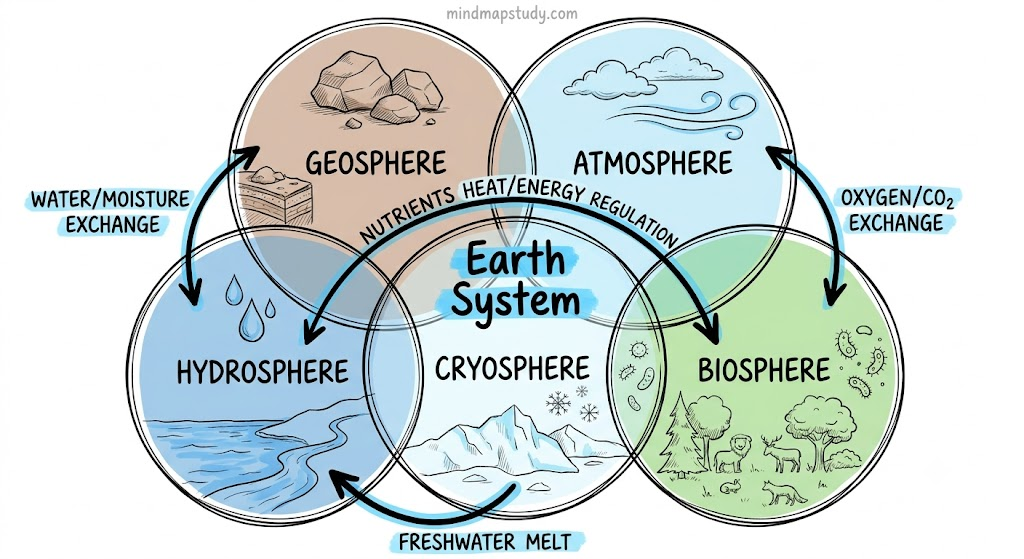
Life on Earth runs on a constant flow of energy and matter. The Sun is the primary energy source, but Earth’s hot interior and chemical reactions in air, water, and rocks also drive these flows. To truly understand our planet, scientists think of it as one interconnected Earth system made of five interacting spheres:
| Sphere | What it includes |
|---|---|
| Geosphere | Solid rocks, soil, landforms like the Deccan Plateau and Thar Desert, Earth’s interior |
| Hydrosphere | Liquid water — oceans, rivers like the Ganga-Brahmaputra system, lakes, groundwater |
| Cryosphere | Solid water — Himalayan glaciers, snow in Ladakh, polar ice caps |
| Atmosphere | The air surrounding Earth that we breathe |
| Biosphere | All living organisms and their habitats — mangroves, forests, ocean plankton, coral reefs |
A change in any one sphere can trigger changes in all the others. For example, warmer Arabian Sea water leads to more evaporation, causing fluctuations in the southwest monsoon. At the same time, rising atmospheric temperatures accelerate glacier and polar ice melting in the cryosphere, threatening low-lying coastal cities and causing habitat loss in the biosphere.
1. Uneven Heating of the Earth
1.1 Solar Radiation and the Electromagnetic Spectrum
Solar radiation is Earth’s main energy source. It arrives as electromagnetic (EM) waves that travel through vacuum at the speed of light (3 × 10⁸ m/s). EM waves span a wide range — from high-frequency, short-wavelength gamma rays and X-rays, to low-frequency, long-wavelength infrared and radio waves.
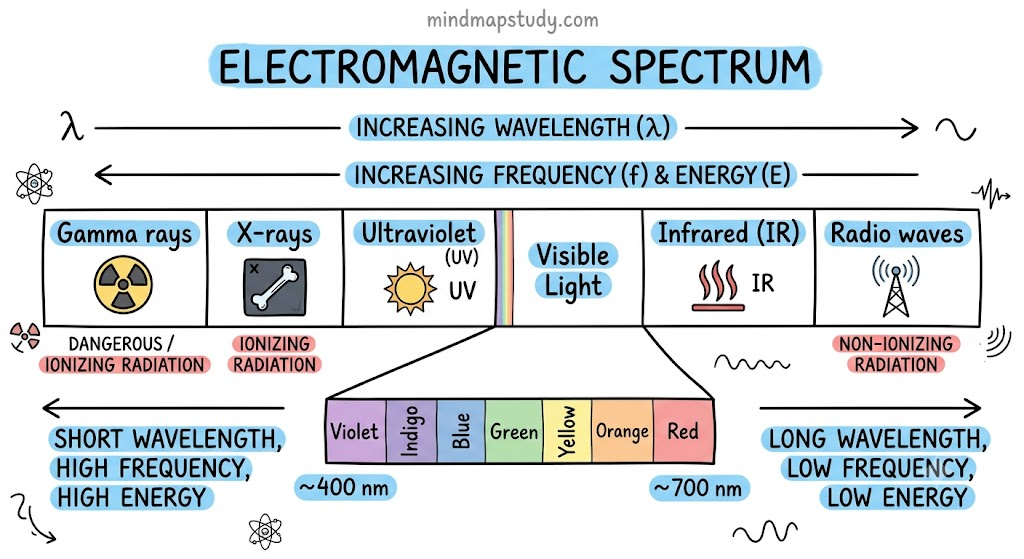
About 99% of solar energy reaching Earth falls in three regions:
- Ultraviolet (UV) radiation — mostly absorbed by the ozone layer in the upper atmosphere; protects life and contributes to atmospheric heating
- Visible light — reaches Earth’s surface; powers photosynthesis, the primary food source for most organisms; partly warms land and water
- Infrared (IR) radiation — warms Earth’s surface, which re-radiates this heat into the atmosphere; a portion is trapped by greenhouse gases (CO₂, CH₄, water vapour), keeping Earth warm enough for life
Gamma rays and X-rays are filtered by the upper atmosphere. Microwaves and radio waves carry too little energy to significantly warm Earth.
Imp term — Insolation: The amount of solar radiation reaching Earth’s surface is called insolation.
Imp term — Solar Constant: The average solar energy received per unit time per unit area perpendicular to the Sun’s rays at the top of Earth’s atmosphere. Its value is approximately 1.4 kWm⁻² (or 1400 J s⁻¹ m⁻²).
Due to atmospheric absorption and scattering by gases, clouds, and dust, the maximum insolation actually reaching Earth’s surface is about 1 kWm⁻² under clear sky conditions.
India, located in tropical and subtropical regions, receives abundant sunlight year-round. This drives the southwest monsoon, influences agriculture, and offers immense solar energy potential.
1.2 Interaction of Solar Radiation on Earth’s Surface
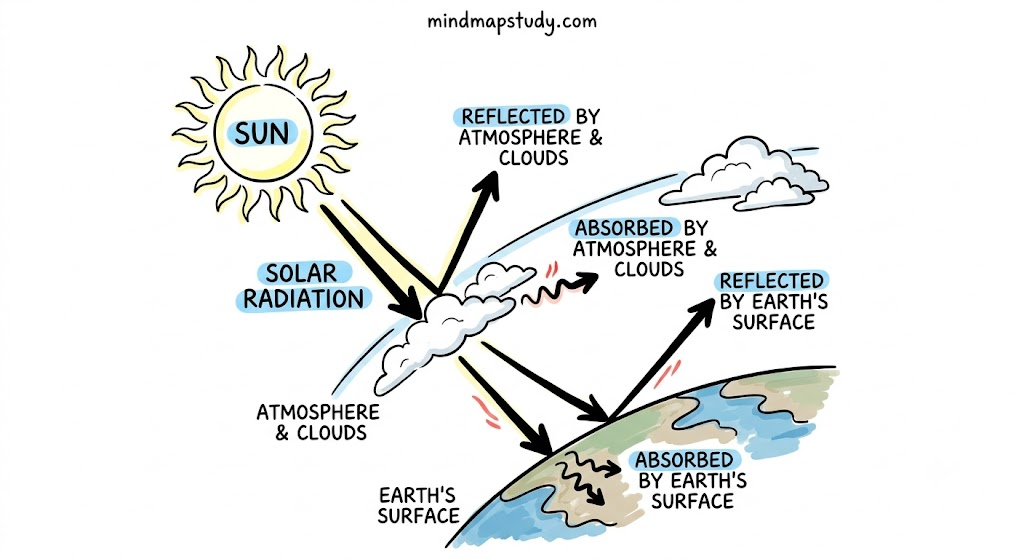
Different surfaces absorb and reflect sunlight differently.
- Dark surfaces absorb more sunlight and heat up faster
- Light-coloured surfaces reflect more and remain cooler
The fraction of solar radiation reflected by a surface is called its albedo (from Latin, meaning “whiteness”).
| Surface | Albedo |
|---|---|
| Snow | 0.80 – 0.90 |
| Ice | 0.50 – 0.70 |
| Crushed rock | 0.25 – 0.30 |
| Light-coloured soil | ~0.25 – 0.45 |
| Black soil | ~0.08 – 0.15 |
| Ocean water | ~0.06 – 0.10 |
Snow and ice have high albedo — they reflect most incoming radiation, making polar regions very cold. Black soil and ocean water have low albedo — they absorb more radiation and are relatively warmer.
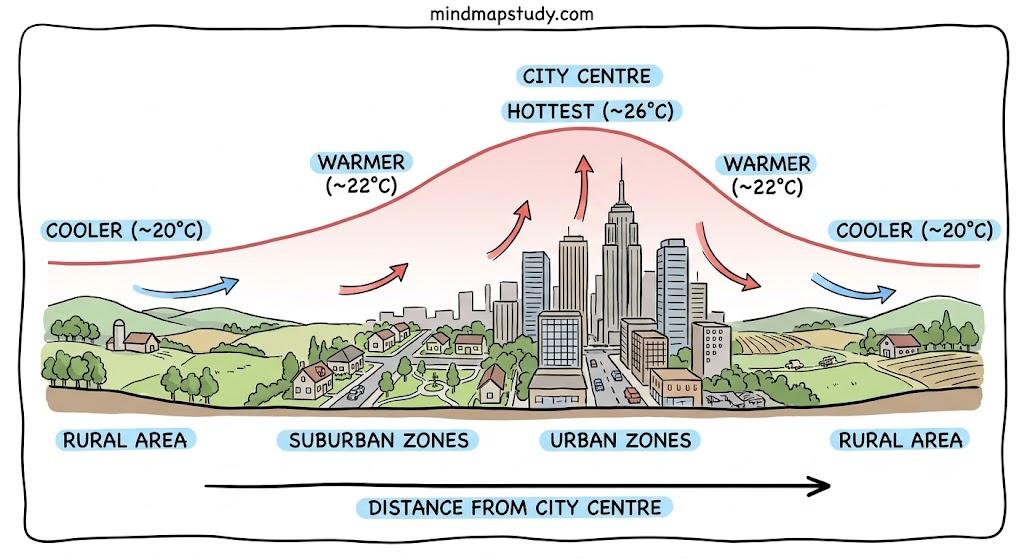
Urban Heat Island Effect: Cities are warmer than surrounding rural areas because buildings made of steel, concrete, and asphalt absorb solar radiation and re-radiate heat. Rural areas and forests stay cooler through shade and plant transpiration. This shows how human land use can alter local climate.
1.3 Latitude and Earth’s Shape
Because Earth is spherical, the Sun’s rays strike different latitudes at different angles.
- At the equator, solar radiation is concentrated over a smaller area — equatorial regions stay relatively warm throughout the year
- At the poles, the same solar energy is spread over a much larger area — polar regions experience much colder conditions
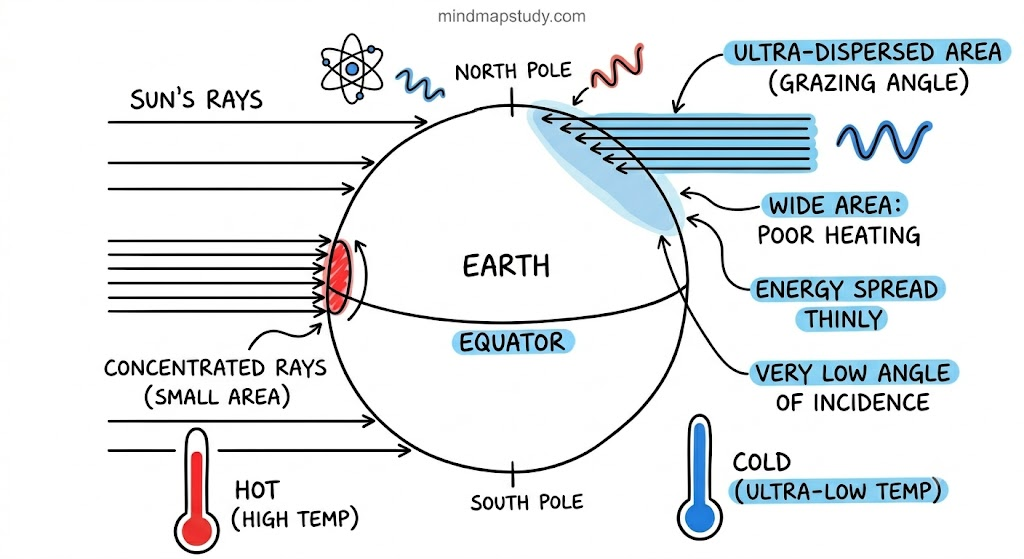
Earth’s spherical shape, combined with the tilt of its rotation axis, also explains seasons and varying day lengths. This uneven heating across the globe drives global winds and ocean currents.
1.4 Role of the Atmosphere
The atmosphere consists mainly of nitrogen (78%) and oxygen (21%), with small amounts of argon, carbon dioxide, water vapour, and other gases.
Atmospheric Layers:
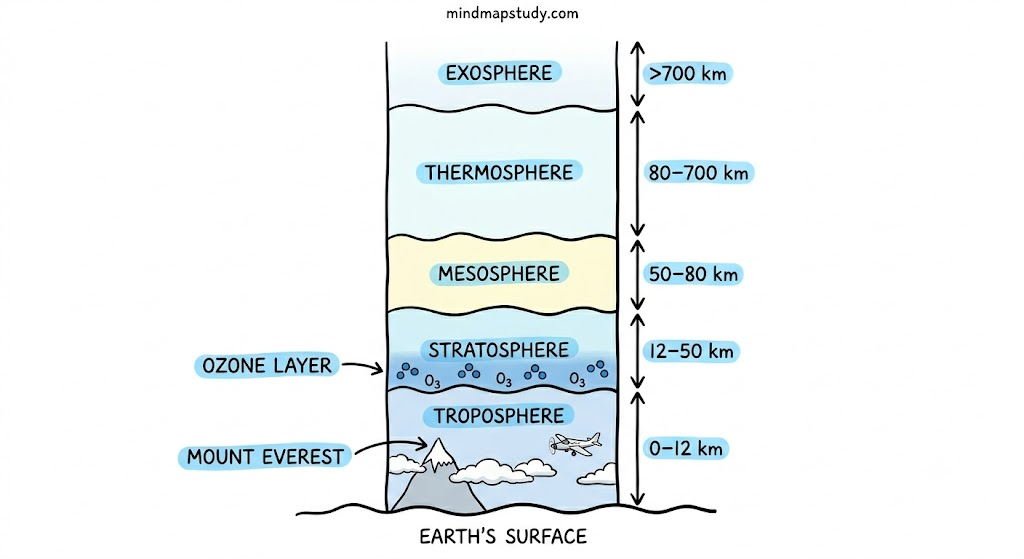
| Layer | Approximate Altitude | Features |
|---|---|---|
| Troposphere | 0 – 12 km | All weather phenomena occur here; temperature decreases with height (~6.5°C/km) |
| Stratosphere | 12 – 50 km | Ozone layer absorbs UV rays; temperature increases with height |
The atmosphere plays two crucial roles in protecting life:
- Absorbs incoming solar radiation — the ozone layer blocks harmful UV rays; clouds and gases absorb some sunlight before it reaches the surface
- Traps outgoing heat — greenhouse gases (CO₂, CH₄, water vapour) absorb heat re-radiated by Earth’s surface, preventing it from escaping into space
Without the atmosphere, Earth would be too cold for life. However, excess CO₂ from human activities enhances the greenhouse effect, causing global warming.
2. Uneven Heating Causes Wind and Ocean Currents
2.1 Local Winds
Uneven heating of Earth’s surface produces local winds like valley breezes and mountain breezes.
Valley Breeze (Daytime):
- Mountain slopes facing the Sun heat up faster than the valley floor
- Warm air over slopes rises, creating low pressure
- Cooler air from the valley moves up the slopes to replace it
- This upslope flow is called a valley breeze
Mountain Breeze (Night-time):
- After sunset, mountain slopes cool faster than the valley floor
- Cooler, denser air over slopes flows downward into the valley
- This downslope flow is called a mountain breeze
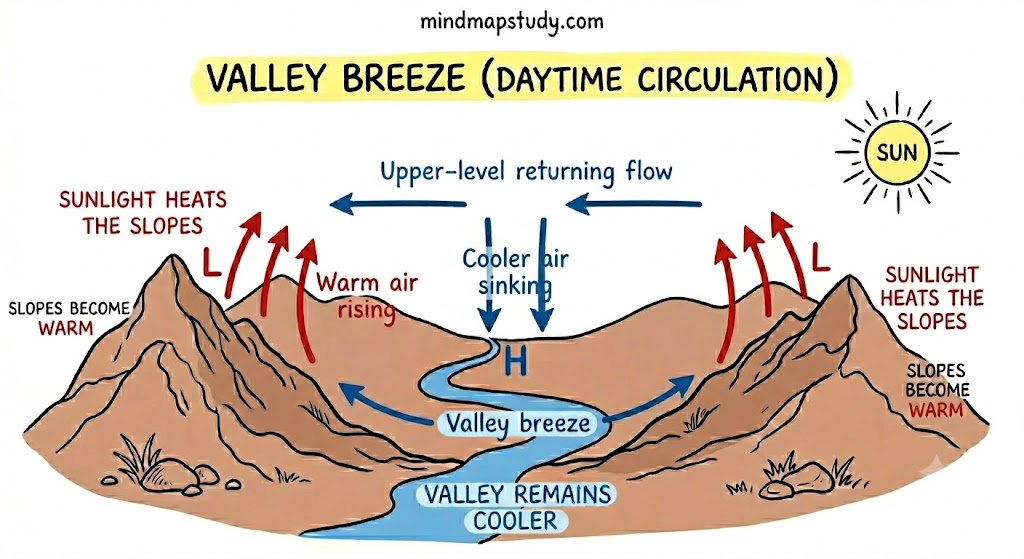
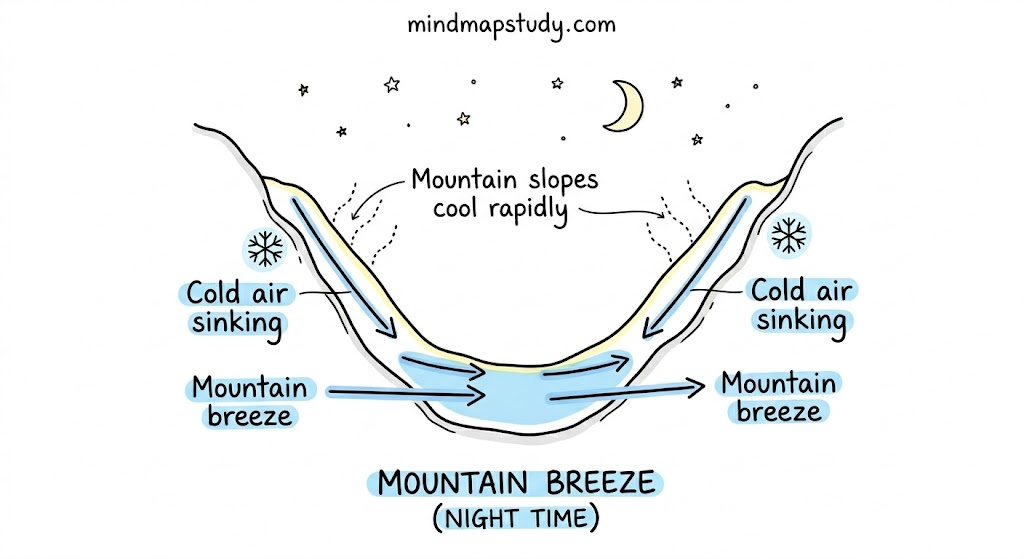
These local winds are commonly experienced in hilly regions like Shimla, Dehradun, and other Himalayan valleys. They influence weather, agriculture, and daily life.
2.2 Planetary Winds
Uneven heating between the equator and poles creates large belts of low and high pressure, driving planetary winds over long distances.
- Near the equator: intense solar heating causes warm air to rise, forming an equatorial low pressure belt
- Rising air moves poleward at altitude; on cooling it sinks around 30° N and S, forming sub-tropical high pressure belts
- From sub-tropical belts, some air flows back to the equator; some moves poleward and rises around 60° N and S, forming sub-polar low pressure belts
- At the poles (90° N and S): cold, dense air sinks, forming polar high pressure belts
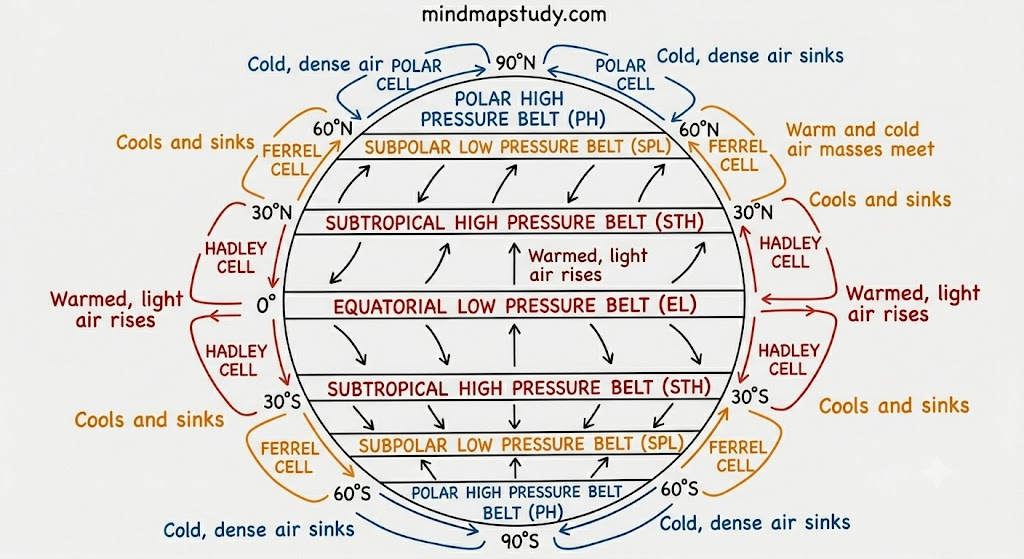
Earth’s rotation deflects these winds from straight paths — to the right in the Northern Hemisphere and to the left in the Southern Hemisphere.
2.3 Ocean Currents
Ocean currents are the continuous movement of large masses of ocean water. They are driven by:
- Planetary winds (create surface currents through friction)
- Temperature and salinity differences
- Earth’s rotation
- Distribution of landmasses
Warm equatorial surface water moves toward the poles; colder, denser water flows back toward the equator through deeper ocean levels. Water with higher salinity sinks and moves at deeper levels. Earth’s rotation deflects these moving water masses into large circular patterns called gyres — clockwise in the Northern Hemisphere, counter-clockwise in the Southern Hemisphere.
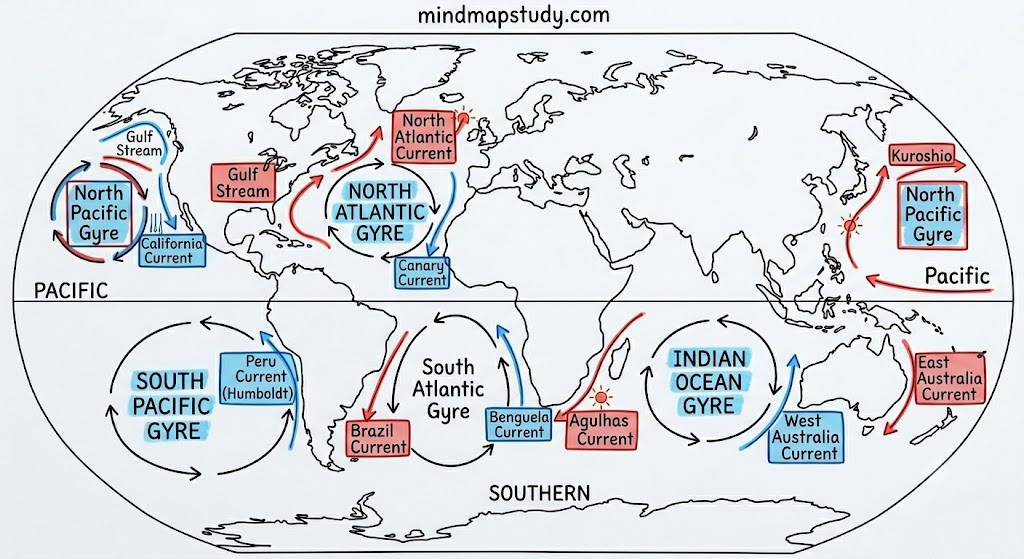
Role of Ocean Currents:
- Transport heat from the equator toward the poles, reducing global temperature differences
- The North Atlantic Drift (extension of the Gulf Stream) keeps northwestern European ports ice-free in winter
- Support massive ecosystems by transporting nutrients
3. Biogeochemical Cycles
Living organisms constantly exchange matter and energy with air, water, soil, and rocks. This cyclic movement of matter and energy between biotic (living) and abiotic (non-living) components is called the biogeochemical cycle. It ensures essential nutrients — carbon, nitrogen, oxygen — are recycled and remain available to support life.
3.1 Water Cycle
Water evaporates from water bodies, condenses to form clouds, and returns as precipitation (rain, hail, or snow). Some water infiltrates through soil and rock, becoming groundwater.
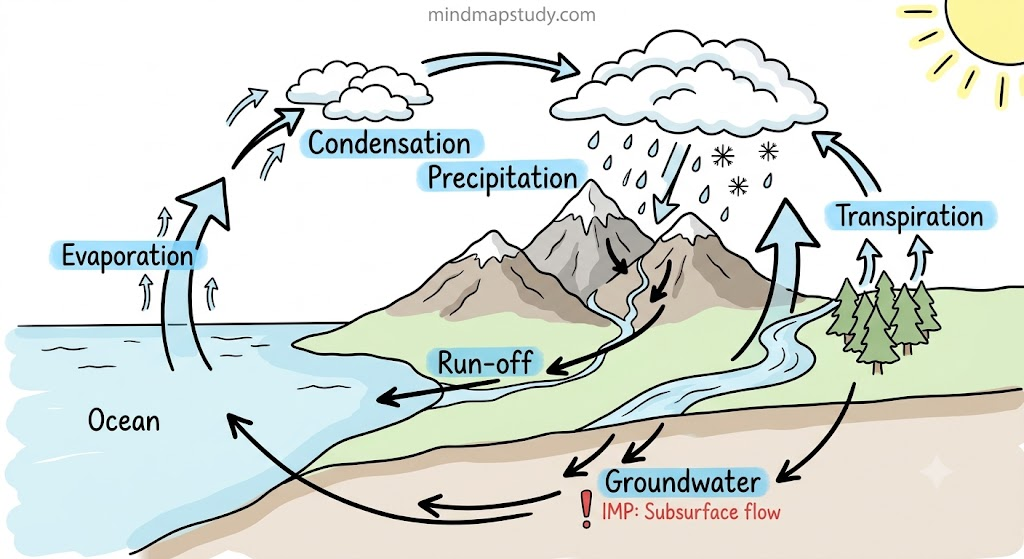
How climate change affects the water cycle:
- A warmer atmosphere holds more moisture — heavier rains in some areas (like intensified monsoons) and droughts elsewhere
- Melting glaciers add water to rivers, raising sea levels and threatening coastal cities like Mumbai and Chennai
- Intense rainfall causes more runoff, increasing soil erosion and reducing groundwater recharge
- This affects crops and fisheries
The water cycle links all five spheres — cryosphere (glaciers), hydrosphere (rivers, oceans), atmosphere (moisture), geosphere (soil erosion, infiltration), and biosphere (crops, fisheries).
3.2 Carbon Cycle
Carbon forms the backbone of life — every protein, carbohydrate, fat, and DNA molecule contains it. Carbon circulates between the atmosphere (CO₂ gas), biosphere (plants and animals), geosphere (carbonate rocks and fossil fuels), and hydrosphere (dissolved CO₂ and marine shells).
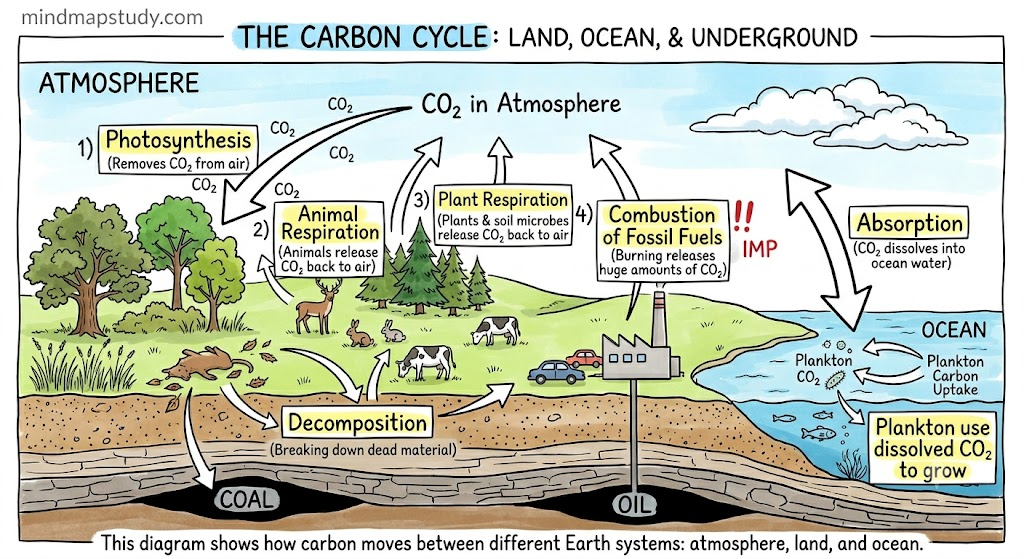
Fast Carbon Cycle (days to years):
- Plants convert atmospheric CO₂ to glucose via photosynthesis
- CO₂ returns to atmosphere through respiration and decomposition
Slow Carbon Cycle (millions of years):
- Dead organisms get buried, forming fossil fuels (coal, oil, gas)
- Burning fossil fuels releases stored carbon back as CO₂ very quickly
The ocean absorbs atmospheric CO₂, forming carbonate and bicarbonate ions used by phytoplankton and shell-forming marine organisms. When organisms die, their carbon is stored on the ocean floor for long periods.
Human Impact: Burning fossil fuels and deforestation have raised atmospheric CO₂ by about 35% since 1960 (from ~315 ppm to ~420 ppm). Excess CO₂ intensifies the greenhouse effect — leading to global warming, glacier and Arctic sea ice melting, rising sea levels, and more extreme weather. In India, this may intensify monsoons and threaten agriculture.
3.3 Nitrogen Cycle
Nitrogen is essential for synthesising proteins and nucleic acids. Although the atmosphere is the largest nitrogen reservoir (~78%), nitrogen gas (N₂) is non-reactive and cannot be used directly by plants and animals. It must first be converted to soluble compounds.
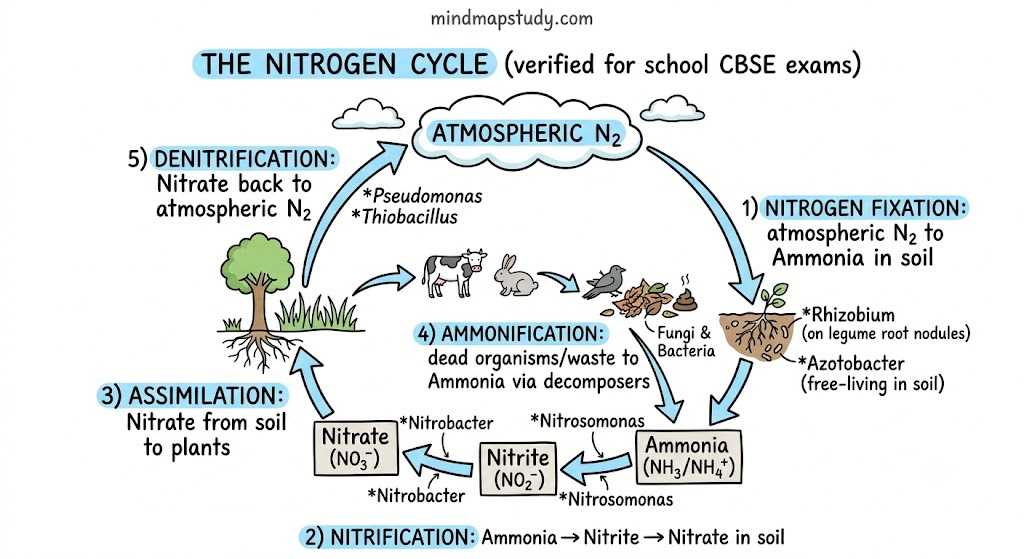
Steps of the Nitrogen Cycle:
| Process | Description | Organisms involved |
|---|---|---|
| Nitrogen fixation | Atmospheric N₂ → Ammonia (NH₃) | Rhizobium (legume roots), Azotobacter (soil) |
| Nitrification | NH₃ → Nitrite (NO₂⁻) → Nitrate (NO₃⁻) | Nitrosomonas, Nitrobacter |
| Assimilation | Plants absorb nitrates from soil; animals get nitrogen by eating plants/animals | Plants, animals |
| Ammonification | Dead organisms/waste → Ammonia returned to soil | Bacteria, fungi (decomposers) |
| Denitrification | Nitrates → N₂ gas released back to atmosphere | Pseudomonas |
Lightning also contributes to nitrogen fixation by producing nitrogen oxides.
3.4 Oxygen Cycle
Oxygen makes up about 21% of the atmosphere. It is an essential component of carbohydrates, proteins, nucleic acids, and fats. It also exists as metal oxides and minerals in Earth’s crust, and as CO₂ in air.
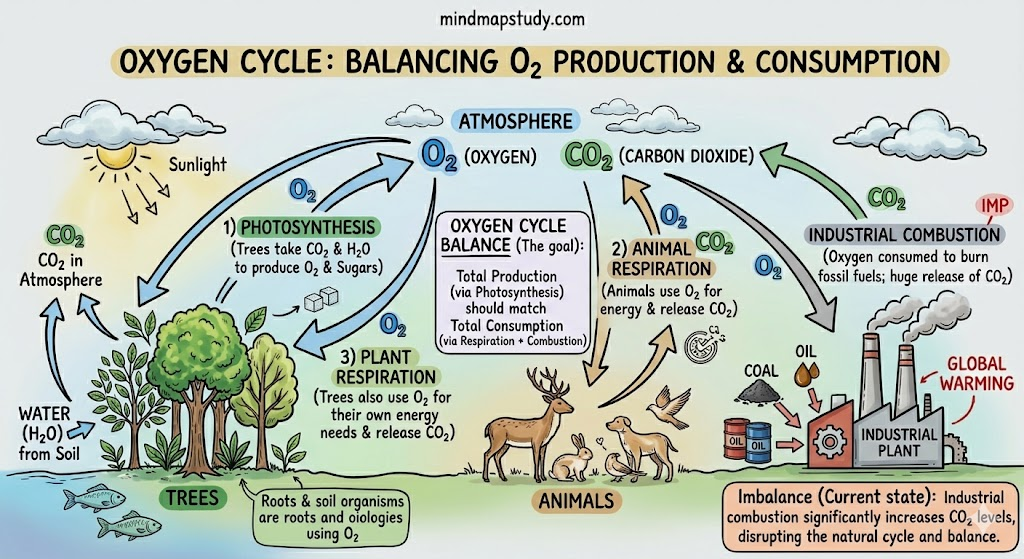
- Consumption of oxygen: Respiration (by plants and animals), combustion of fuels, formation of metal oxides
- Production of oxygen: Photosynthesis by plants — using sunlight, water, and CO₂ to produce glucose and release O₂
This balance between consumption and production circulates oxygen between the atmosphere, land, oceans, and living organisms, sustaining life across all spheres.
4. Human Impact on Earth’s Processes
Human activities are disrupting biogeochemical cycles across all of Earth’s spheres:
- Excess CO₂ from fossil fuels increases ocean absorption, making seawater more acidic — threatening plankton and coral reefs and disrupting marine ecosystems. Warmer ocean water also reduces the ocean’s capacity to absorb CO₂.
- Burning fossil fuels and deforestation saturate natural carbon sinks (forests and oceans), intensifying the greenhouse effect and global warming.
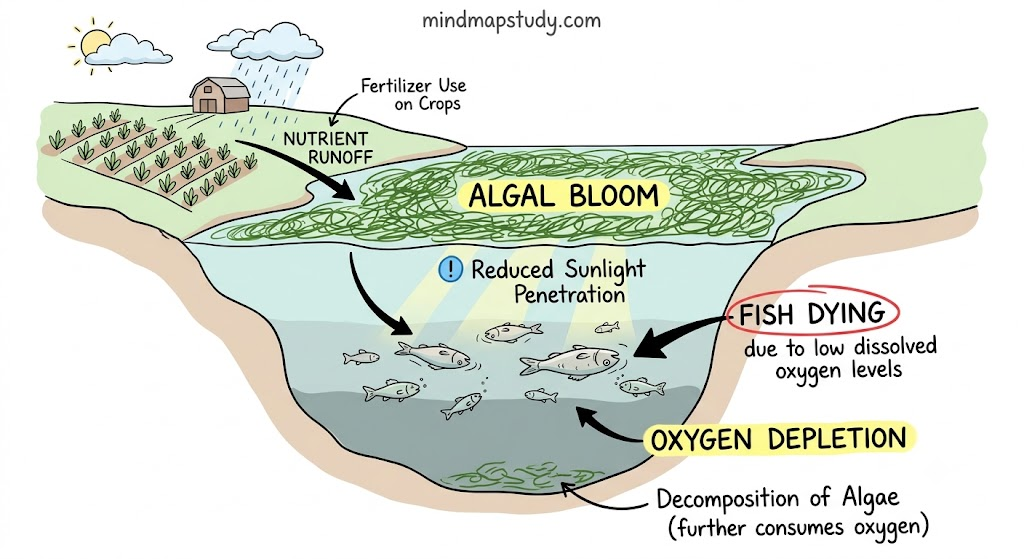
- Overuse of fertilisers adds excessive nitrogen via nitrates to rivers and lakes. This causes widespread algal growth — a process called eutrophication — which depletes oxygen and kills fish, threatening water bodies and coastal fisheries.
- Deforestation reduces photosynthesis and transpiration, decreasing local rainfall. It alters surface albedo, increases soil erosion (without tree roots holding soil), and destroys habitats, causing biodiversity loss.
- Vehicular emissions react with sunlight to form ground-level smog and ground-level ozone, making city air unhealthy (note: stratospheric ozone is protective; ground-level ozone is harmful).
Restoration Efforts:
- The Montreal Protocol has begun the recovery of the stratospheric ozone layer
- Conserving energy, switching to renewable sources (solar, wind), planting trees, saving water, and sustainable farming help restore balance
- India has planted billions of trees, expanded solar and renewable energy, and promoted sustainable farming
- Individuals can contribute by reducing waste, reusing, and recycling
Exercise Solutions
Q1. Choose the most appropriate option to describe the role of biogeochemical cycles in an ecosystem.
Answer: (ii) To recycle essential nutrients between biotic and abiotic components.
Biogeochemical cycles ensure that essential nutrients like carbon, nitrogen, and oxygen are continuously recycled between living organisms (biotic) and the non-living environment (abiotic — air, water, soil, rocks). They do not provide food directly, create new elements, or remove pollutants.
Q2. Which of the following is primarily responsible for warming of the Earth?
Answer: (iii) The Earth’s surface absorbs solar radiation, which is then re-radiated and trapped by greenhouse gases.
Visible and infrared solar radiation is absorbed by Earth’s surface, which then re-radiates it as infrared heat. Greenhouse gases — CO₂, CH₄, and water vapour — absorb this outgoing heat and prevent it from escaping into space, warming the planet.
Q3. Explain how climate change affects the water cycle. Illustrate with examples.
Answer:
Climate change alters the water cycle in several interconnected ways:
- More atmospheric moisture: A warmer atmosphere holds more water vapour. This intensifies precipitation in some regions — for example, more severe monsoon rains in India — while increasing drought frequency elsewhere as evaporation rates rise.
- Glacier melting: Rising temperatures accelerate the melting of Himalayan glaciers and polar ice. This adds more water to rivers in the short term, raising sea levels over time and threatening coastal cities like Mumbai and Chennai.
- Disrupted runoff and infiltration: Sudden intense rainfall increases surface runoff, causing flooding and soil erosion. Less water infiltrates into the ground, reducing groundwater recharge. This makes agriculture difficult during dry months when groundwater is critical.
- Reduced snowfall: In some mountain regions, reduced winter snowfall leads to lower river levels in summer, affecting drinking water supply, irrigation, and hydroelectric power.
All of these effects link the cryosphere, hydrosphere, atmosphere, geosphere, and biosphere — showing how climate change disrupts the entire Earth system.
Q4. Describe how albedo affects the Earth’s surface temperature and its climate.
Answer:
Albedo is the fraction of incoming solar radiation that a surface reflects. It directly influences how much solar energy a surface absorbs and therefore how warm it becomes.
- High albedo surfaces (like snow, albedo 0.80–0.90, and ice, 0.50–0.70) reflect most incoming solar radiation. Very little energy is absorbed, keeping these surfaces cold. This is why polar regions covered in snow and ice remain extremely cold. These surfaces also reflect energy back to the atmosphere, contributing to overall cooling.
- Low albedo surfaces (like black soil, ~0.08–0.15, and ocean water, ~0.06–0.10) absorb more solar radiation. They heat up more quickly and retain warmth, making these regions relatively warmer.
Climate implications:
- As global warming melts ice and snow, high-albedo surfaces are replaced by lower-albedo land or ocean. These absorb more solar energy, causing further warming — a positive feedback loop that accelerates climate change.
- Deforestation replaces darker vegetation with lighter bare soil or farmland, changing the local albedo and altering regional temperature and rainfall patterns.
- Urban areas, with their concrete and asphalt surfaces, have lower albedo than forested land, contributing to the urban heat island effect.
Q5. How are mountain and valley breezes formed? Suppose there are two mountains, one covered with grass and another covered with barren rocks; would the temperature of the two mountain breezes be different? If so, how?
Answer:
Valley Breeze (Daytime): During the day, mountain slopes facing the Sun heat up faster than the valley floor. Air over the warm slopes becomes lighter and rises, creating a low pressure zone. Cooler, denser air from the valley floor moves upward to fill this low pressure. This upslope flow is called a valley breeze.
Mountain Breeze (Night-time): After sunset, the mountain slopes lose heat quickly by radiation and become cooler than the valley floor. The cool, dense air over the slopes flows downward into the valley. This downslope flow is called a mountain breeze.
Comparison of the two mountain breezes:
Yes, the temperature of the mountain breezes from the two mountains would be different.
- The grass-covered mountain has vegetation that retains moisture, absorbs heat slowly during the day, and cools less rapidly at night. The grass also undergoes transpiration, adding moisture to the surrounding air. The mountain breeze from this mountain would be relatively cooler and more moist.
- The barren rock-covered mountain has low albedo and high heat capacity. Rocks heat up quickly during the day and radiate heat rapidly at night, cooling faster. The mountain breeze from this mountain would tend to be colder and drier, since there is no vegetation to moderate heat loss or add moisture.
Additionally, grass-covered slopes cool through transpiration and have more thermal mass from soil and vegetation, whereas bare rocks cool more rapidly by radiation alone.
Q6. You have witnessed weather phenomena such as winds, storms, rainfall, etc. Which atmospheric layer is mainly responsible for such phenomena and what is the primary reason for its occurrence?
Answer:
Nearly all weather phenomena — winds, storms, rainfall, clouds, and fog — occur in the troposphere, the lowest atmospheric layer extending from Earth’s surface to about 12 km altitude.
Primary reason: The troposphere is heated from below by Earth’s surface, which absorbs solar radiation and re-radiates it as heat. As a result, temperature decreases with increasing altitude in this layer (at approximately 6.5°C per km). Warm air near the surface becomes lighter and rises; cooler air at higher altitudes sinks. This continuous up-and-down movement of air creates convection currents, instability, and vertical mixing — the engine behind all weather. Rising warm air carries moisture that condenses to form clouds and precipitation. Pressure differences created by uneven heating drive winds and storms.
The troposphere is also where most of Earth’s water vapour resides, providing the raw material for precipitation. The height of the troposphere is greatest above the equator (where heating is most intense) and lowest above the poles.
Q7. Explain the processes involved in the nitrogen cycle. How would life on Earth be affected if nitrogen were not cycled?
Answer:
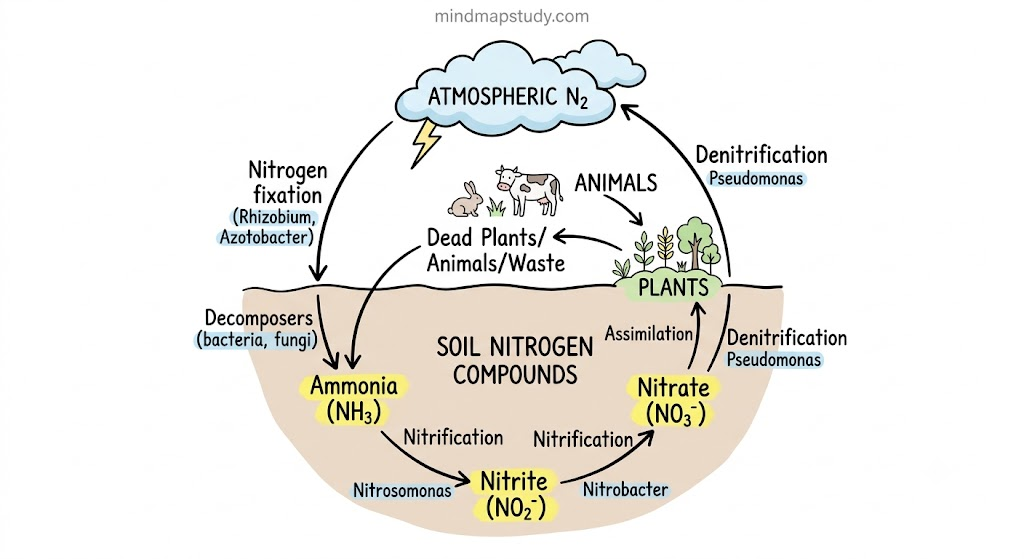
Processes of the nitrogen cycle:
Nitrogen fixation: Nitrogen-fixing bacteria — Rhizobium in the root nodules of legume plants and Azotobacter in soil — convert atmospheric N₂ into ammonia (NH₃). Lightning also fixes a small amount of atmospheric nitrogen into nitrogen oxides.
Nitrification: Nitrifying bacteria convert ammonia into more usable forms. Nitrosomonas converts ammonia to nitrite (NO₂⁻); Nitrobacter converts nitrite to nitrate (NO₃⁻). Plants can absorb nitrates from the soil.
Assimilation: Plants absorb nitrates and use them to synthesise proteins and nucleic acids. Animals obtain nitrogen by consuming plants or other animals.
Ammonification: When plants and animals die or produce waste, decomposers — bacteria and fungi — break down the organic matter and return nitrogen compounds (mainly ammonia) to the soil.
Denitrification: Denitrifying bacteria like Pseudomonas convert some soil nitrates back into nitrogen gas (N₂), which returns to the atmosphere. This completes the cycle and maintains nitrogen balance in ecosystems.
If nitrogen were not cycled:
- Nitrogen in the soil would be rapidly depleted as plants continuously absorb nitrates
- Plants could not synthesise proteins or nucleic acids (DNA, RNA), causing their growth and reproduction to fail
- Without plants, herbivores would have no food, and the collapse would cascade up the entire food chain
- All living organisms, including humans, would be unable to build proteins — the fundamental molecules of life
- Decomposers breaking down organic matter would release nitrogen in forms unusable by plants, and with no fixation process, this nitrogen would simply accumulate in the atmosphere as unreactive N₂
- Essentially, all life as we know it would cease to exist
Q8. What are the impacts of deforestation on Earth’s oxygen and carbon cycles? What are the other consequences of deforestation?
Answer:
Impact on the oxygen cycle:
- Trees and other plants produce oxygen through photosynthesis. When large forests are cleared, the total photosynthetic capacity of an area is drastically reduced.
- Less oxygen is produced and released into the atmosphere.
- Decomposition of the cleared vegetation and burning of wood releases CO₂ and consumes oxygen.
- Over time, sustained deforestation can reduce local and regional oxygen availability, particularly impacting the biosphere.
Impact on the carbon cycle:
- Forests act as carbon sinks — they absorb large quantities of CO₂ from the atmosphere through photosynthesis and store carbon in wood, roots, and soil.
- Deforestation removes this sink. The carbon stored in trees is released back into the atmosphere as CO₂ when forests are burned or when felled trees decompose.
- This contributes directly to rising atmospheric CO₂ levels, intensifying the greenhouse effect and accelerating global warming.
- With fewer trees to absorb CO₂, the natural balance of the carbon cycle is disrupted.
Other consequences of deforestation:
- Reduced transpiration: Trees release water vapour through transpiration, contributing to local precipitation. Fewer trees means reduced transpiration, which can decrease local and regional rainfall.
- Increased soil erosion: Tree roots bind soil together. Without them, topsoil is washed away by rain and blown by wind, degrading land quality and increasing sedimentation in rivers.
- Altered albedo: Forests are darker and absorb more solar radiation. Cleared land is often lighter, reflecting more radiation and changing local and regional temperature patterns.
- Biodiversity loss: Forests provide habitat for countless species. Deforestation destroys these habitats, driving many species toward extinction and reducing overall biodiversity.
- Disrupted water cycle: Less infiltration of rainwater reduces groundwater recharge, affecting the availability of freshwater for agriculture and human use.
Q9. Explain with a suitable diagram the path that carbon takes to go back to the atmosphere. You may start from plants using CO₂ from the atmosphere.
Answer:
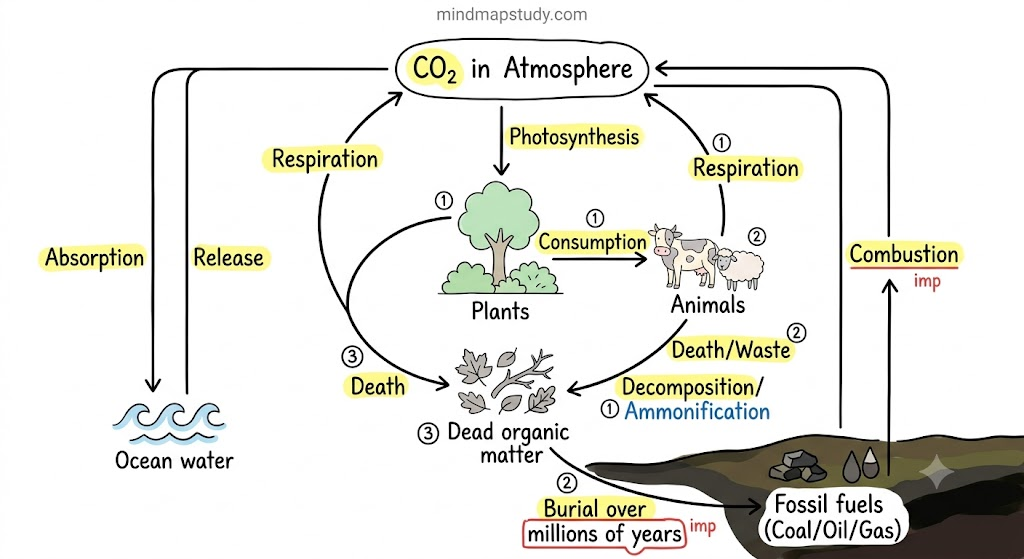
The path of carbon back to the atmosphere:
Pathway 1 — Through living organisms (fast cycle): Plants absorb CO₂ from the atmosphere during photosynthesis and convert it into glucose and other organic compounds. When plants carry out their own respiration, some CO₂ is released back directly. Animals eat plants (and other animals), using carbon to build their own proteins, fats, and carbohydrates. Both plants and animals release CO₂ back into the atmosphere through cellular respiration. When organisms die, decomposers (bacteria and fungi) break down the organic matter, releasing CO₂ and other carbon compounds back into the atmosphere through decomposition. This fast cycle operates over days to years.
Pathway 2 — Through fossil fuels (slow cycle): Over millions of years, dead organisms that were buried under layers of sediment were transformed into fossil fuels — coal, oil, and natural gas. When humans burn these fuels for energy (heating, transport, electricity generation), the stored carbon is released rapidly back into the atmosphere as CO₂. This pathway, which naturally takes millions of years, is being short-circuited by human activity in decades.
Pathway 3 — Through the ocean: The atmosphere and ocean water continuously exchange CO₂. Ocean water absorbs atmospheric CO₂, which forms carbonate and bicarbonate ions. Phytoplankton use these for photosynthesis. When marine organisms die, their carbon sinks to the ocean floor and can be stored for very long periods.
Q10. Why is an excess of CO₂ in the atmosphere considered undesirable even though it is required by plants?
Answer:
Carbon dioxide is essential for photosynthesis — plants use it along with sunlight and water to produce glucose and oxygen. In this sense, CO₂ is a necessary and beneficial gas in the atmosphere.
However, CO₂ is also a greenhouse gas. It absorbs the infrared radiation re-emitted by Earth’s surface and prevents it from escaping into space, keeping the planet warm. A certain amount of CO₂ is necessary to maintain temperatures suitable for life. Without any greenhouse effect, Earth would be too cold to support life as we know it.
The problem arises when CO₂ levels rise far above the natural balance. Human activities — burning fossil fuels and deforestation — have raised atmospheric CO₂ by about 35% since 1960. This excess CO₂ traps much more heat, intensifying the greenhouse effect beyond what is needed. The consequences include:
- Rising global temperatures (global warming)
- Melting of glaciers and polar ice, raising sea levels and threatening coastal cities
- More extreme and unpredictable weather events — intense cyclones, floods, and droughts
- Ocean acidification, as excess CO₂ dissolves in seawater and forms carbonic acid, threatening coral reefs and marine organisms that form calcium carbonate shells
- Disruption of agricultural patterns and food security, particularly in countries like India that depend on the monsoon
- Loss of biodiversity as ecosystems struggle to adapt to rapid climate shifts
So while plants need CO₂ in moderate amounts, excess CO₂ disrupts the Earth’s energy balance and destabilises the very systems that all life — including plants — depend on.
Q11. How is heat lost from the surface of the Earth? What is its significance?
Answer:
Earth’s surface gains heat by absorbing incoming solar radiation (visible light and infrared from the Sun). It loses this heat primarily through two processes:
Re-radiation (Terrestrial Radiation): Earth’s surface absorbs solar energy and re-radiates it outward as infrared radiation (heat). Unlike incoming short-wave solar radiation, this outgoing radiation is long-wave infrared. Greenhouse gases (CO₂, CH₄, water vapour) in the atmosphere absorb a significant portion of this outgoing infrared radiation and re-emit some of it back toward Earth’s surface. The rest escapes into space. This is the primary mechanism of heat loss from Earth’s surface to space over time.
Convection and Conduction: The warm surface heats the air directly above it through conduction and convection. Warm air rises into the troposphere, carrying heat upward. This drives wind circulation and weather patterns.
Evaporation: When water evaporates from oceans, lakes, rivers, and through plant transpiration, it absorbs heat energy (latent heat) from the surface. This energy is carried into the atmosphere and released when water vapour condenses to form clouds. Evaporation accounts for a significant portion of surface heat loss.
Significance:
- The balance between heat gained (from solar radiation) and heat lost (by radiation, convection, evaporation) maintains Earth’s average temperature, creating the stable climate conditions that support life
- This energy balance drives the global water cycle, wind patterns, and ocean currents
- Greenhouse gases regulate how much heat escapes into space — too little greenhouse effect and Earth freezes; too much (from excess CO₂) and Earth overheats
- Understanding this balance is fundamental to climate science and predicting how human activities will affect future global temperatures
Q12. If the Earth were a flat disc instead of a sphere, how would the patterns of solar radiation and temperature be different?
Answer:
Earth’s spherical shape is responsible for the uneven distribution of solar radiation across latitudes — the most fundamental driver of climate, winds, and ocean currents. If Earth were a flat disc, all of this would change fundamentally:
Solar radiation distribution: On a sphere, the Sun’s rays strike the equator almost perpendicularly (concentrated over a small area) while they strike higher latitudes at increasingly oblique angles (spread over a larger area). This is why tropical regions are hot and polar regions are cold. On a flat disc, if the disc faced the Sun directly, all parts of the surface would receive solar radiation at the same angle simultaneously. The intensity of solar radiation would be nearly uniform across the entire surface (ignoring any edge effects). There would be no concept of equatorial heating or polar cooling.
Temperature patterns: On a flat disc, there would be no temperature gradient from equator to poles driven by the angle of incoming sunlight. The surface temperature would be relatively uniform across the disc during the day. The extreme temperature contrasts that drive our global wind systems and ocean currents would not exist.
Seasons: Earth’s seasons arise from the combination of its spherical shape and the tilt of its rotational axis as it orbits the Sun. A flat disc would still experience tilt-related changes in solar angle, but the geometry of heat distribution would be entirely different, and the concept of polar summers and winters would not apply in the same way.
Winds and Ocean Currents: Planetary winds and ocean currents are driven by temperature differences between the equator and the poles. Without those temperature differences, the large-scale circulation cells (Hadley, Ferrel, Polar cells) would not form. There would be far weaker large-scale wind and ocean circulation, fundamentally altering rainfall distribution, monsoons, and climate across the entire planet.
Day and Night: On a sphere, half the planet experiences day while the other half experiences night at any given time. On a flat disc facing the Sun, the entire upper surface would be in daylight simultaneously (though edges might be in shadow), and the entire lower surface would always be in darkness. This would create extreme temperature swings unlike anything on the present Earth.
Q13. Suppose there is a rise in atmospheric temperature on Earth. How would this affect the cryosphere, hydrosphere, and biosphere?
Answer:
A rise in atmospheric temperature would trigger a chain of effects across multiple spheres:
Effect on the Cryosphere:
- Rising temperatures would accelerate the melting of glaciers (including the Himalayan glaciers), ice sheets (in Greenland and Antarctica), and polar sea ice
- Snow cover would decrease in mountainous regions like Ladakh and the Himalayas
- Permafrost in polar and high-altitude regions would begin to thaw, releasing stored methane (a powerful greenhouse gas), which would further accelerate warming — a positive feedback loop
- Over time, the cryosphere would significantly shrink in volume and extent
Effect on the Hydrosphere:
- Melting glaciers would initially increase river flow, providing more water to rivers fed by glacial melt. However, as glaciers retreat and eventually disappear, these rivers would receive much less water, threatening freshwater supply for agriculture and drinking in regions like North India
- Rising sea levels (from melting ice sheets) would threaten low-lying coastal regions and cities like Mumbai and Chennai with flooding and eventual submersion
- Warmer ocean water would hold less dissolved CO₂ (reducing the ocean’s function as a carbon sink), promote more evaporation, and alter ocean circulation patterns
- A warmer atmosphere holding more moisture would intensify the water cycle — leading to more extreme precipitation events (intense monsoons, flash floods) in some areas and more severe droughts in others
- Increased runoff from intense rains would reduce groundwater recharge, while warmer temperatures increase evaporation, depleting surface water bodies
Effect on the Biosphere:
- Many species would face habitat loss as ecosystems shift — coral reefs would bleach and die in warmer, more acidic oceans; polar species like polar bears would lose their ice-based habitats
- Changes in rainfall and temperature patterns would disrupt agriculture, threatening food security especially in monsoon-dependent regions of India
- Warmer conditions would allow pests and disease vectors (like mosquitoes carrying malaria) to spread to higher altitudes and latitudes, affecting human health
- Phenological changes (shifts in the timing of flowering, migration, breeding) would disrupt ecological relationships between species
- Rising sea levels would destroy coastal and mangrove ecosystems, reducing biodiversity and the natural protection these systems provide against storms and erosion
Q14. Explain how the Earth’s atmosphere helps in maintaining a suitable temperature for life to survive on Earth.
Answer:
The atmosphere acts as Earth’s natural temperature regulator through two complementary mechanisms:
Filtering incoming solar radiation: The atmosphere does not allow all of the Sun’s radiation to reach Earth’s surface. The ozone layer in the stratosphere (12–50 km altitude) absorbs most of the harmful high-energy ultraviolet radiation, protecting living organisms from DNA damage, skin cancer, and eye damage. Clouds and atmospheric gases also reflect and absorb a portion of incoming solar radiation before it reaches the surface. This selective filtering ensures that only the beneficial visible and moderate infrared radiation reaches Earth’s surface in appropriate amounts.
Trapping outgoing heat — the natural greenhouse effect: Earth’s surface absorbs incoming visible and infrared solar radiation and warms up. It then re-radiates this absorbed energy outward as infrared radiation (heat). Without the atmosphere, all of this heat would escape directly into space, and Earth’s average surface temperature would be approximately –18°C — far too cold for most life.
However, greenhouse gases in the atmosphere — primarily water vapour, carbon dioxide (CO₂), and methane (CH₄) — absorb this outgoing infrared radiation. They then re-emit energy in all directions, including back toward Earth’s surface. This effectively traps heat near the surface, raising Earth’s average temperature to approximately +15°C — a difference of about 33°C that makes Earth habitable.
This natural greenhouse effect thus creates the temperature range that allows liquid water to exist, the water cycle to function, and biological processes to operate.
The balance is critical: Too little greenhouse effect (like on Mars, which has a very thin atmosphere) results in an extremely cold surface. Too much greenhouse effect (like on Venus, where an uncontrolled greenhouse effect exists) results in surface temperatures hot enough to melt lead. Earth’s atmosphere maintains a precise balance — currently being disturbed by human addition of excess CO₂ — that supports the conditions necessary for life.
Q15. Describe the interrelationship between different spheres of the Earth. Illustrate with an example of how these spheres function in a delicate balance.
Answer:
Earth’s five spheres — geosphere, hydrosphere, cryosphere, atmosphere, and biosphere — are not isolated systems. They constantly exchange matter and energy, and a change in any one sphere triggers responses in all the others. This interconnectedness constitutes the Earth system.
How the spheres interact:
- The atmosphere receives water vapour from the hydrosphere (through evaporation) and biosphere (through transpiration). It returns water as precipitation.
- Solar energy absorbed by the atmosphere and Earth’s surface drives winds and ocean currents within the hydrosphere, distributing heat globally.
- The geosphere provides minerals dissolved by water from the hydrosphere and carried to the biosphere as nutrients.
- The biosphere (through photosynthesis) removes CO₂ from the atmosphere and adds oxygen. It also stabilises the geosphere through plant roots that prevent soil erosion.
- The cryosphere stores freshwater that feeds the hydrosphere (rivers, lakes). It also influences the atmosphere by reflecting solar radiation (high albedo), helping to regulate global temperatures.
Example illustrating the delicate balance — The effect of warming Arabian Sea water:
- Rising atmospheric temperatures (atmosphere) warm the surface of the Arabian Sea (hydrosphere).
- Warmer sea water evaporates more rapidly, feeding more moisture into the atmosphere.
- This intensified moisture drives stronger or more erratic southwest monsoons, causing floods in some parts of India and droughts in others (atmosphere-hydrosphere interaction).
- Simultaneously, rising atmospheric temperatures accelerate the melting of Himalayan glaciers and Ladakhi snow cover (cryosphere).
- Melting glaciers add more water to rivers like the Ganga and Brahmaputra in the short term, increasing flood risk in the northern plains (hydrosphere).
- Over the long term, as glaciers shrink, these rivers lose their reliable meltwater source, threatening freshwater availability for hundreds of millions of people and disrupting agricultural systems (biosphere).
- Rising sea levels from melting polar ice (cryosphere) threaten coastal ecosystems like mangroves and coral reefs (biosphere), and flood low-lying agricultural land (geosphere-biosphere).
- Floods erode topsoil, disrupting the geosphere and reducing land fertility, which further impacts the biosphere.
Download Free Mind Map of All Class 9 Exploration Chapter From Google Drive Link Here