
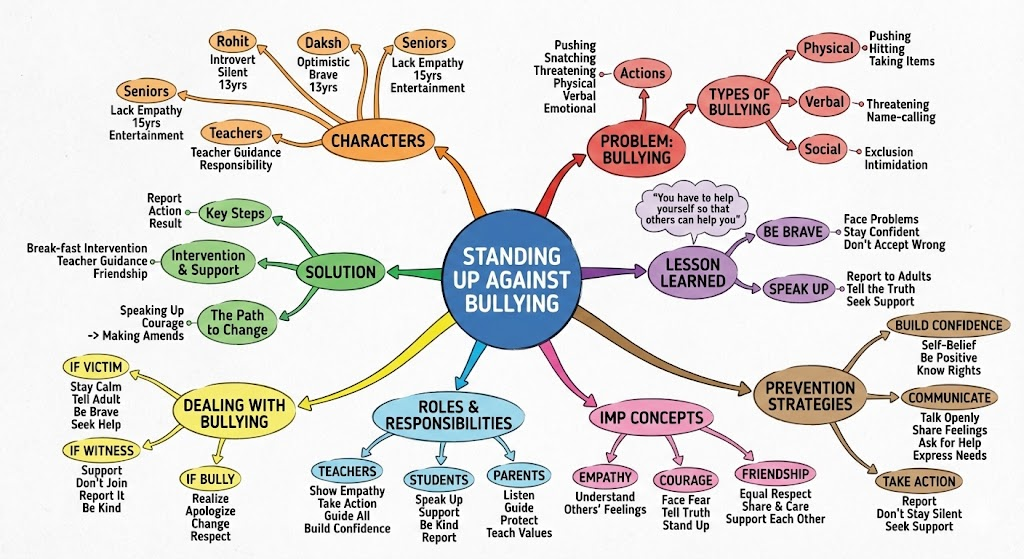
This chapter uses a graphic novel format to help you understand bullying and learn how to handle it. Through the story of Rohit and Daksh, you’ll discover the importance of speaking up and seeking help when facing difficult situations.
Learning Outcomes
After reading this chapter, you will be able to:
- Identify and describe what bullying is
- Recognize bullying behavior
- Create a plan of Do’s and Don’ts when dealing with bullying
- Understand the role of teachers and parents when dealing with bullies
- Plan strategies to avoid bullying
Characters in the Story
Rohit
- Age: 13 years old
- Personality: Introvert boy who chooses to remain silent
- Behavior: Dares to endure pain rather than speak up
Daksh
- Age: 13 years old
- Personality: Shows immense strength and optimism
- Behavior: Understands serious situations and behaves maturely
Senior Students
- Age: 15 years old
- Behavior: View violence as entertainment
- Problem: Lack empathy and sympathy for others
Teacher
- Personality: Warm, accessible, enthusiastic, and caring
- Role: Helps students realize that bullying hurts others’ feelings
The Story: Standing Up Against Bullying
Day 1 at Nature Camp
Rohit and Daksh attend a Nature Camp organized by their school. On the first morning, Daksh wakes up his friend Rohit:
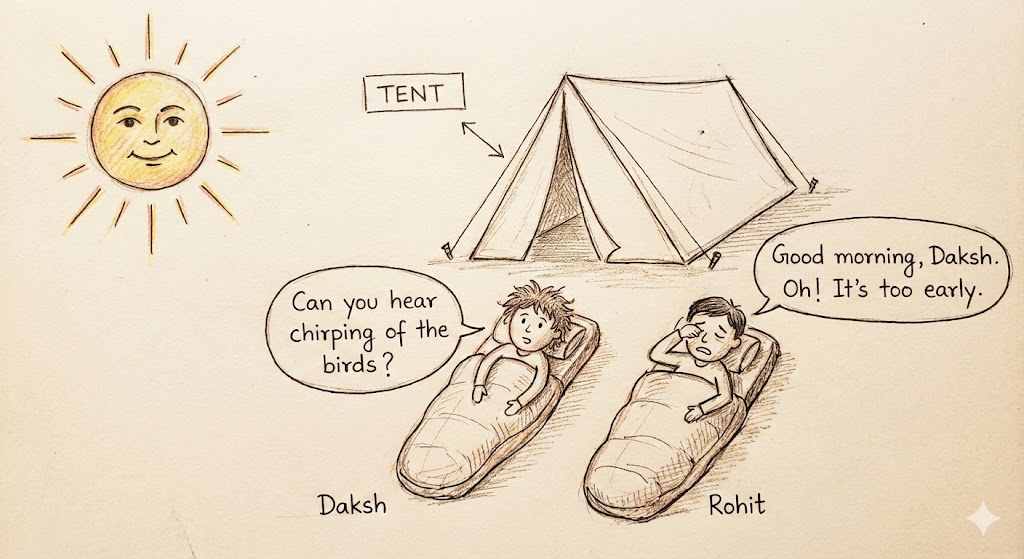
The Morning Routine
The sports teacher blows the whistle and announces:
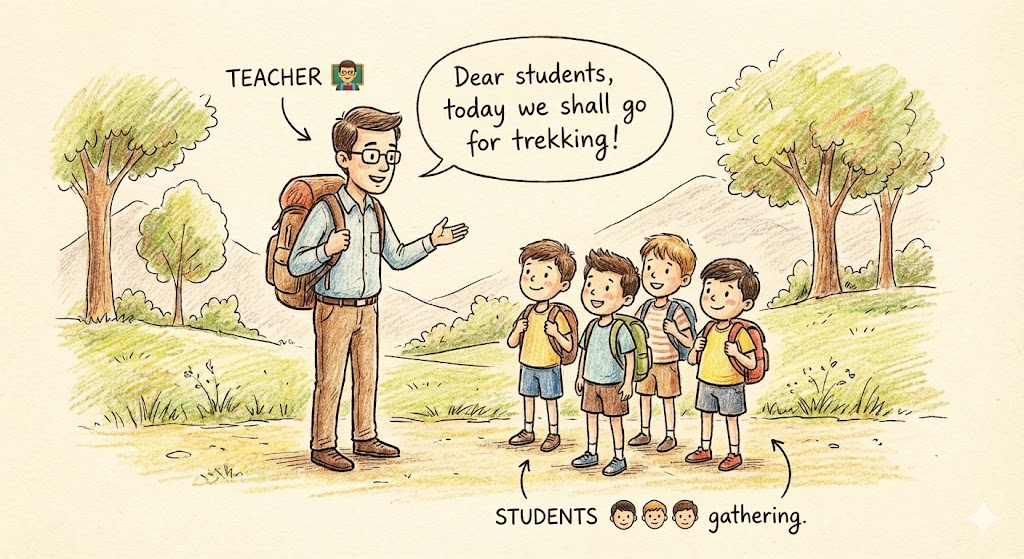
All students rush to the water tap with toothpaste and brush. Daksh and Rohit are excited to be first in line.
First Incident of Bullying
Two senior boys approach and push Daksh and Rohit:
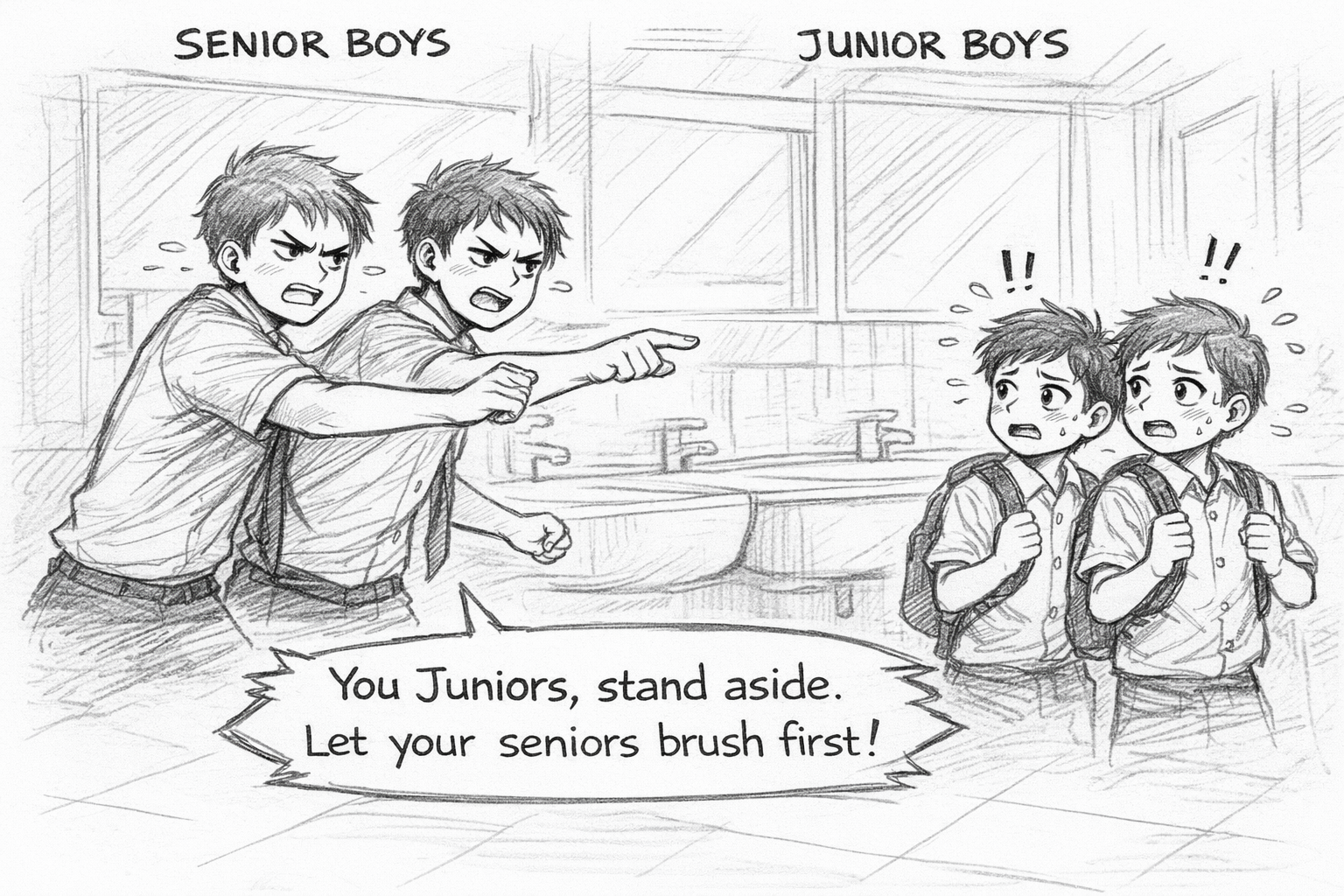
Daksh and Rohit feel petrified and respond: “Yes, brother. You can brush first”
Breakfast Time
The teacher announces breakfast. Rohit is happy about getting sandwiches:
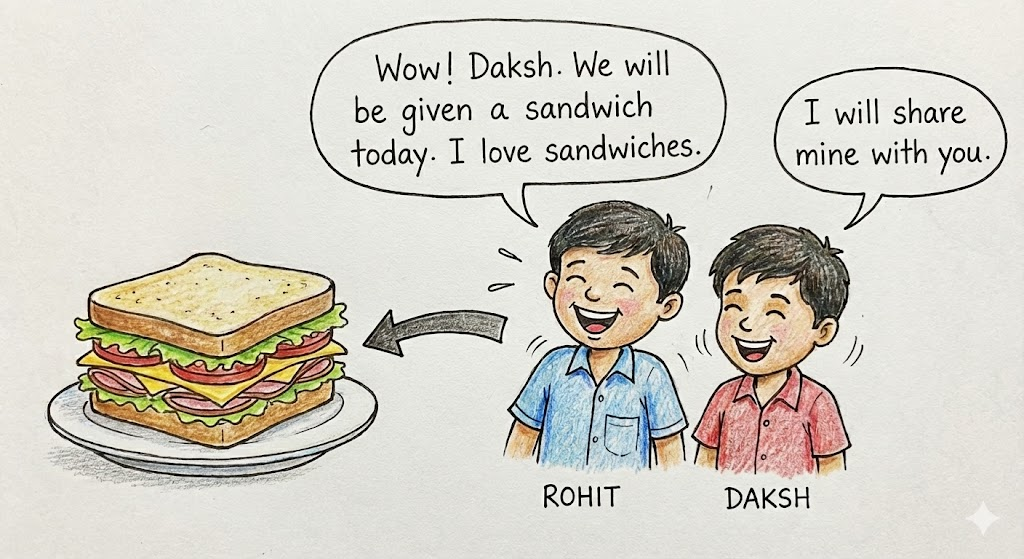
Second Incident of Bullying
The senior boys return and snatch Rohit’s sandwich:
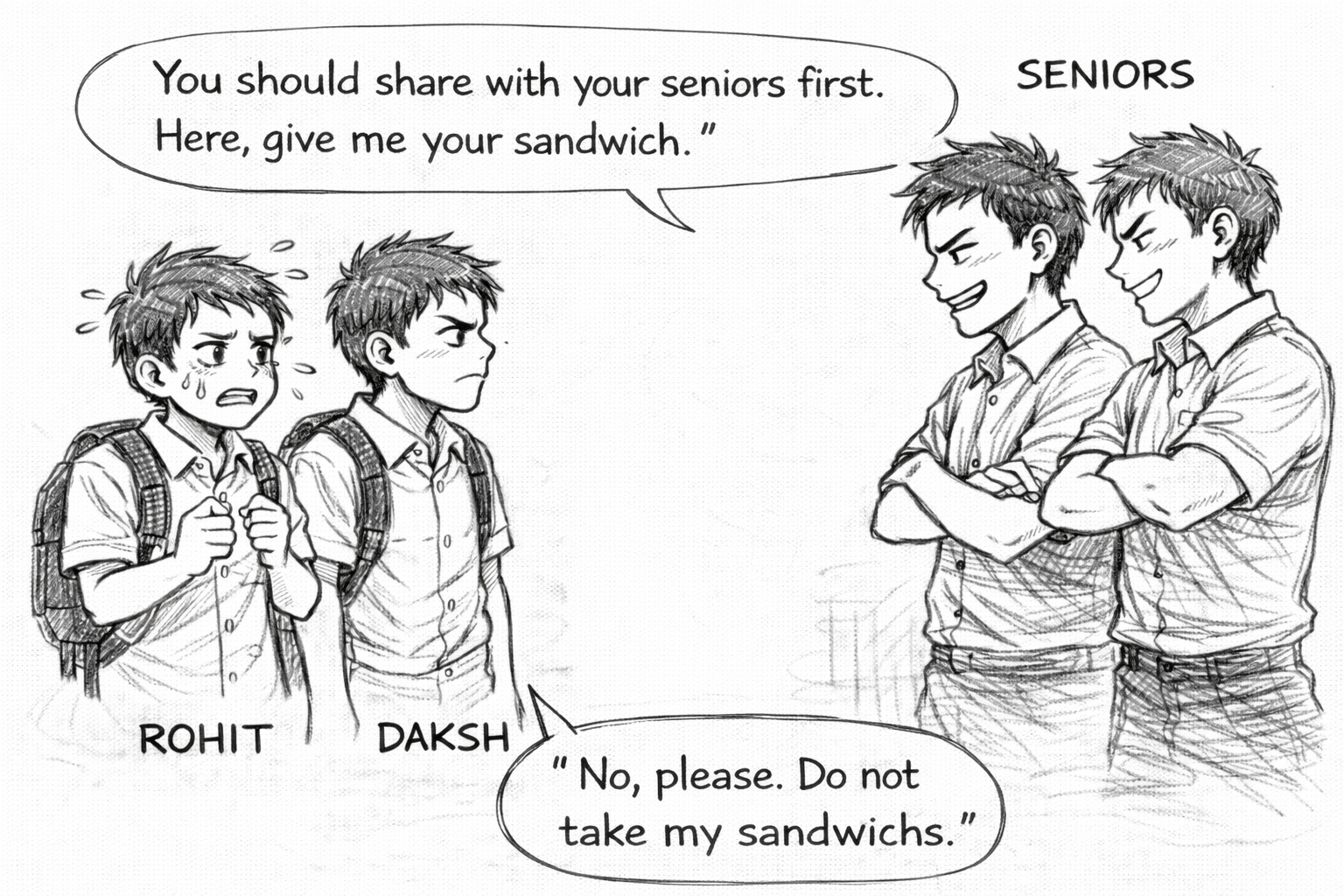
The senior boys push Rohit to the ground. Daksh tries to help him.
The Threat
The bullies threaten the boys:
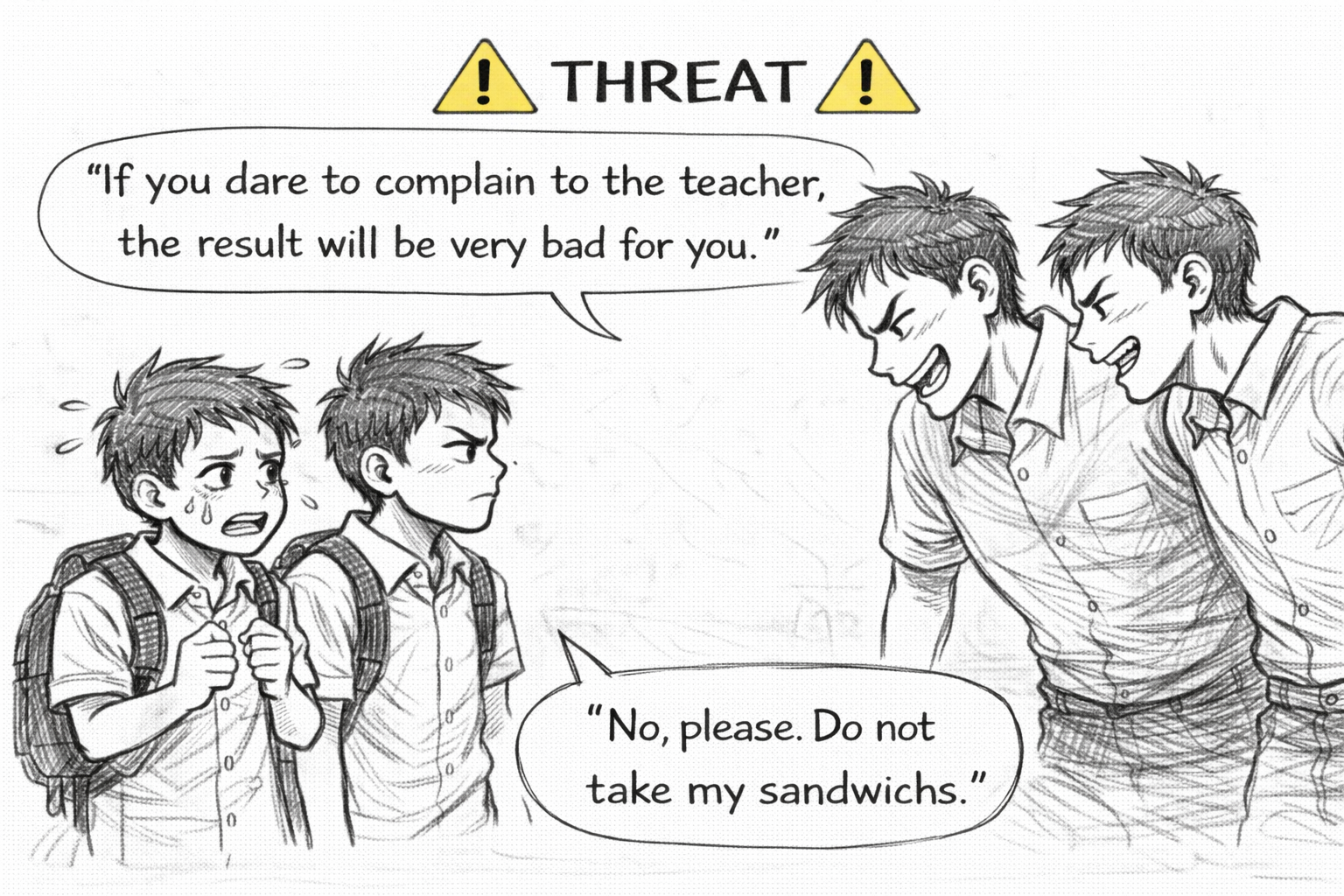
Rohit is afraid: “Oh no! Daksh. They will do this again.”
Daksh’s Wisdom
Daksh shares an important lesson from his mother:
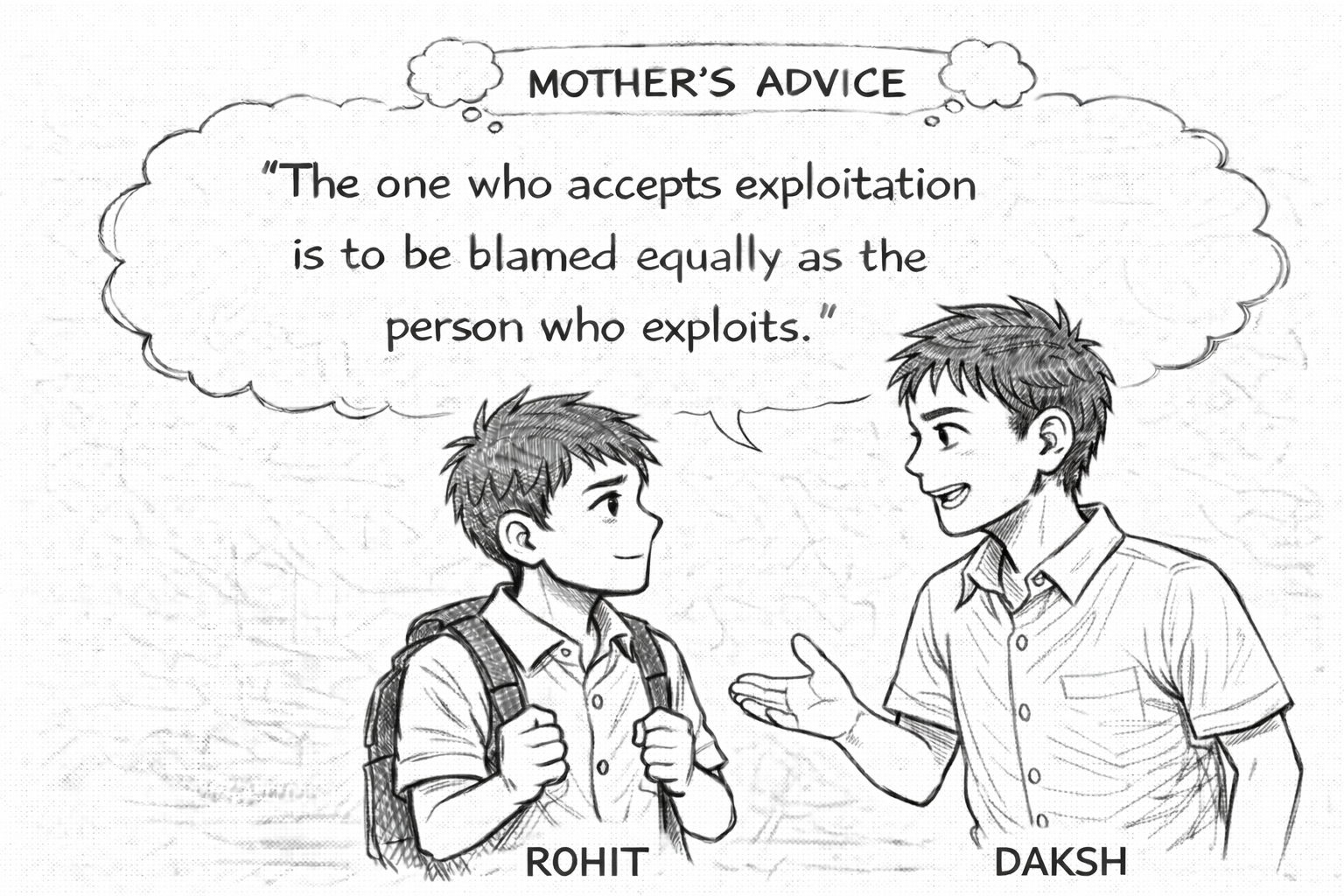
Daksh encourages Rohit:
- “You have to help yourself so that others can help you”
- “The teacher will surely believe you because you are going to tell him the truth”
- “Very Good, Rohit and don’t you worry at all, I am with you”
Reporting to the Teacher
Daksh takes Rohit to the teacher:
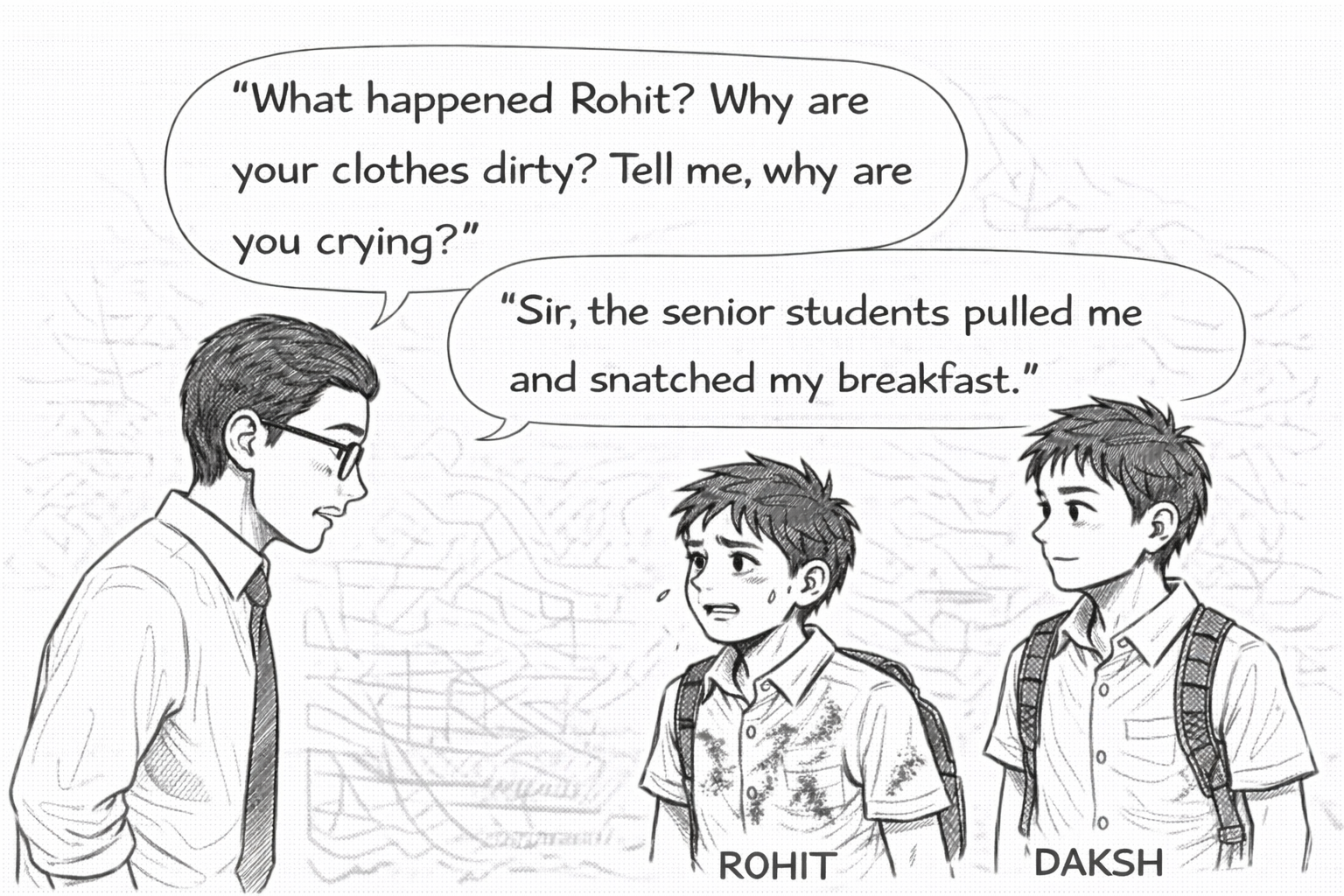
The teacher listens carefully and asks: “Oh! Is that so?”
Rohit continues: “Yes, Sir. And, they threatened me not to tell you anything.”
The Teacher’s Response
The teacher responds with care and wisdom:
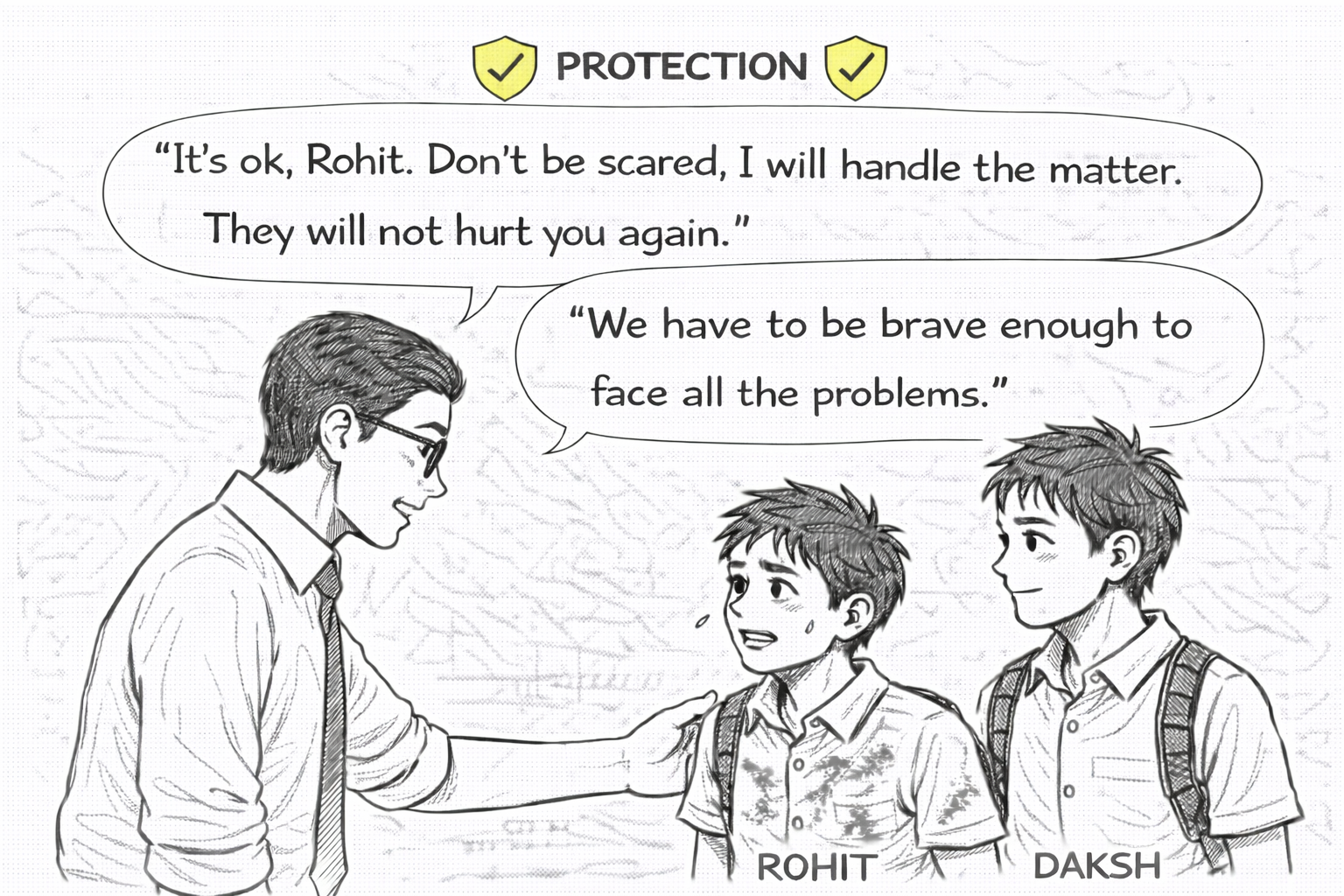
The teacher makes Rohit promise: “But first, promise me that you will not be scared of anything from now onwards.”
Rohit: “I promise, sir.” Teacher: “Thank you, Sir. I feel much better now.”
Confronting the Bullies
The teacher calls the senior students:
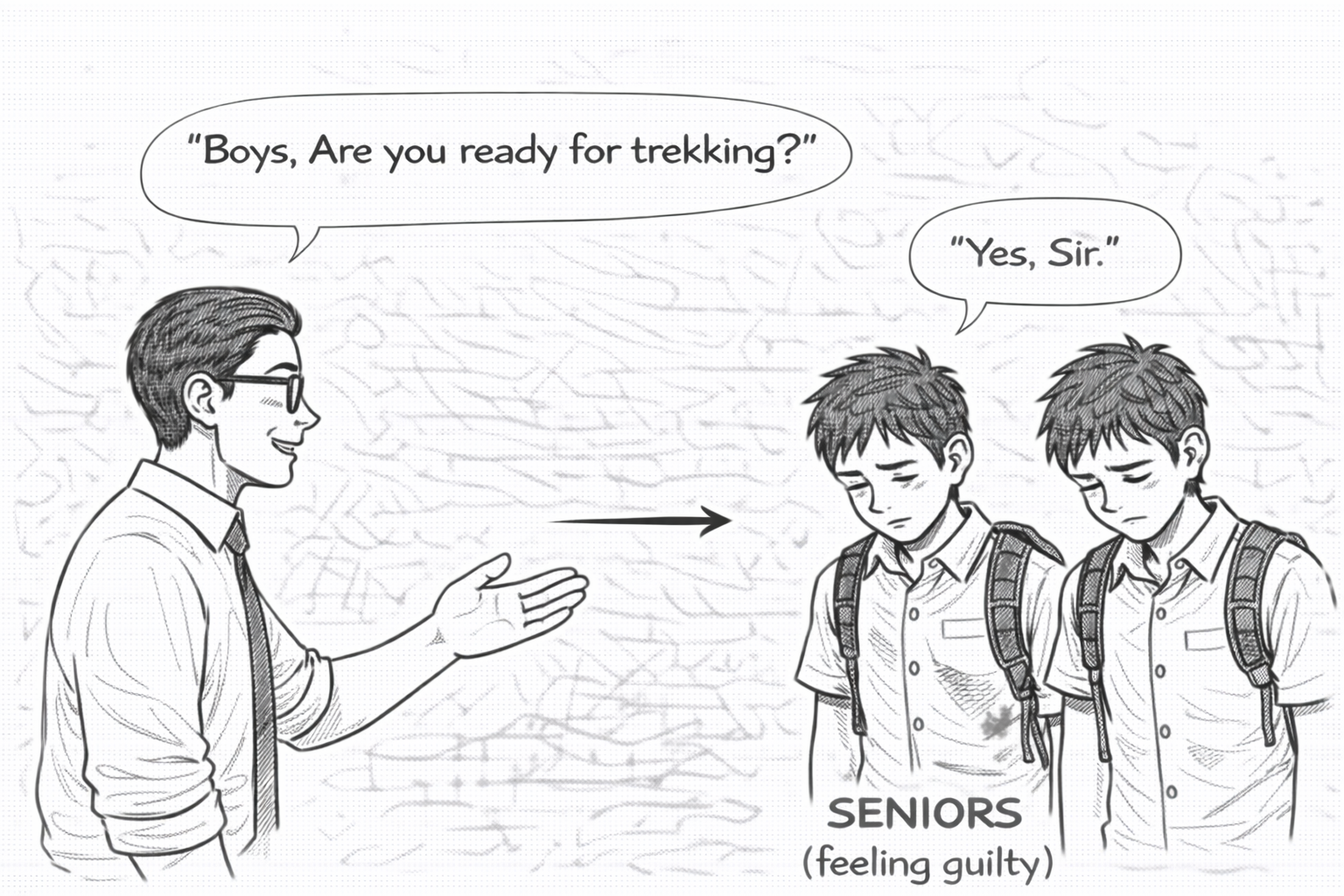
The teacher gives them a task:
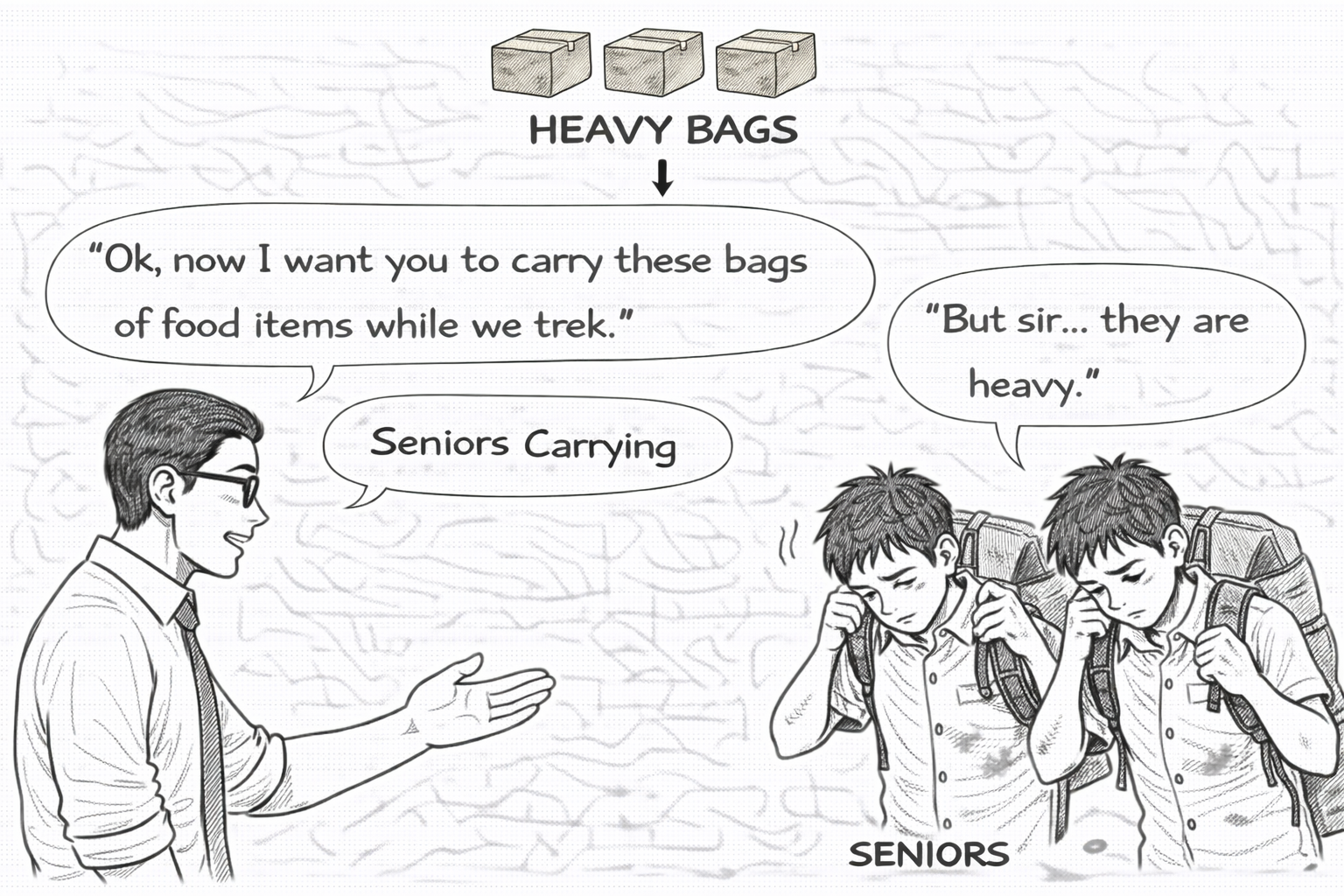
Realization and Apology
The senior students immediately understand that their teacher knows about the bullying:
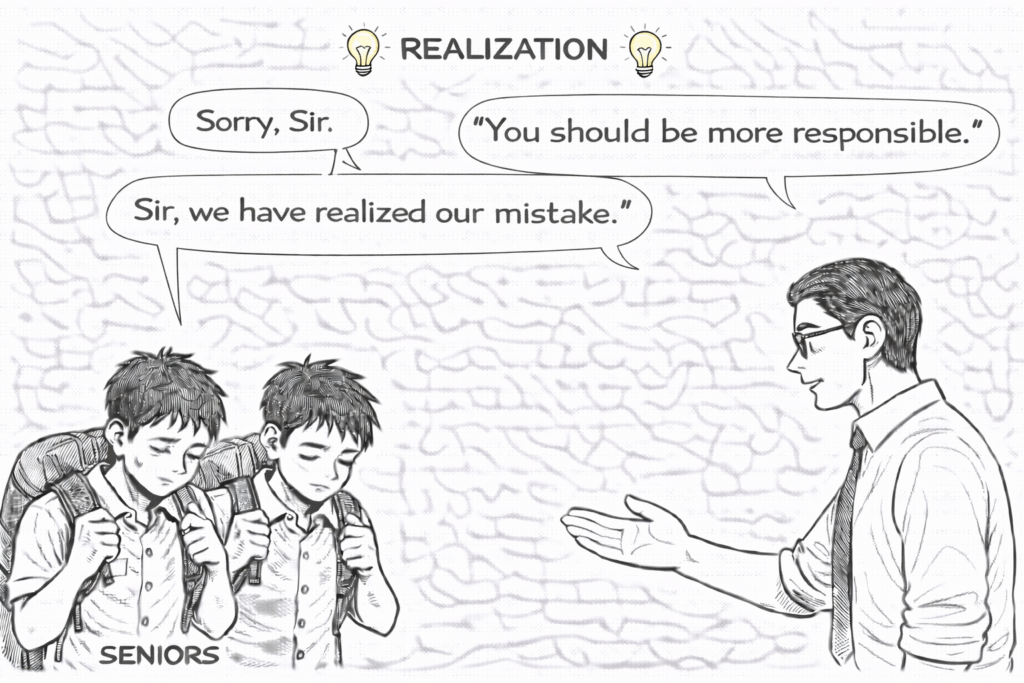
The teacher’s lesson:
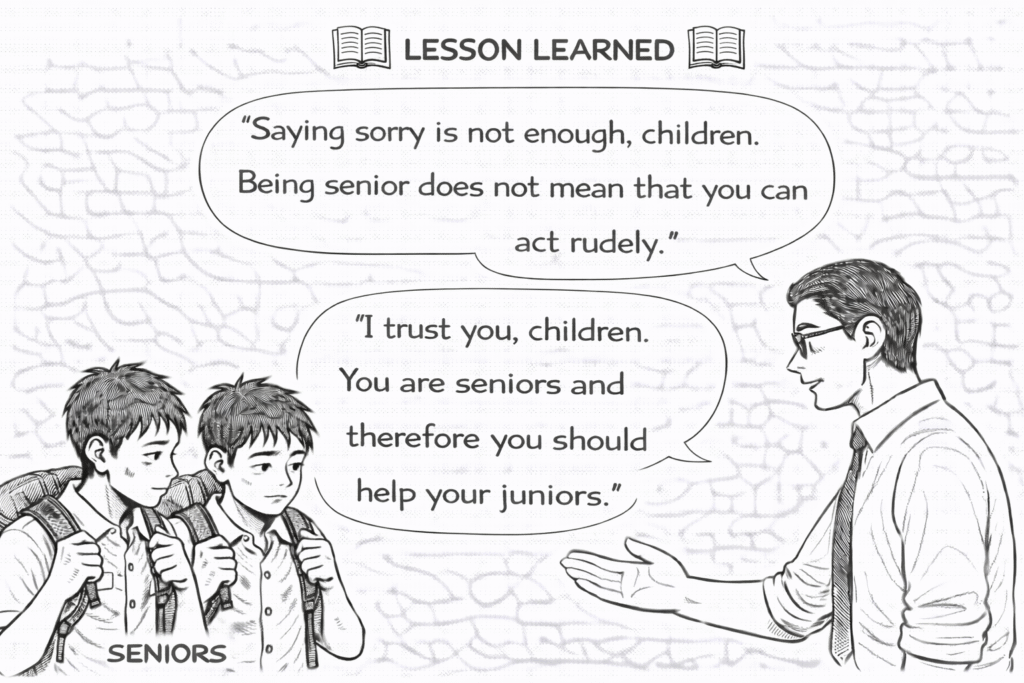
Seniors: “Sir, thank you for guiding us. We will never give you a chance to complain.”
Teacher: “Well done! Students we will go for the trek after 10 min from now.”
Making Amends
The senior students approach Rohit and Daksh to apologize:
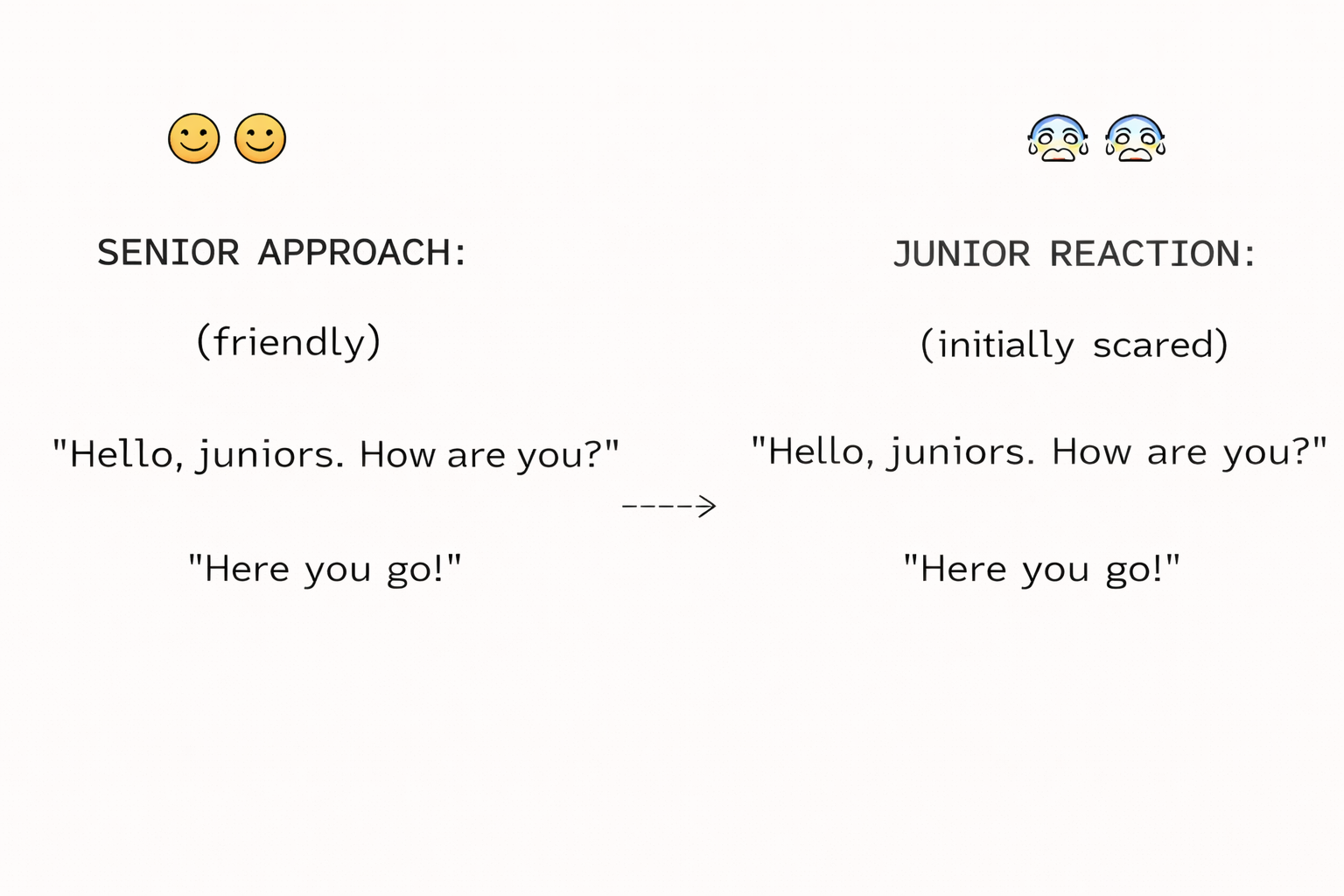
They hand over a sandwich to Rohit:
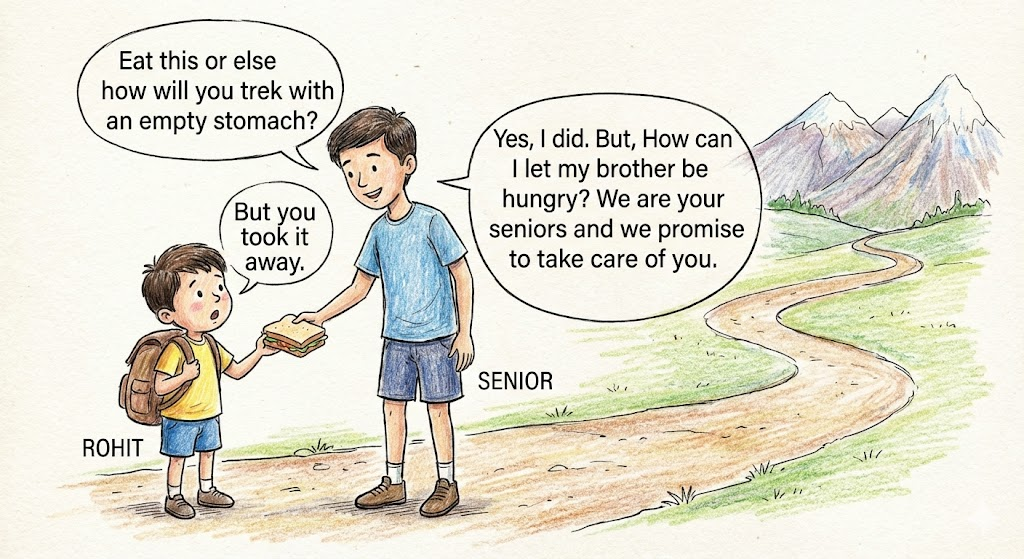
Happy Ending
Rohit & Daksh: "Thank you so much!
We respect wonderful seniors like you."
They all go trekking together happily.
Assessment Questions and Answers
A. Choose the Correct Option
Question 1: Reason for bullying among students.
- a) Power —
- b) Fun activity
- c) Personality type
Answer: a) Power Bullying often happens because someone wants to show they have control or power over others.
Question 2: Why bullying is manifestation of social status?
- a) Popularity —
- b) Aggressiveness
- c) Self-centered
Answer: a) Popularity Bullies sometimes think being aggressive makes them popular or important in a group.
Question 3: Cooperation among seniors and juniors create…
- a) Leadership
- b) Team building —
- c) Group formation
Answer: b) Team building When seniors and juniors work together respectfully, it builds strong teams.
Question 4: Expected role of teacher in avoiding bullying at school
- a) Confidence building in weaker students —
- b) Aggressive nature towards bullies
- c) Being neutral in nature
Answer: a) Confidence building in weaker students Teachers should help students feel confident to speak up and report bullying.
Question 5: If you want to complain, what’s the best way to behave?
- a) Stay calm but stick to your point —
- b) Get very angry
- c) Get ready to cry
Answer: a) Stay calm but stick to your point Being calm and clear helps adults understand and help you better.
Question 6: What is important when teacher communicates with student.
- a) Empathy —
- b) Sympathy
- c) Apathy
Answer: a) Empathy Empathy means understanding how the student feels, which helps in solving problems.
Question 7: Peers are people who are:
- a) Younger than us
- b) Older than us
- c) Of our age group —
Answer: c) Of our age group Peers are people of similar age who we interact with regularly.
Question 8: Bullying is a type of behaviour which is:
- a) Rare
- b) Habitual or repeated —
- c) Unintentional
Answer: b) Habitual or repeated Bullying happens repeatedly over time, not just once by accident.
Question 9: Why peer pressure arises?
- a) Fit into a group —
- b) Ignorance
- c) Behave distinctively
Answer: a) Fit into a group People often feel pressure to act certain ways to be accepted by their friends.
B. Short Answer Questions with Solutions
Question 1: Do we sometimes need to say NO to our peers? Why?
Answer: Yes, we definitely need to say NO to our peers when:
- They ask us to do something wrong
- They want us to hurt someone
- They pressure us to do things we’re uncomfortable with
- They ask us to break rules
Saying NO shows that we have our own values and can think for ourselves. True friends will respect our decisions.
Question 2: Do you get stressed? How often? Mention the reasons that give you stress.
Answer: Stress is normal and everyone experiences it. Common reasons include:
- Too much homework or difficult exams
- Arguments with friends or family
- Pressure to perform well in sports or studies
- Being bullied or excluded
- Changes in routine or new situations
It’s important to recognize stress and talk to trusted adults about it.
Question 3: How can positivity help students?
Answer: Positivity helps students in many ways:
- Builds confidence to face challenges
- Helps make better friends
- Improves problem-solving abilities
- Reduces stress and anxiety
- Creates a better learning environment
- Encourages helping others
Like Daksh in the story, positive thinking helped Rohit find courage to report bullying.
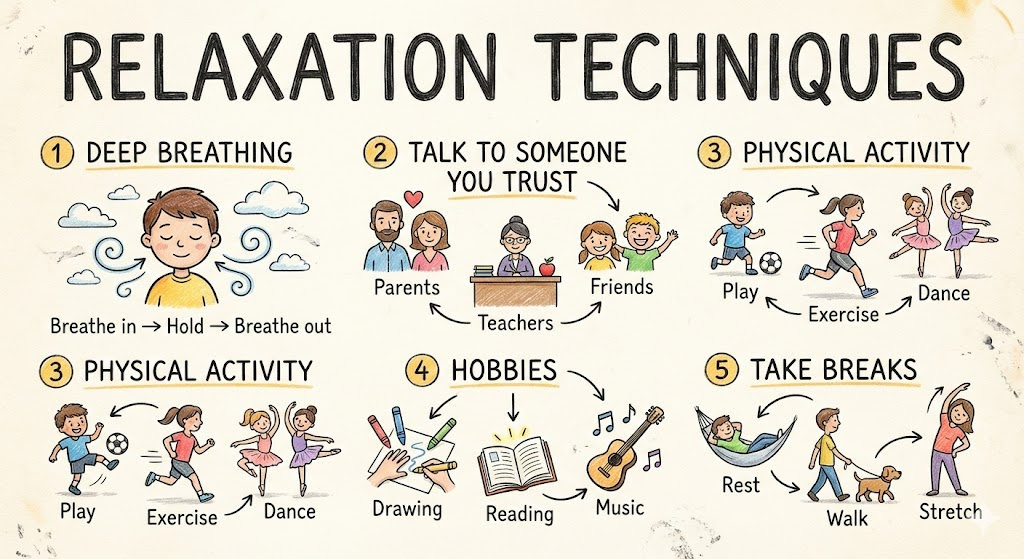
Question 4: What techniques can be applied to relax yourself in stress?
Answer: Here are helpful relaxation techniques:
Question 5: How should you approach the right person in an adverse situation?
Answer: Follow these steps:
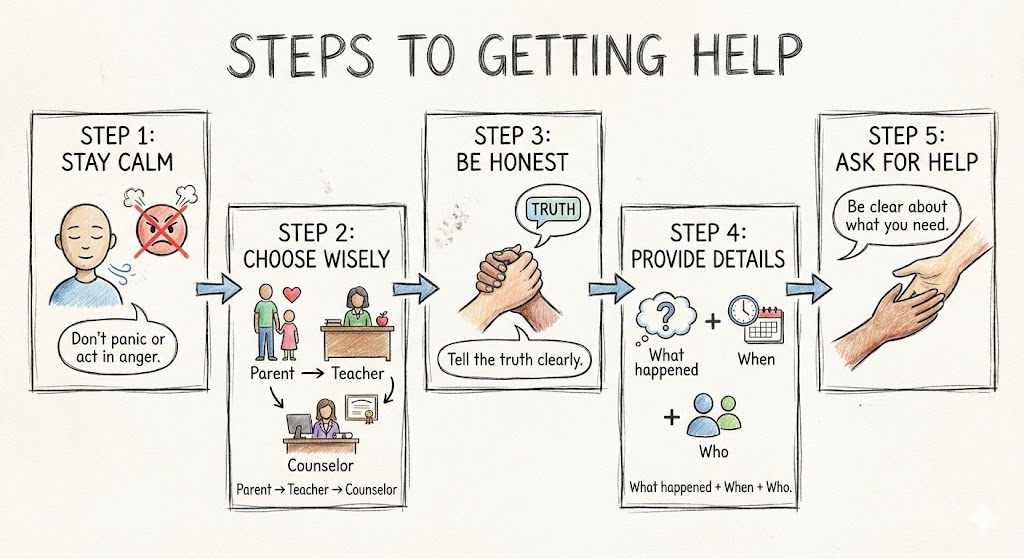
Like Rohit did with his teacher – be brave and truthful.
C. Think and Suggest
Situation 1: Raghav and Raman are two friends in Class VI. Raghav does not share his own tiffin but finishes Raman’s tiffin everyday. Raghav also makes Raman carry his bag to the bus frequently.
Do you think this is right? Give reasons.
Answer: No, this is not right because:
- Real friends share equally, not take advantage
- Making someone carry your bag regularly is unfair
- This is a form of bullying through exploitation
- True friendship is based on mutual respect
- Raghav is being selfish and controlling
Is Raghav a true friend? Suggest what should Raman do.
Answer: No, Raghav is not a true friend. Raman should:
RAMAN'S ACTION PLAN:

STEP 1: Talk to Raghav
  "I don't feel this is fair friendship"

STEP 2: Set boundaries
  "I can't carry your bag anymore"

STEP 3: If nothing changes
  → Tell parents
  → Inform teacher

STEP 4: Find better friends
  Who respect and care for you
Situation 2: When you went to the library the other day you saw two senior students forcibly taking the Geometry Box from a junior student. He looked scared and did not even tell his teacher.
Do you think the junior student should have informed the school authorities? Give reasons.
Answer: Yes, the junior student should definitely inform authorities because:
- Silence encourages bullies to continue
- Other students might also face the same problem
- Teachers can only help if they know what’s happening
- School rules exist to protect all students
- Speaking up shows courage, not weakness
Suggest what should the boy have done in that situation?
Answer: The boy should have:
CORRECT RESPONSE:

IMMEDIATE:
→ Tell the senior: "This is not right"
→ Ask nearby students for support

SOON AFTER:
→ Report to class teacher
→ Tell parents at home
→ Write down what happened

REMEMBER:
"The one who accepts exploitation
is to be blamed equally as the
person who exploits"
(Like Daksh's mother said)
D. Multiple Statements Analysis
Question: Choose the correct set of statements that truly indicate measures to counter bully and stress.
Available statements:
- Boost the self confidence in communicating the thoughts
- Learn to make the person responsible, realize his mistakes
- Non-cooperative attitude towards others around
- Learn to handle the adverse situations
- Be introvert and avoid communication
- Be adamant on your thought process
- Stay calm and be confident
Answer: Option b) 1, 2, 7
Explanation:
Correct Statements:
- Statement 1: Building confidence helps you speak up
- Statement 2: Helping others understand their mistakes creates positive change
- Statement 7: Calmness and confidence are powerful tools
Incorrect Statements:
- Statement 3: Being non-cooperative makes things worse
- Statement 5: Avoiding communication prevents getting help
- Statement 6: Being stubborn without reason doesn’t solve problems
- Statement 4: While important, needs to be combined with other positive actions
Crossword Solution
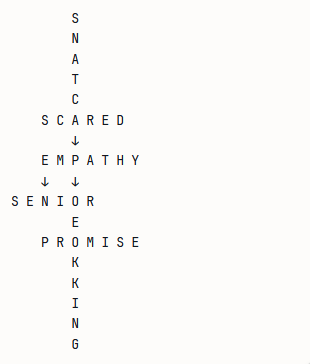
Answers:
ACROSS: 2. SCARED – Being in a state of fear or panic 3. EMPATHY – Ability to understand others 5. SENIOR – Word used for older or more experienced people
DOWN:
- SNATCH – Word similar to grab
- TREKKING – To go on a long journey on foot
- PROMISE – Declaration of assurance
Glossary Terms
1. Bullying Meaning: The behavior of a person who hurts or frightens someone smaller or less powerful Similar words: imperious, despotic
2. Energized Meaning: Give vitality and enthusiasm to Similar words: Liven up, vitalize
3. Exploitation Meaning: Treating someone unfairly to benefit from their work Similar words: Taking advantage, ill treatment
4. A Chance Meaning: A possibility of something happening Similar words: Accidental, coincidental
5. Nature Camp Meaning: A place where people stay in tents to enjoy nature Similar words: Campsite, encampment
6. Peer Pressure Meaning: Feeling that one must do the same things as others of one’s age group to be liked Similar words: Group pressure, social pressure
7. Trekking Meaning: The act of making a long and difficult journey on foot Similar words: Hike, tramp
Imp Points to Remember
 IMP LESSONS FROM THE STORY:

1. SILENCE ≠ SAFETY
   Staying quiet makes bullying worse

2. SEEK HELP
   Teachers and parents are there to protect you

3. TRUE FRIENDSHIP
   Friends support each other, not exploit

4. COURAGE
   Speaking up takes bravery but brings change

5. EMPATHY
   Understanding others' feelings prevents bullying

6. RESPONSIBILITY
   Seniors should guide, not dominate juniors
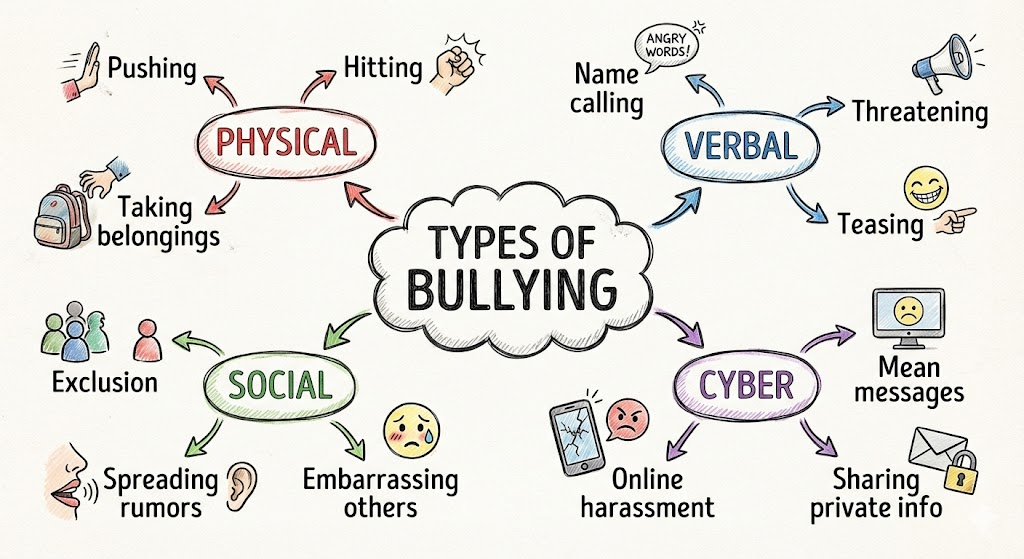
What is Bullying?
Bullying is intentional behavior that is repeated and causes harm. It includes:
How to Deal with Bullying
IF YOU'RE BEING BULLIED:

STEP 1: DON'T BLAME YOURSELF
        It's not your fault

STEP 2: TELL A TRUSTED ADULT
        Parent → Teacher → Counselor

STEP 3: STAY WITH FRIENDS
        Safety in numbers

STEP 4: BE CONFIDENT
        Stand tall, speak clearly

STEP 5: KEEP EVIDENCE
        Write down incidents
IF YOU SEE BULLYING:

DO:
Support the victim
 Tell an adult
Be a friend
Stand up if safe

DON'T:
 Join the bully
 Stay silent
 Record and share
 Make it worse
Download Free Mind Map from the link below
This mind map contains all important topics of this chapter