
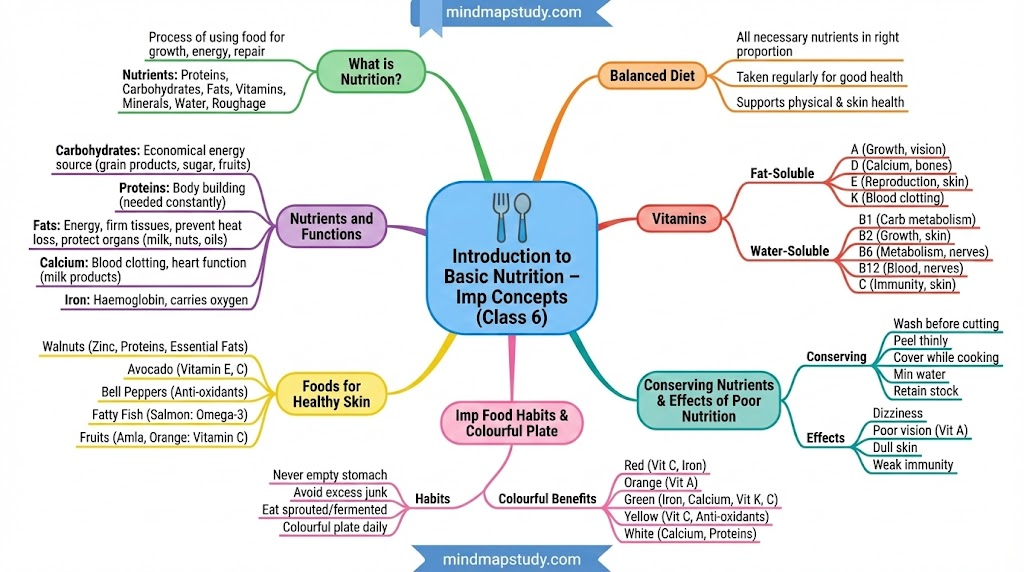
Nutrition is what you get from the food you eat, and it directly shapes how you feel, perform, and look. Good nutrition gives your body proteins, carbohydrates, fats, vitamins, minerals, and water — the basic building blocks of good health. When the right balance of nutrition is missing from daily meals, the body starts showing signs like weakness, dull skin, low energy, and poor concentration.
CONCEPT MAP
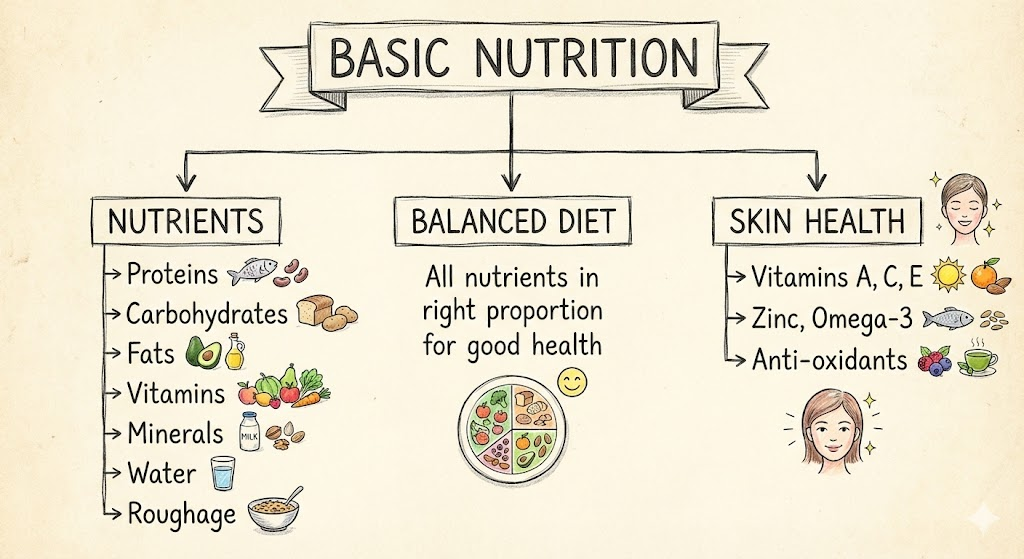
CHARACTERS
- Shourya – 7-year-old boy, stubborn, fond of junk food.
- Soumya – 9-year-old girl, Shourya’s elder sister, patient and intelligent.
- Teena – Shourya’s mother, homemaker, cooks balanced meals.
- Animesh – Shourya’s father, supportive and healthy.
- Grandmother – Kind and wise, fond of traditional home food.
- Ms Bhawna – Maths teacher, strict and attentive to students.
- Mr Vivek – PT teacher, fit and observant.
- Nurse – Helps students in the medical room.
- Ms Gurmeet – Beauty and Wellness teacher, explains nutrition in class.
STORY
Importance of Food and Nutrition
Shourya and Soumya live in New Delhi with their parents and grandparents. Both children refuse to eat home-cooked food like dal, roti, vegetables, and sabzi. They only want pizza, burgers, Maggi, and pasta. Their mother Teena and grandmother try to explain that home food is a balanced diet and skipping it will make the body weak and undernourished.
Despite repeated requests, Shourya continues to ignore meals. One morning, he rushes out of the house with just a bite of sandwich and a packet of chips.
During the morning assembly at school, Shourya feels dizzy and collapses. The PT teacher Mr Vivek rushes him to the medical room.
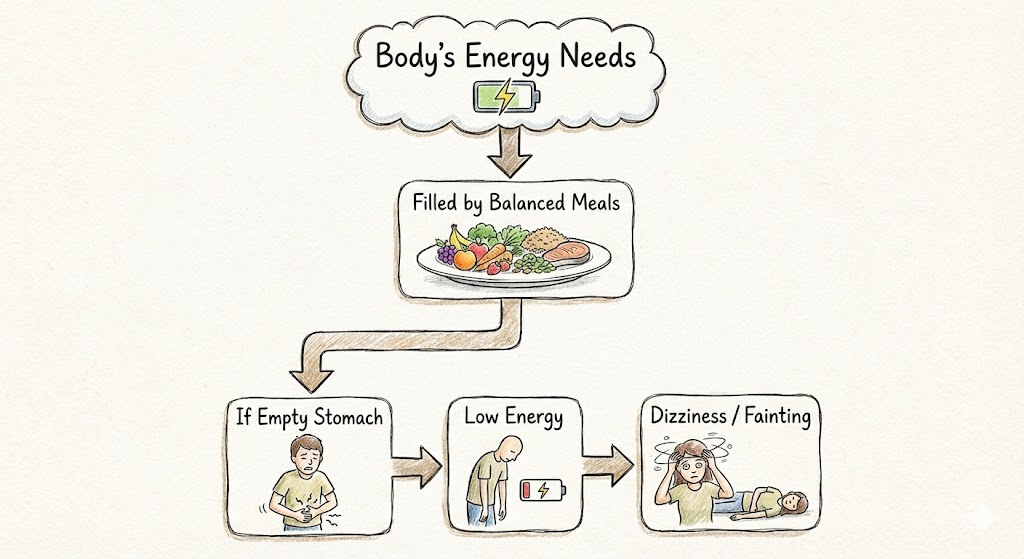
In the medical room, the Nurse explains that Shourya fainted because:
- He hardly ate anything that morning.
- A packet of chips does not provide the energy the body needs for daily activities.
- The body needs a certain number of calories to maintain good health and replenish energy lost during work.
Energy Need:
Importance of Balanced Diet
The next day in Science class, Ms Gurmeet continues the discussion on nutrition. She explains:
- Sprouted, puffed, par-boiled, and fermented foods hold strong nutritional value.
- To conserve nutrients in food:
- Wash vegetables before cutting and peeling.
- Peel vegetables thinly.
- Cover food while cooking.
- Use minimum water while cooking.
- Retain the cooking stock.
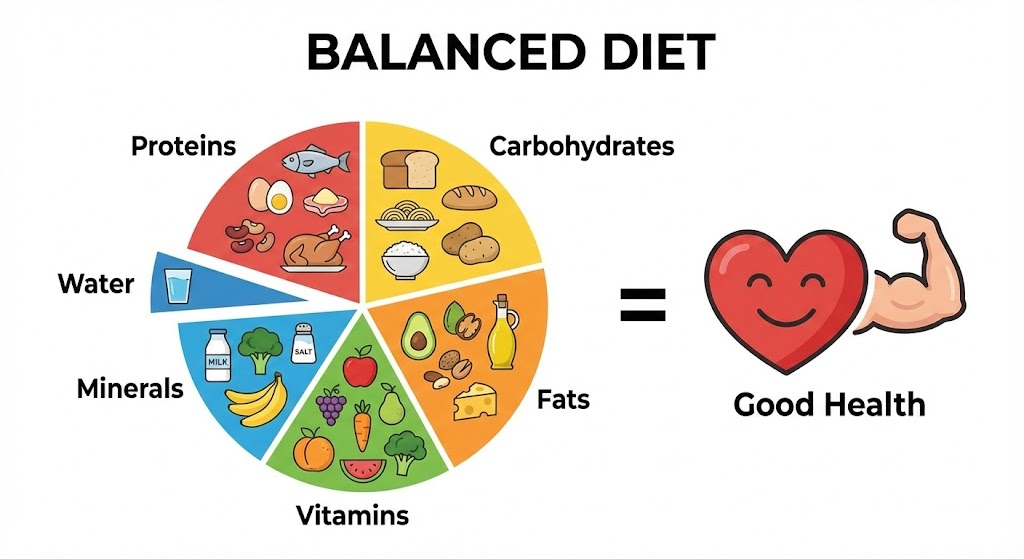
At home, Teena explains what a Balanced Diet means:
A balanced diet is food that contains all necessary nutrients — Proteins, Fats, Carbohydrates, Vitamins, Mineral salts, and Water — in the right proportion, taken regularly.
Grandmother also adds that food like avocado (contains Vitamin E and C) and fatty fish like salmon (contains omega-3 fatty acids) help keep skin healthy and moisturised.
Nutrients and Their Functions
Carbohydrates
- Carbohydrates are the most economical source of energy.
- Sources: grain products, confectionery products made from flour and sugar, honey, and fruits.
Fats
- Fats provide energy and make body tissues firm.
- They prevent loss of body heat.
- Stored fat acts as fuel in emergencies.
- Fat protects vital organs from injury.
- Sources: milk and milk products, butter, egg yolk, soya beans, almonds, nuts, and vegetable fats.
- Oils: Coconut oil, Groundnut oil, Mustard oil, Olive oil, and other vegetable oils.
Excessive fat causes problems for the heart and other organs. A balanced amount of fat in daily diet is healthy.
Proteins
- Proteins help in body building.
- They are needed constantly by the body.
Calcium
- Calcium helps in blood clotting.
- It helps in the proper working of the heart.
- Sources: milk and milk products.
Iron
- Iron is a constituent of haemoglobin.
- It helps carry oxygen in the blood.
Vitamins
Vitamins have energy values and are essential for the body’s existence. They regulate metabolic processes.
Vitamins are of two types:
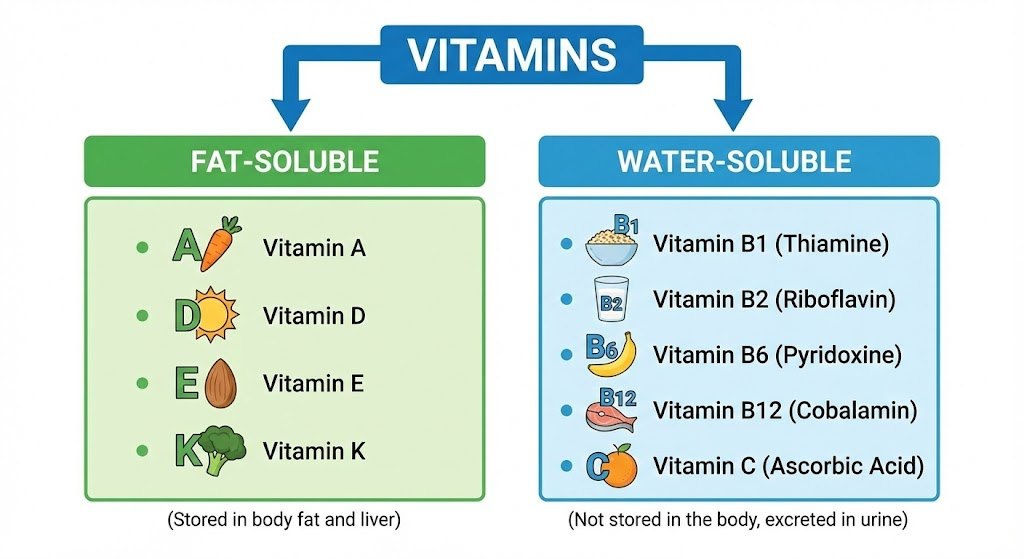
| Vitamin | Type | Function / Use |
|---|---|---|
| A | Fat-Soluble | Growth, skin health, vision |
| B1 | Water-Soluble | Proper carbohydrate metabolism |
| B2 | Water-Soluble | Growth, healthy skin |
| B6 | Water-Soluble | Proper metabolism and nervous system |
| B12 | Water-Soluble | Blood formation, nervous system health |
| C | Water-Soluble | Anti-oxidant, skin health, immunity |
| D | Fat-Soluble | Proper utilisation of calcium, bone formation |
| E | Fat-Soluble | Normal reproduction, healthy skin, anti-oxidant |
| K | Fat-Soluble | Blood clotting, normal functioning of body |
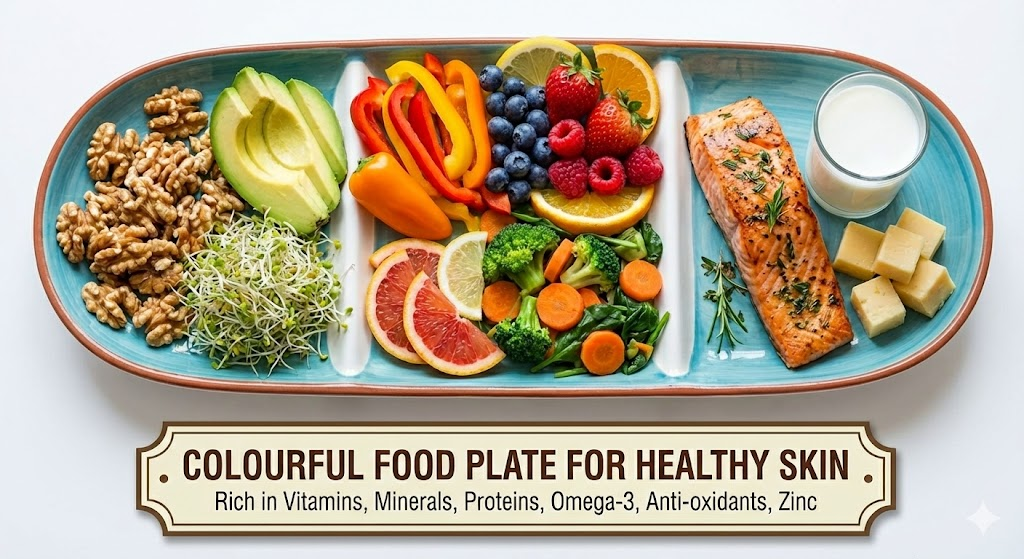
Food for Healthy Skin
- Walnuts – source of essential fats, zinc, and proteins; great for skin.
- Red or Yellow Bell Peppers – contain anti-oxidants that protect skin.
- Avocado – contains Vitamin E and C, important for healthy skin.
- Fatty Fish (Salmon) – contains omega-3 fatty acids; reduces inflammation, keeps skin moisturised.
- Seasonal fruits and salads with colour add anti-oxidants.
- Milk, cheese, and other dairy products strengthen the body and maintain skin.
plate:
Effects of Poor Nutrition
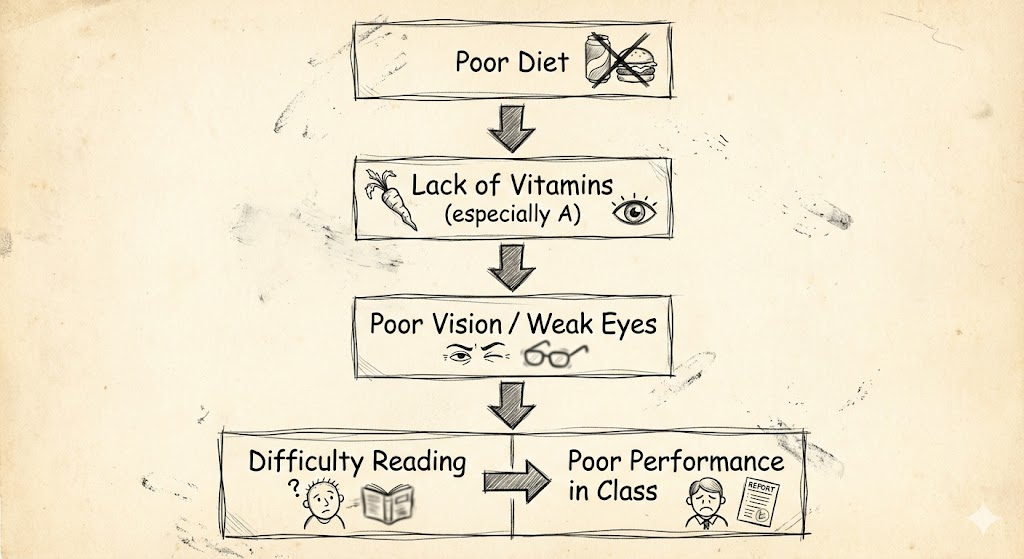
Shourya continues to eat junk food even after Soumya switches to fruits and vegetables. Over time, the effects show clearly:
- Shourya struggles to see the blackboard in Maths class.
- His vision becomes blurry.
- Ms Bhawna notices he cannot answer a simple question (6+5=11) not because he doesn’t know, but because he cannot read the board.
His parents meet the teacher and discover his vision problem. His father takes him to an optical shop to get spectacles. His mother reassures him that a healthy diet will help him recover.
After 10 Years
After following a balanced diet consistently:
- Shourya at 18 years old became a state-level cricket player with good health and glowing skin.
- Soumya at 21 became a well-known model with amazing skin texture, in perfect health.
ASSESSMENT – 1 (WITH ANSWERS)
A. Identify the different nutrients like Proteins, Carbohydrates, Fats, Vitamins, Minerals, Water and Roughage in vegetables and fruits.
| Nutrient | Found in Vegetables and Fruits |
|---|---|
| Proteins | Peas, beans, soya, sprouts |
| Carbohydrates | Potato, sweet potato, corn, banana, mango |
| Fats | Avocado, coconut, olives |
| Vitamins | Carrots (A), tomato (C), bell peppers (C, A), spinach (K) |
| Minerals | Spinach (Iron), banana (Potassium), broccoli (Calcium) |
| Water | Cucumber, watermelon, tomato, orange |
| Roughage | Cabbage, leafy greens, apple skin, whole vegetables |
B. How does a ‘colourful plate’ relate to sound body and mind?
Different coloured fruits and vegetables provide different nutrients:
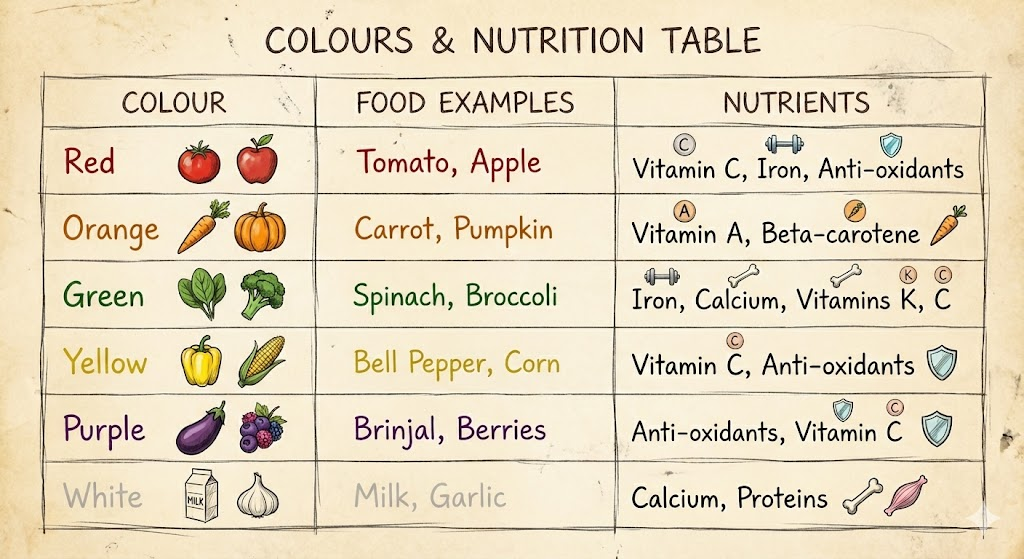
A colourful plate means you are eating food from multiple groups, getting all required vitamins, minerals, anti-oxidants, and energy sources together. This keeps the body strong, the brain sharp, and the skin healthy — resulting in a sound body and a sound mind.
C. Plan a diet for healthy skin as suggested by the Beauty and Wellness teacher.
Sample one-day diet plan for healthy skin:
| Meal | Food Items |
|---|---|
| Morning | Glass of milk, boiled egg, walnuts |
| Breakfast | Sprout sandwich or idli with sambar |
| Mid-morning | Seasonal fruit (banana, apple, or orange) |
| Lunch | Roti, dal, sabzi with colourful vegetables, salad |
| Evening | Handful of nuts and a glass of buttermilk |
| Dinner | Rice or chapatti, dal, cooked green vegetables |
Foods to include for skin:
- Walnuts (Zinc, Proteins, Essential Fats)
- Bell Peppers (Anti-oxidants)
- Avocado (Vitamin E, C)
- Fatty Fish (Omega-3)
- Fruits rich in Vitamin C (Amla, Orange, Guava)
D. Make a list of food items that can help in maintaining a clear complexion.
- Walnuts – rich in zinc and essential fats.
- Avocado – rich in Vitamin E and C.
- Red and yellow bell peppers – high in anti-oxidants.
- Fatty fish (salmon, mackerel) – omega-3 keeps skin moisturised.
- Carrots – Vitamin A, prevents dryness and dullness.
- Tomatoes – Vitamin C, keeps skin bright.
- Amla and oranges – Vitamin C helps with collagen formation.
- Green leafy vegetables – Iron and Vitamins for blood health which reflects on skin.
- Milk and cheese – Calcium and Vitamins.
- Seasonal fruits – natural sugars and vitamins.
ASSESSMENT – 2 (MCQ WITH ANSWERS)
1. Soumya fainted in the morning assembly due to __________.
a) lack of nutrition in the diet
b) eating junk food
c) empty stomach
d) study pressure
Answer: (a) lack of nutrition in the diet
(Note: The story mentions Shourya fainted, not Soumya. The answer given in the PDF is: lack of nutrition in the diet.)
2. Healthy skin can be achieved if you eat __________.
a) junk food
b) run fast
c) walnuts
d) ice cream
Answer: (c) walnuts
3. Iron is necessary for the human body because it __________.
a) is a constituent of haemoglobin
b) helps in growth of bones
c) is a source of milk
d) builds the body muscles
Answer: (a) is a constituent of haemoglobin
4. Sprouted and par-boiled fermented food holds a lot of __________.
a) bad taste
b) staleness
c) nutritional value
d) mouth-watering
Answer: (c) Nutritional value
ASSESSMENT – 3 (CROSSWORD WITH ANSWERS)
DOWN
- Our body needs a certain number of calories to __________ the energy lost during work.
Answer: Replenish - To conserve nutrients, use minimum water and retain the __________.
Answer: Stock - Fruits and vegetables are a potent source of __________.
Answer: Anti-oxidants - Essential __________ must be derived from milk and milk products.
Answer: Fat
ACROSS
- Always wash the __________ before cutting.
Answer: Edible (vegetables) - __________ help in body building and are needed constantly by our body.
Answer: Proteins
ASSESSMENT – 4 (SITUATIONAL ANSWERS)
A. My skin looks dull and poor. Does that mean I do not take a healthy diet?
Yes, dull and poor skin is often a sign of poor nutrition. Skin needs:
- Vitamin C and E for brightness and protection.
- Zinc and Proteins for repair and strength.
- Omega-3 fatty acids for moisture.
- Iron for healthy blood which reflects in skin colour.
If your diet lacks these, your skin will look pale, dry, and dull. Including walnuts, avocado, fruits, green vegetables, and adequate water each day can visibly improve skin health.
B. If I have a vision problem, can a well-planned diet improve my eyesight?
A well-planned diet cannot correct a vision problem like shortsightedness (which requires glasses), but it can definitely prevent further deterioration and support eye health.
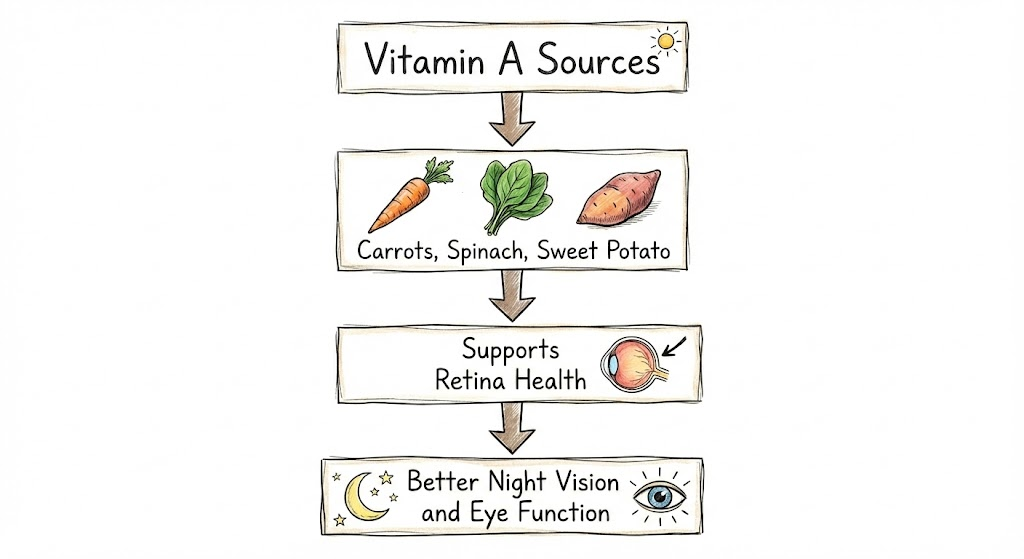
- Vitamin A is most important for eye health; deficiency leads to night blindness and weak eyesight.
- Carrots, sweet potato, and leafy greens are rich in Vitamin A and beta-carotene.
- Vitamin C and E protect the eyes from damage.
- A regular diet including these foods helps maintain good eyesight over time.
C. What are the indications of feeling weak or unhealthy?
Common indications of poor health due to poor nutrition:
- Feeling dizzy or fainting.
- Low energy and constant tiredness.
- Difficulty concentrating in class.
- Blurry vision.
- Dull, dry, or patchy skin.
- Frequent cold, cough, or infections (weak immunity).
- Pale face and dark circles.
- Weak nails and hair fall.
These are signs that the body is not receiving all nutrients in the right amounts.
GLOSSARY
| Term | Meaning |
|---|---|
| Calories | Unit of energy provided by food. |
| Consume | To intake or eat. |
| Inflammation | A condition where the body becomes red and sore. |
| Moisturised body | A well-nourished and hydrated body. |
| Constituent | An ingredient or component. |
This mind map contains all important topics of this chapter
Visit our Class 6 Skill Development page for free mind maps of all Chapters