
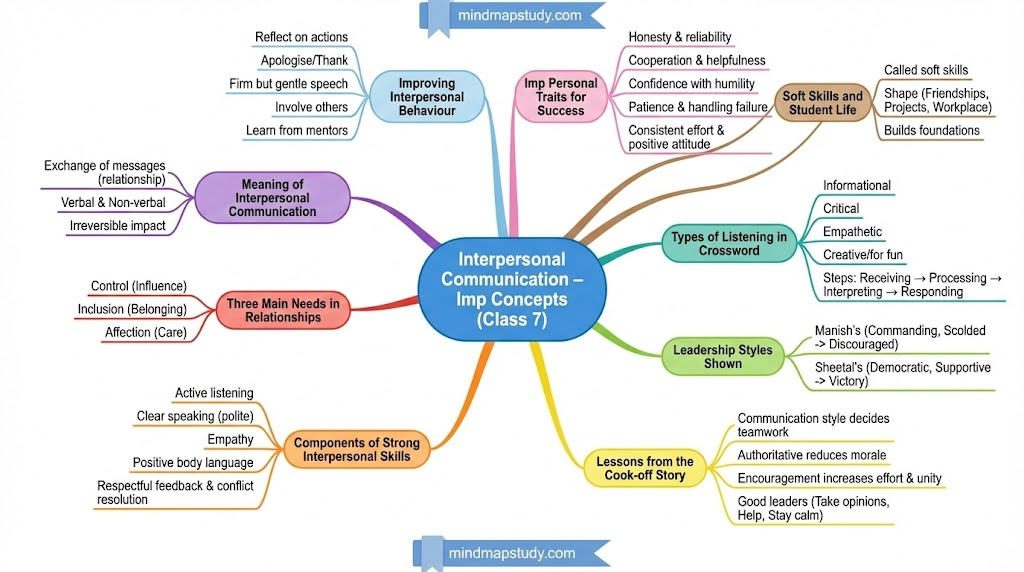
Interpersonal communication means how we send and receive messages between people. It includes words, tone, body language, listening, and emotions. For students, strong interpersonal skills improve friendships, teamwork, and confidence. This chapter shows, through a story, how communication style can unite a team or discourage it.
Characters
- Shiv / Manish (team captain in the cook‑off, narrator in parts) – enthusiastic, loves Indian culture and food, but tends to micro‑manage and talk sharply.
- Sheetal – Manish’s best friend, all‑rounder, loves books and regional cuisines, excellent team leader.
- Nani – Manish’s grandmother, caregiver while parents work abroad, teaches him cooking and values.
- Vinita – classmate, promotional in‑charge in Manish’s team.
- Other teammates – Kavita, etc., part of Team Jasmine.
- Ms Veena – observant teacher and mentor who explains interpersonal skills after the contest.
Story
The Dessert
Grade 7 is about to end. The class wants one last special activity before moving to high school. Ms Veena announces a cook‑off contest where teams will prepare a lunch menu with desserts as the main focus (no fire allowed in school). Other dishes can come from home.
Manish loves cooking North Indian food with Nani—rajma, dal ke pakode, rotis, and sweets like malpua. He also really wants to become class monitor and dreams of proving himself as a leader.
However, Sheetal is the usual class choice for leadership roles. She is responsible, supportive, and already popular with classmates. Manish respects her but secretly wants to outshine her at something—this dessert competition feels like his chance.
Team Jasmine vs Team Rose
Both Manish and Sheetal are chosen as team captains.
- Manish’s team chooses the flower name “Jasmine” directly because he, as captain, likes it.
- Sheetal asks her team to vote on their favourite flower and announces “Rose” only after everyone’s opinion is counted.
Team duties:
- Cooking three dishes (one dessert prepared in school).
- Promotion and service during lunch.
- The team with highest sales wins; all money goes to a nearby orphanage.
Menus:
| Team | Main Dishes | Dessert (no-fire) |
|---|---|---|
| Jasmine (Manish) | Jeera Rice, Paneer Pasanda | Rabri (condensed milk sweet) |
| Rose (Sheetal) | Shepuchi Bhaji, Thalipeeth flatbread | Mango Mastani |
Manish had predicted Sheetal would make Shrikhand because she personally loves strained yoghurt, but she surprises him by choosing Mango Mastani—likely after listening to her team’s ideas.
During preparation:
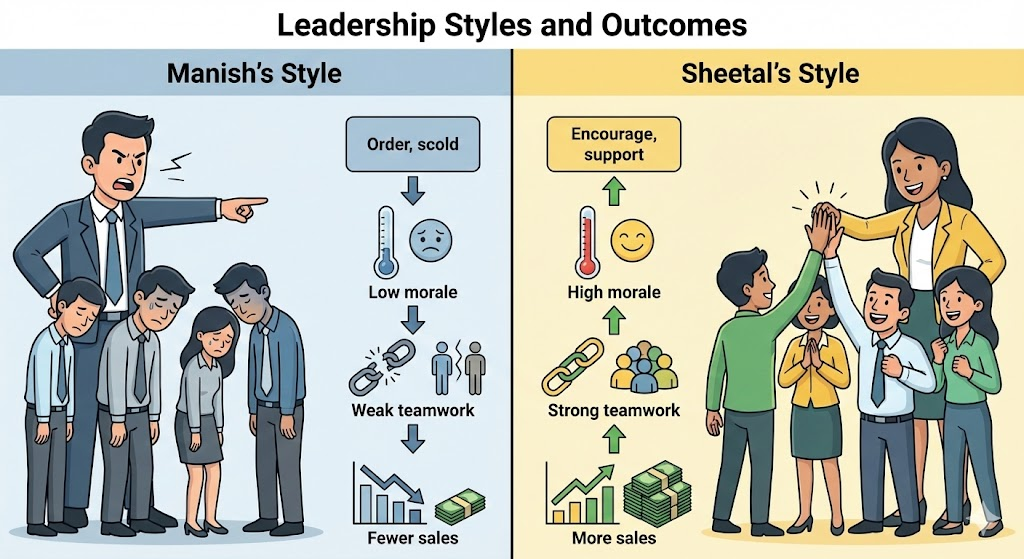
- Manish keeps saying “we must win” and sends everyone out to pull customers into their tent, pushing them hard.
- He scolds Shiv for requesting one extra plate for lunch instead of listening to his situation.
- Sheetal quietly passes encouragement cards to her teammates, helps in different work stations, and calmly handles crises.
Team Rose’s Crisis and Response
Inside Team Rose’s tent:
- Puneet adds too much sugar to the stir fry by mistake.
- Sheetal does not shout. Instead:
- She pats his back.
- Suggests adding a little salt to balance flavours.
- Keeps him motivated to correct the dish.
This calm, respectful response maintains the team’s confidence. They work harder and join hands to invite students to their stall.
Result:
- Team Rose wins by a huge margin.
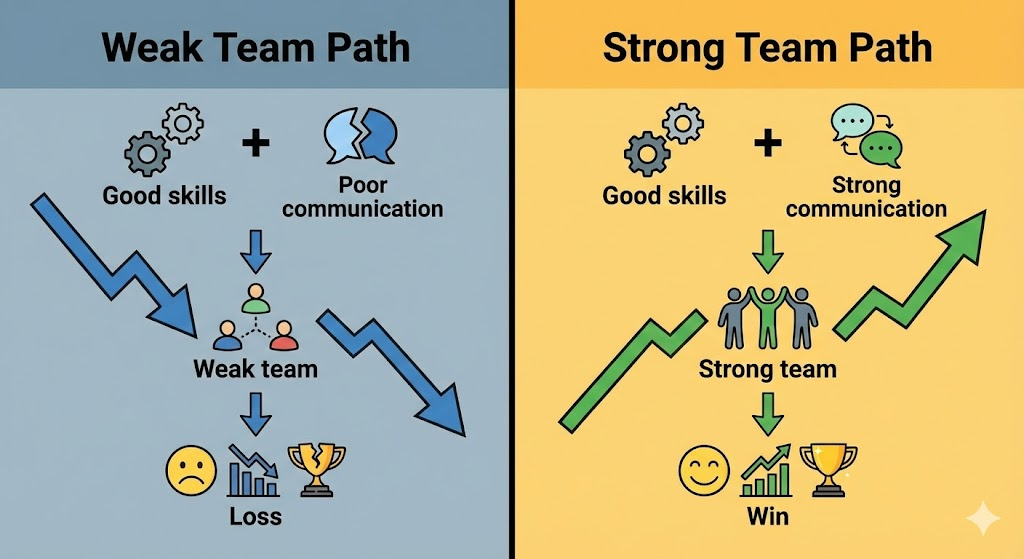
- Team Jasmine loses despite having good cooks because communication and motivation were weak.
Reflection with Ms Veena – Learning Interpersonal Skills
Manish feels devastated, thinking he is not good enough. Ms Veena calls him to school on Saturday and walks with him in the garden to discuss what happened.
She explains:
- Both teams had talent, but Team Rose showed better interpersonal behaviour.
- Sheetal:
- Encouraged her team with written notes.
- Used non‑verbal messages (gestures, smiles) to comfort members.
- Switched roles to help whoever needed support.
- Solved problems quietly (like Puneet’s sugar mistake).
- Used democratic decisions (voting) instead of imposing orders.
Manish realises:
- He made the contest only about his own victory, not the team’s growth.
- He often spoke in a curt tone and never truly asked for his teammates’ ideas.
- He did not listen to Shiv’s need and created distance.
Important points from Ms Veena:
- Good leaders are firm but gentle.
- Instructions must be clear, respectful, and open to feedback.
- Body language, facial expressions, and empathy influence how others feel.
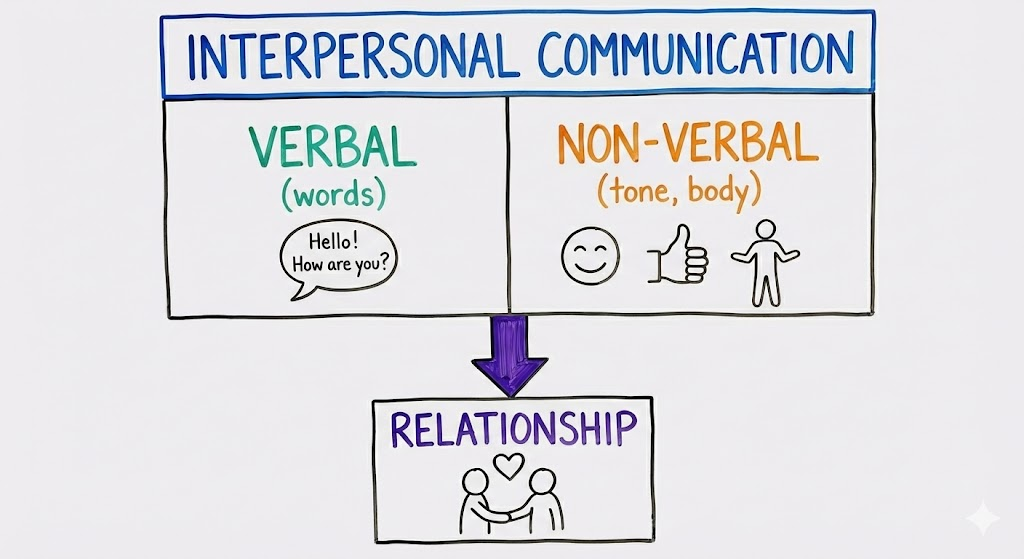
- Interpersonal communication is not just words; it includes:
- tone of voice
- listening
- eye contact
- gestures and posture
- respect for others’ feelings.
Manish admits he needs to improve. Ms Veena encourages him, saying this awareness is the first step.
Repairing Relationships
Next week, Manish writes small thank‑you notes to each teammate, appreciating their efforts during the competition. He quietly slips them into their bags.
He also gives a note to Sheetal, saying she deserved the win and that he has learned a lot from her. Sheetal feels emotional and asks if he is still upset. Manish smiles and says he is not; he is proud of her.
They hug as friends again. This shows:
- An apology can be silent but sincere.
- Appreciation strengthens bonds.
- Interpersonal skills can be improved through conscious effort.
Assessment – Descriptive Questions and Answers
Write Briefly
1. Why were the students excited?
They were excited because Grade 7 was ending and the cook‑off contest gave them a final chance to work in teams, create memories, and enjoy food together before moving to high school.
2. Why were Sheetal and Manish praised by their teachers?
- Sheetal was praised for her excellent teamwork, respectful communication, and ability to encourage her teammates, which helped Team Rose win.
- Manish was praised for his cooking skills, initiative, and later for honestly reflecting on his mistakes, improving his interpersonal behaviour, and appreciating his team and Sheetal.
3. What was the competition about?
The competition was a cook‑off where each team planned a lunch menu with three dishes:
- One dessert prepared in school without using fire.
- Two savoury dishes brought from home.
Teams had to sell their food during lunch; the team with the maximum sales won, and the total money collected was donated to an orphanage.
4. Both Manish and Sheetal were equally talented, even then Manish was defeated in the competition. Why?
Although both had good cooking skills:
- Manish:
- Spoke harshly and ignored teammates’ needs.
- Took decisions alone and focused only on winning.
- Did not listen carefully or motivate his team.
- Sheetal:
- Involved her team in decisions (voting).
- Used kind words and encouragement notes.
- Stayed calm during mistakes and solved them together.
Thus, Sheetal’s stronger interpersonal communication and team spirit led to better performance and more sales.
5. What do you mean by interpersonal development? How did Manish improve it with people he had lost connection with?
- Interpersonal development means improving the way we communicate and interact with others so that relationships become healthier and more trusting.
- Manish improved it by:
- Reflecting on his rude behaviour after Ms Veena’s guidance.
- Accepting his mistakes instead of blaming others.
- Writing personal thank‑you notes to his teammates and to Sheetal.
- Speaking kindly and appreciating their efforts.
These actions rebuilt trust and strengthened his friendships.
Think and Write (Model Points)
1. What is the significance of interpersonal behaviour in a student’s life?
- Helps build strong friendships and support systems.
- Makes group projects and teamwork smoother.
- Reduces conflicts and misunderstandings.
- Increases confidence when speaking to teachers and peers.
- Prepares students for future workplaces and society.
2. How can a student develop his/her interpersonal skills?
- Practise active listening (focus, nod, ask clarifying questions).
- Use polite words: please, thank you, sorry.
- Maintain eye contact and friendly body language.
- Share ideas clearly and allow others to share theirs.
- Accept feedback calmly and work on it.
- Help classmates during difficulties, not only during grading.
3. What are interpersonal skills?
Interpersonal skills are the abilities that help us work and communicate well with others, such as:
- Listening
- Speaking clearly
- Empathy
- Cooperation
- Conflict resolution
- Respectful body language
4. What are the methods you would use to motivate your team?
- Set a clear shared goal (e.g., best taste, maximum sales, charity).
- Appreciate each member’s strength and assign roles accordingly.
- Give small encouragement notes or messages.
- Celebrate small successes and handle mistakes calmly.
- Involve everyone in decisions through discussion or voting.
5. Name few personal traits which are mandatory to achieve success.
- Honesty
- Hard work
- Discipline
- Patience
- Confidence with humility
- Respect for others
- Ability to learn from mistakes
Multiple Choice Questions – Answers
1. Interpersonal communication is the communication between two people who
a. share a relationship
b. are connected in some way
c. are aware of one another
d. are complete strangers
Correct option: a – share a relationship.
2. Interpersonal communication is
a. verbal only
b. continuous
c. irreversible
d. static
Correct option: c – irreversible
(Once spoken or expressed, a message cannot be taken back; its effect remains.)
3. What is the best way to handle conflict in your life?
a. be aggressive
b. be deferring
c. be assertive
d. be avoidant
Correct option: c – be assertive
(Assertive means firm yet respectful: expressing your views without hurting others.)
4. Interpersonal skills are also known as
a. worthless skills
b. soft skills
c. rarely used skills
d. skills beyond reach
Correct option: b – soft skills
Crossword – Clues and Answers
Word bank:
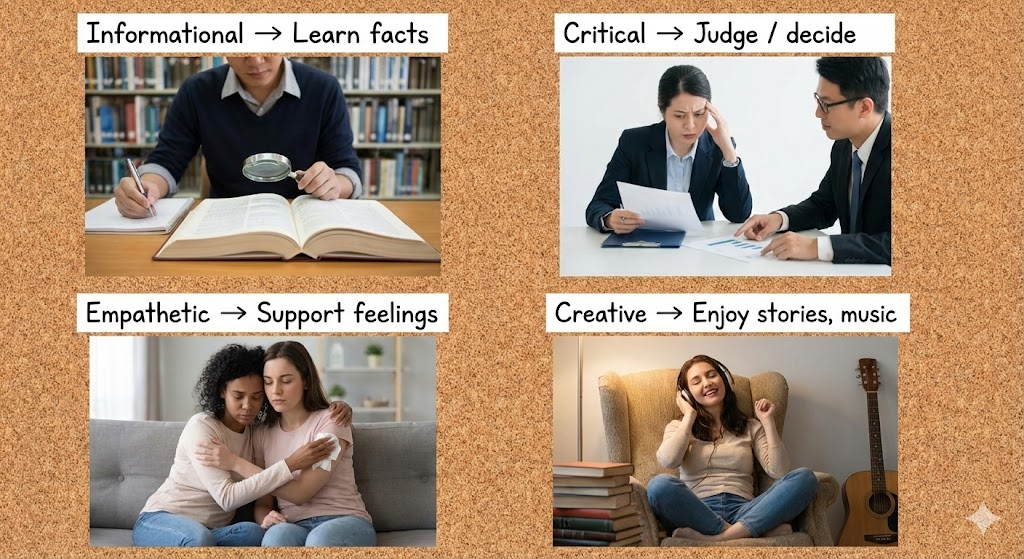
critical, interpreting, informational, shakehands, responding, creative, listening, receiving, processing, name, empathetic, eyes
Down
- When meeting someone you should what
→ shakehands - What should you be looking at when speaking to someone
→ eyes - You understand what the message is saying
→ interpreting - You hear or receive the message
→ receiving - Communication skills involves
→ listening - When introducing yourself you should say your what
→ name - Listening to be there for someone
→ empathetic
Across
- Listening to gain information
→ informational - You think about what the message was saying
→ processing - Listening to determine if you agree or disagree with someone
→ critical - Listening to something for fun
→ creative - You give feedback for the message
→ responding
Download Mind Map
This mind map contains all important topics of this chapter
Visit our Class 7 Skill Development page for free mind maps of all Chapters